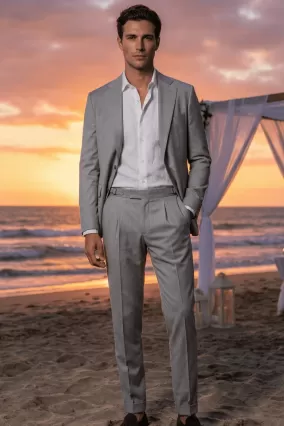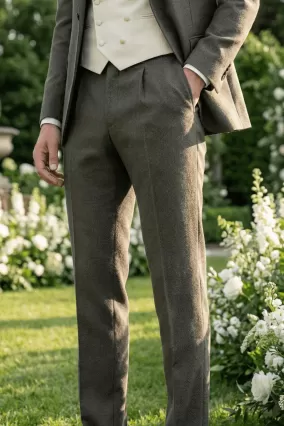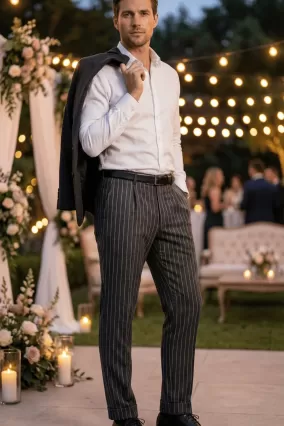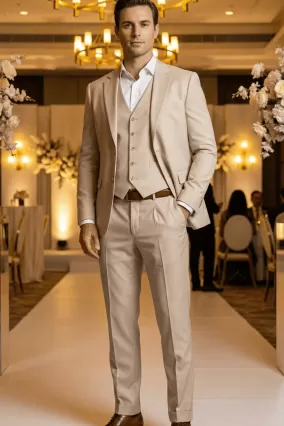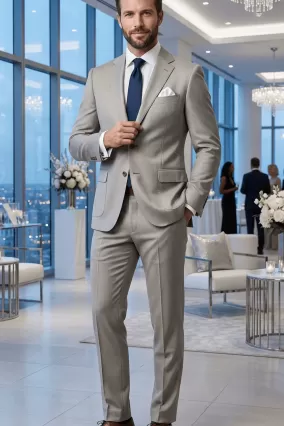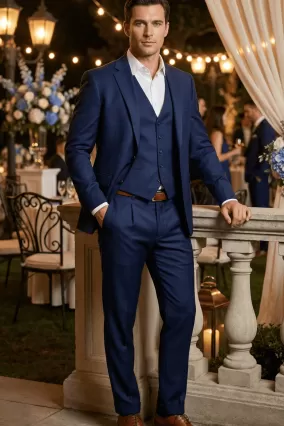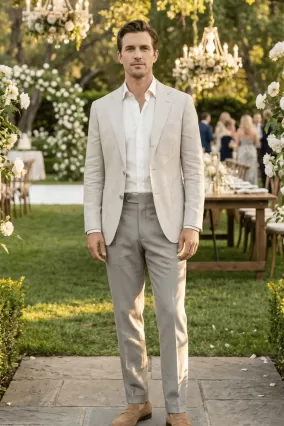
The Australian luxury wedding suit market offers discerning grooms two distinct pathways: global fashion houses like Tom Ford and Dior delivering iconic design DNA and brand prestige, or elite local made-to-measure specialists including P Johnson and Oscar Hunt providing absolute fit precision and climate-adapted fabrics. The top high-class fashion brands have wedding suits meeting critical luxury criteria transparent supply chains, full-canvas construction, and explicit fabric mill identification. For grooms investing beyond $3,000, understanding these technical foundations and choosing between aesthetic statement and personalized service determines whether wedding attire becomes a true investment piece or merely ceremonial expense.
1. Global fashion icons: Tom Ford wedding suits and international luxury
1.1. Tom Ford: Cinematic opulence and material supremacy
Tom Ford wedding suits represent the apex of modern luxury formalwear. The brand's signature silhouettes the commanding Windsor fit and trimmer O'Connor profile feature structured, fully-canvassed construction that provides exceptional shape retention throughout extended wedding celebrations.
The luxury proposition centers on material excellence. Tom Ford wedding suits for mens utilize opulent textiles including Super 170s wool blended with silk, creating an unmatched drape and distinctively soft handle. Formal wear incorporates high-polish finishes such as silk lapels and refined patterning that photograph exceptionally well.
These garments are positioned as investment pieces designed for four-season wear, emphasizing longevity and aesthetic timelessness. When a groom selects Tom Ford wedding suits, the choice prioritizes supreme aesthetic luxury and the ability to make a powerful statement recognized globally.

1.2. Dior: Parisian couture meets made-to-measure precision
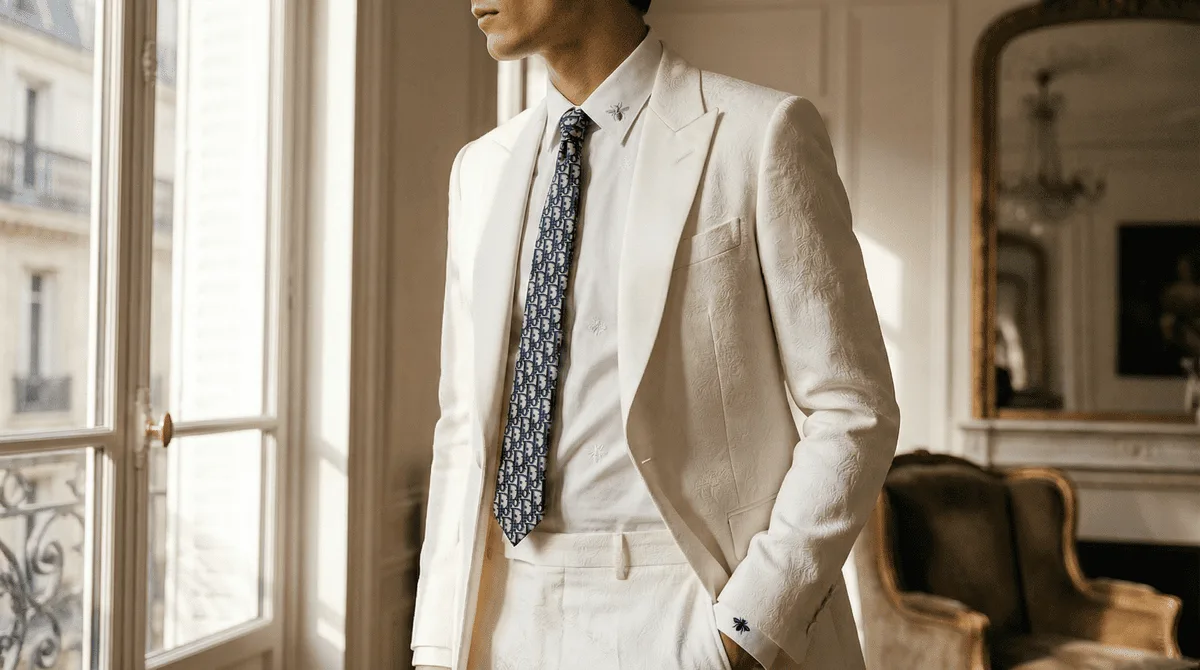
Dior Men's Celebrations collection infuses formalwear with the spirit of Parisian couture. Under Artistic Director Kim Jones, the house creates wedding attire featuring proprietary design codes that elevate traditional silhouettes into distinctive luxury pieces.
The iconic Dior Oblique motif appears across accessories including ties and bow ties, while the Bee motif is embroidered onto premium cotton shirting. These signature elements ensure the wedding ensemble is simultaneously classic and exclusive. The collection showcases textile craftsmanship through specific applications such as white virgin wool and silk jacquard tuxedos.
Critically for Australian grooms, all Dior models can be adapted through made-to-measure services, bridging the gap between bold aesthetic statements and precision fit requirements. The brand's dedicated Australian presence confirms recognition of the market's luxury spending capacity.
2. Elite Australian made-to-measure: P Johnson and Oscar Hunt
2.1. P Johnson: Transcontinental craftsmanship and climate adaptation
Established in Sydney in 2009, P Johnson has distinguished itself through a philosophy of natural, refined, and elegant tailoring specifically adapted for Australian conditions. The brand's definitive advantage lies in maintaining a proprietary workshop in Tuscany, Italy, merging Australian design sensibility with world-class Italian technical standards.
This Tuscany workshop provides stringent quality control and authentic artisanal pedigree, directly addressing concerns about offshore production. P Johnson explicitly acknowledges the diverse Australian wedding environment spectrum from summer beach ceremonies to winter mountain venues promising perfect suits with balanced, comfortable fits regardless of location.
The firm's climate-conscious approach represents a specific luxury advantage often absent from global ready-to-wear inventory. By accommodating a wide range of budgets across tailoring lines, P Johnson focuses on delivering genuine quality rather than relying solely on label prestige.

2.2. Oscar Hunt: High-touch experience and party coordination
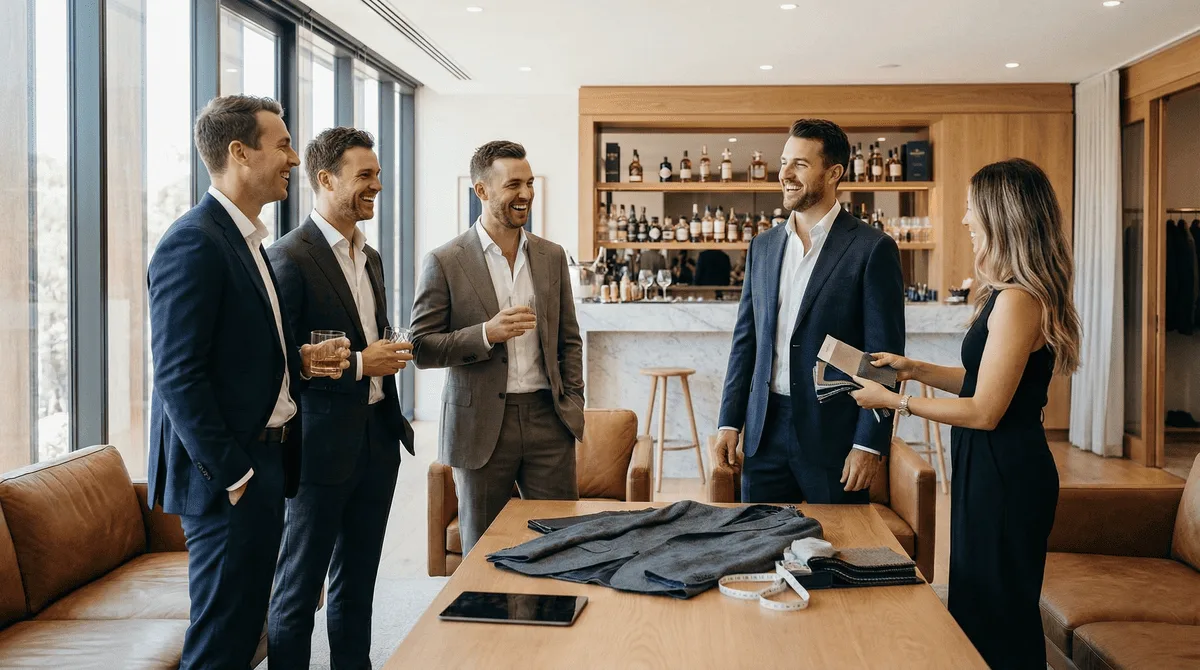
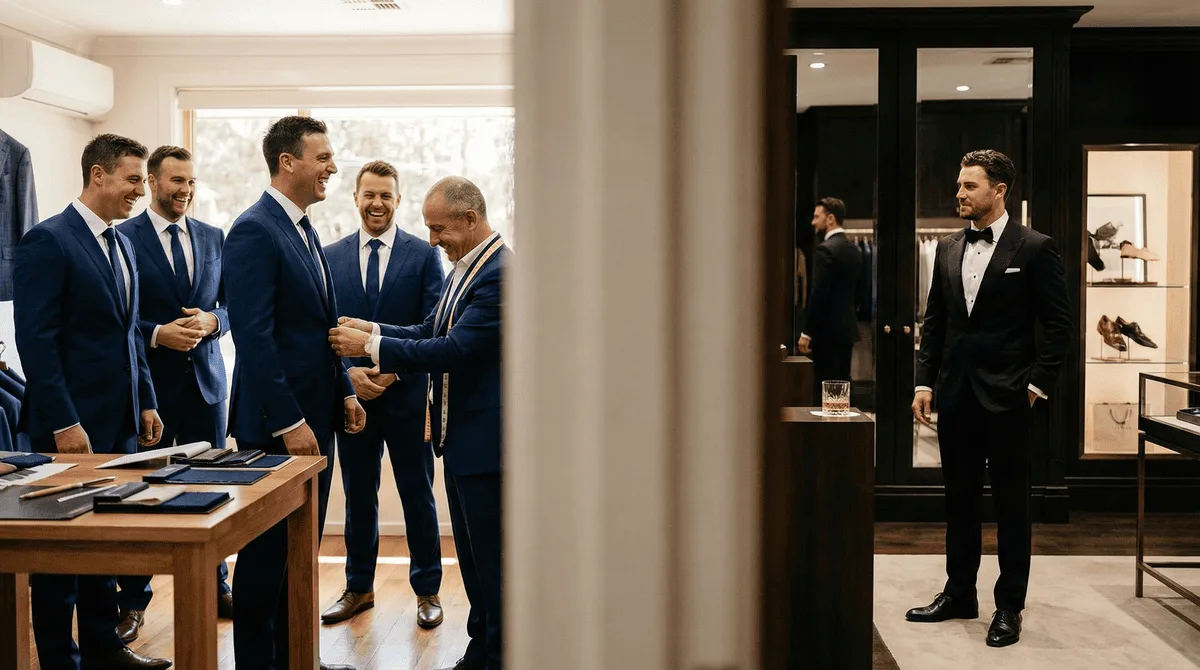
Oscar Hunt has transformed made-to-measure into a modern, accessible luxury experience granting comprehensive stylistic control. The service deliberately adopts a laid-back, convivial approach, conducted in large private fitting suites across Melbourne, Sydney, Adelaide, Brisbane, and Perth.
Appointments feature complimentary beverages from in-house bars stocked with premium Australian brands, transforming fittings into enjoyable pre-wedding events. This widespread showroom network facilitates complex wedding logistics, particularly valuable for parties with groomsmen scattered across different states.
Personalization rests on three pillars: style guidance for refining vision, finish customization including lapel widths and waistband options, and fabric optimization based strictly on wedding season and venue. For summer beach weddings, consultants recommend open-weave fabrics maximizing air transfer and comfort.
Oscar Hunt's significant competitive advantage lies in seamless coordination of entire wedding parties. The firm extends made-to-measure to all groomsmen, crafting each suit from a customized block, eliminating common off-the-rack sizing issues and ensuring unified, cohesive aesthetics.
3. Raymond wedding suits for men: Understanding the heritage brand
Raymond wedding suits for men represent a significant segment within the broader luxury market, particularly for grooms seeking established heritage combined with contemporary styling. The Raymond brand has built reputation on consistent quality and accessible luxury positioning.
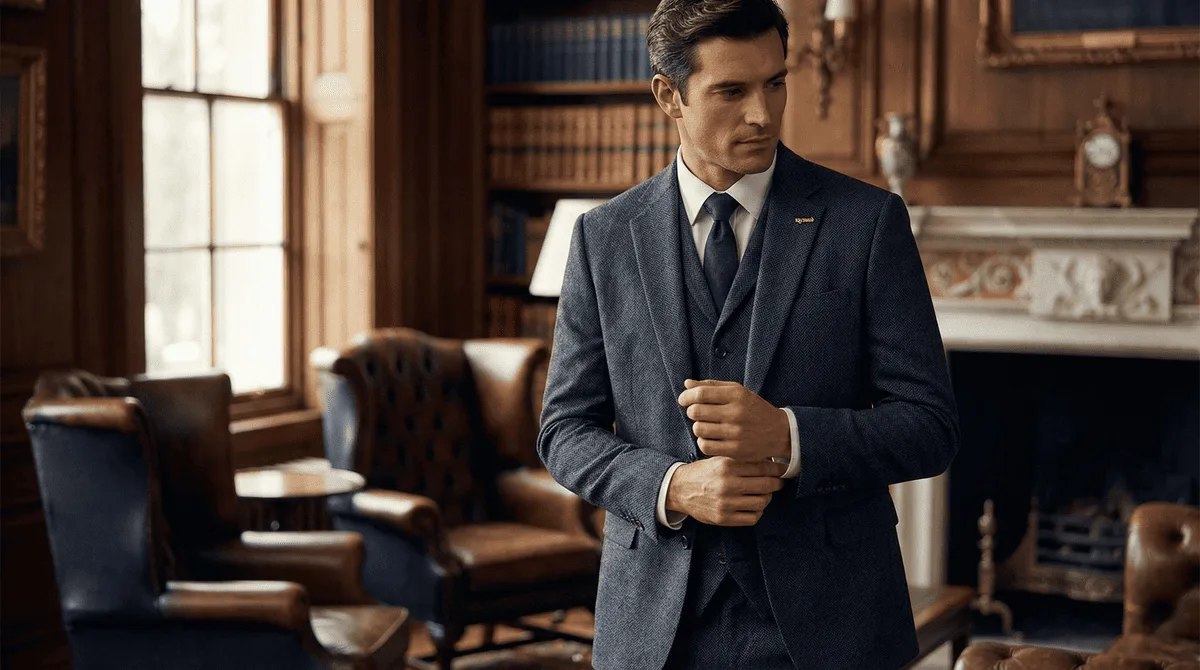
Wedding suits raymond offers typically feature premium wool blends with attention to construction details that ensure durability and professional drape. Raymond wedding suits for men prioritize versatility, allowing garments to transition from ceremonial use to business and formal occasions, maximizing investment value.
For Australian grooms considering raymond wedding suits, the key evaluation criteria remain consistent with broader luxury standards: confirmation of canvas construction type, explicit fabric mill identification, and assessment of how the brand's styling aligns with specific wedding formality and personal aesthetic preferences.
4. The fabric pedigree: Investment in material excellence
4.1. Prestige mills and climate performance
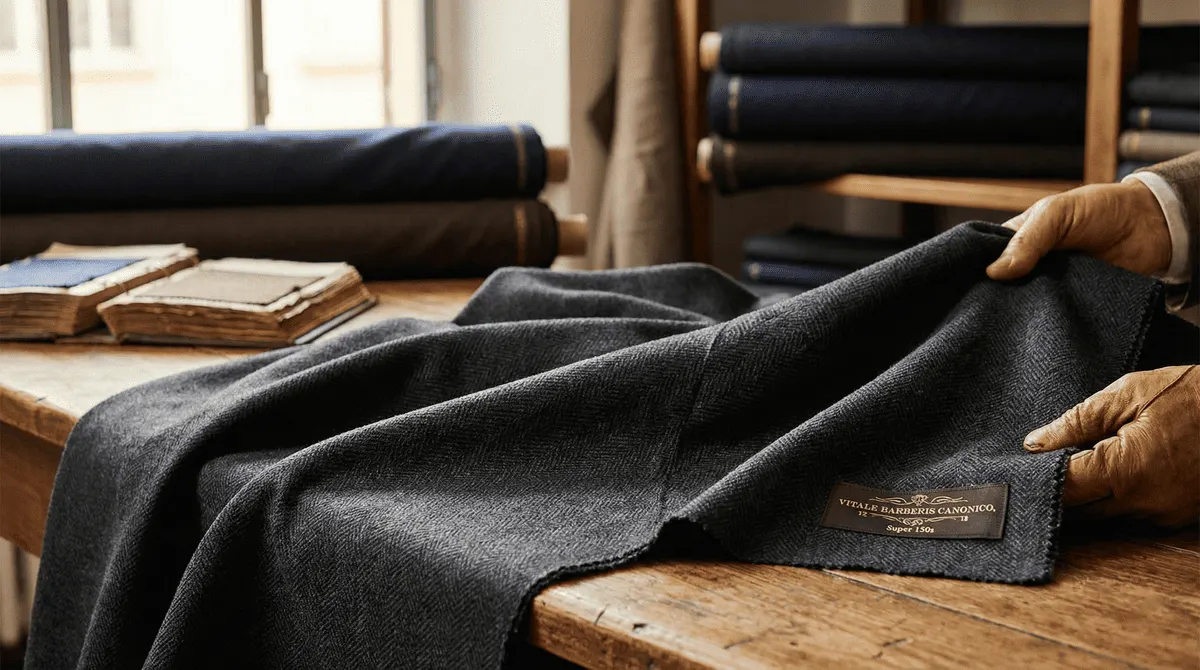
In the high-class segment, fabric provenance often dictates garment value and performance. True luxury suiting relies on textiles from the world's most prestigious mills: Loro Piana, Vitale Barberis Canonico, Scabal, Holland & Sherry, Dormeuil, and Drago.
Vitale Barberis Canonico, founded in 1663, holds distinction as the oldest wool mill on earth. Its prominence in Australian consumer discussions solidifies status as the minimum expectation for fabric quality and supply chain transparency in high-end made-to-measure. Demanding specific mill names is the only mechanism ensuring investment protection against inferior textile substitution.
4.2. Loro Piana: Australian climate engineering
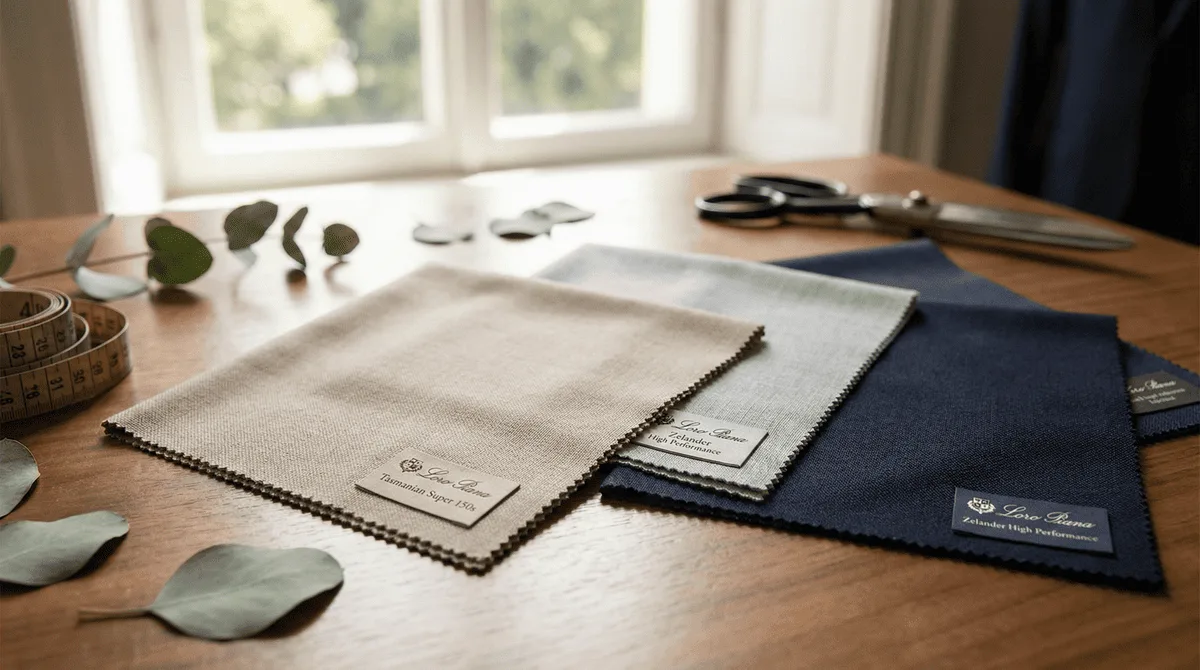
Given wide temperature variances and high heat encountered in Australian weddings, material performance is paramount. Loro Piana specializes in textiles engineered for lightness and resilience.
The Tasmanian fabric collection connects directly to Australia, originally created using Merino wool sourced from Tasmania. Engineered at lightweight 250 grams per meter, Tasmanian fabric is renowned for crease-resistance, transpiration, thermal insulation, and overall lightness, enabling elegant dressing across all seasons.
The Zelander collection, crafted from white, strong New Zealand merino wool, further enhances options for cool, lightweight suits. High-end made-to-measure firms emphasize raw material integrity, utilizing Woolmark certified 100% Australian Merino wool, guaranteeing supply chains originating in local, high-quality resources.
4.3. Scabal: Luxury blends for formal occasions
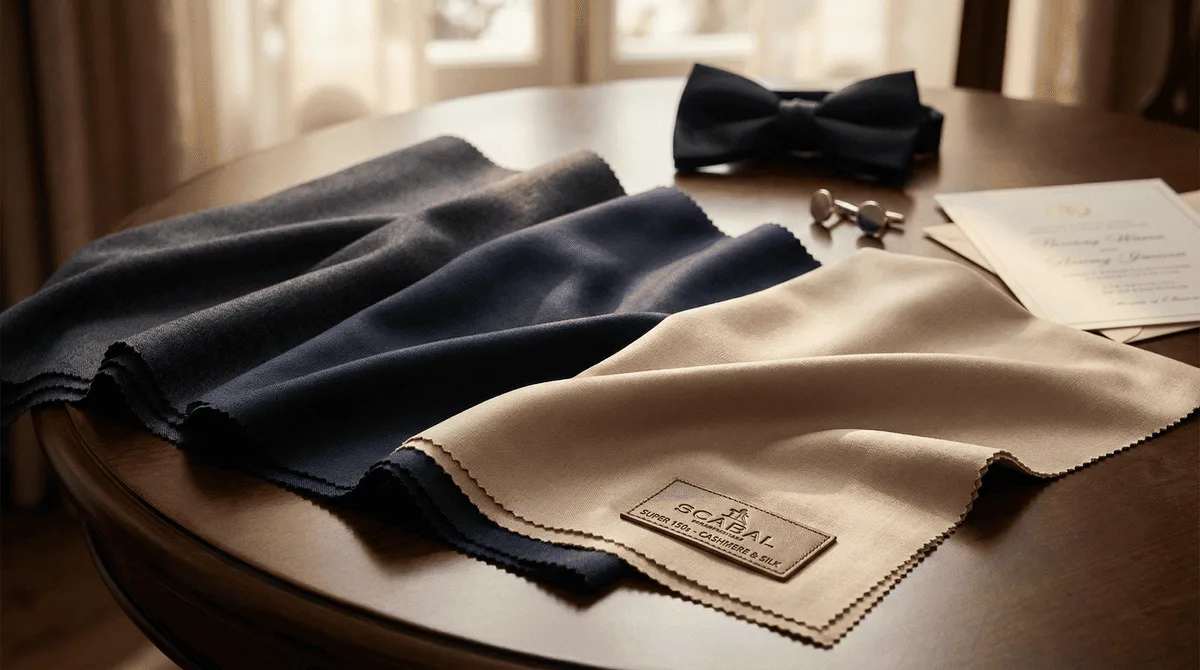
Scabal provides collections specifically engineered for formal event comfort and sophisticated aesthetics. The Summer Cashmere collection blends cashmere with lightweight worsted cloth, offering superior natural crease resistance highly valued for destination weddings or events requiring extended wear in warm climates.
The Sleek Collection utilizes Super 150s wool and silk blends, specifically crafted to maximize breathability while achieving refinement and elegance required for formal occasions. The ability of high-class tailors to access these specialized wools and blends ensures fabric performance can be meticulously matched to exact wedding environments and seasons.
5. Technical construction: The full-canvas imperative
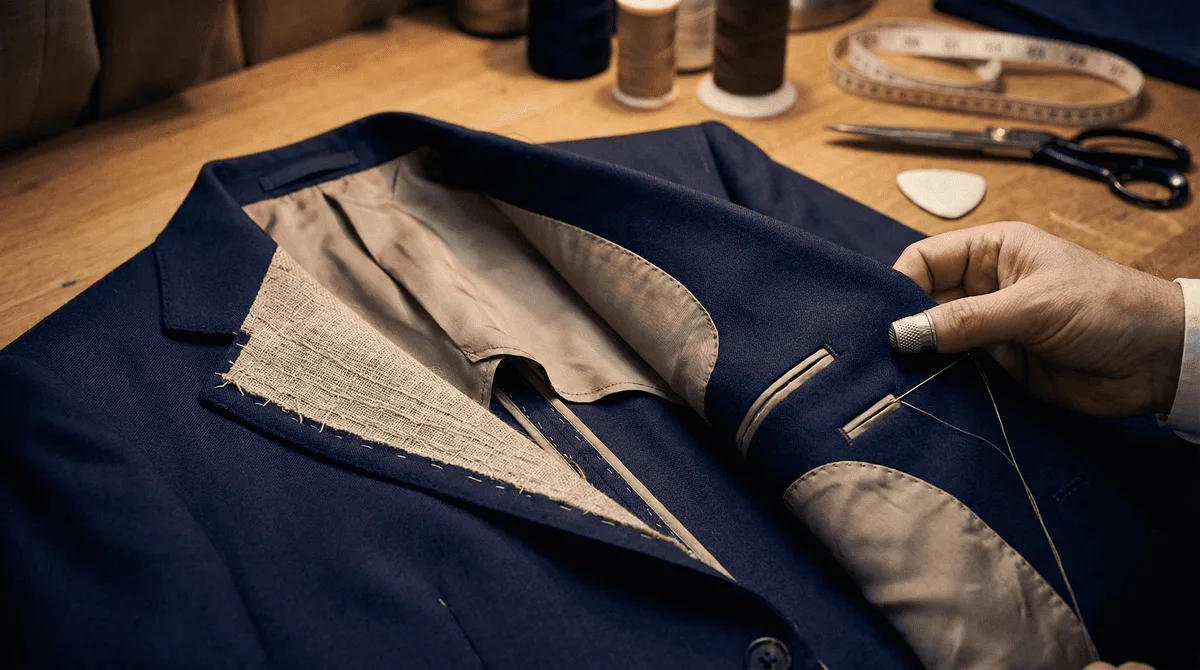
The single most critical yet often invisible component of a high-class suit is interior construction. Discerning Australian grooms consistently demand full-canvas construction as the non-negotiable technical benchmark.
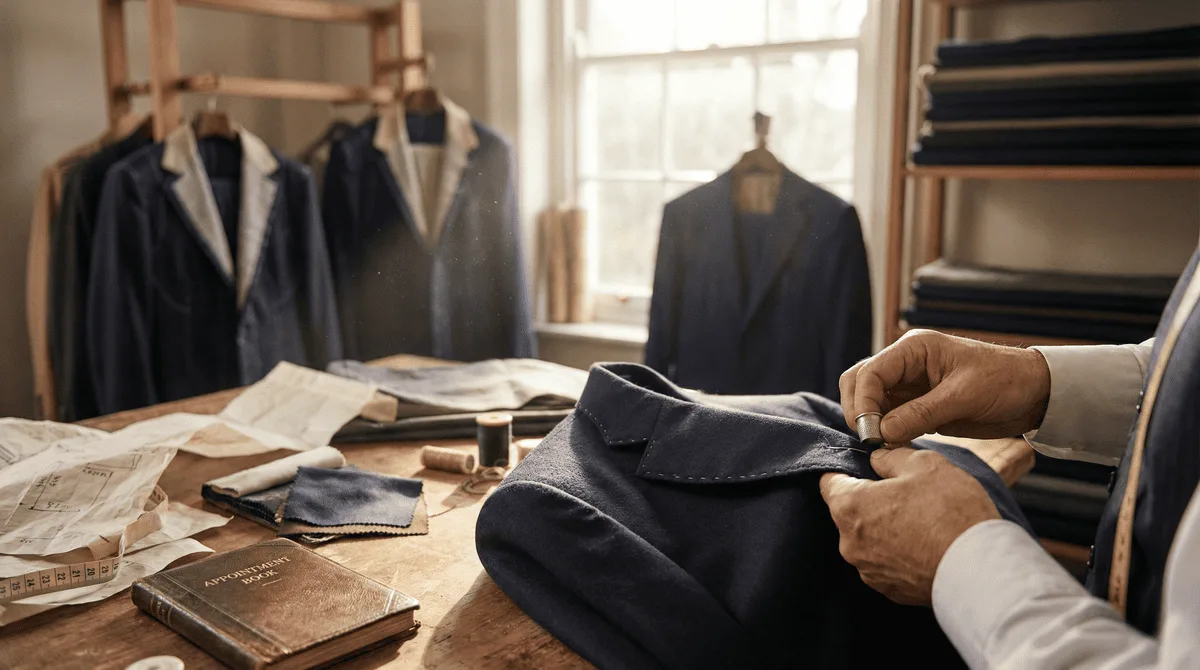
Full-canvas construction involves hand-stitching a layer of horsehair canvas between outer cloth and lining. This technique allows suits to float, molding to the wearer's body over time and maximizing natural, fluid drape of expensive fabrics like Super 170s wool. Critically, it prevents bubbling and stiffness associated with heat-fused construction found in lower-tier suits, ensuring garments remain impeccable for decades.
This technical detail justifies the long-term investment that high-class wedding suits represent. When evaluating any luxury suit whether Tom Ford wedding suits, raymond wedding suits for men, or Australian bespoke options confirmation of full-canvas construction should be explicitly requested and verified.
6. Investment comparison: Global cachet versus local precision
6.1. The luxury decision matrix
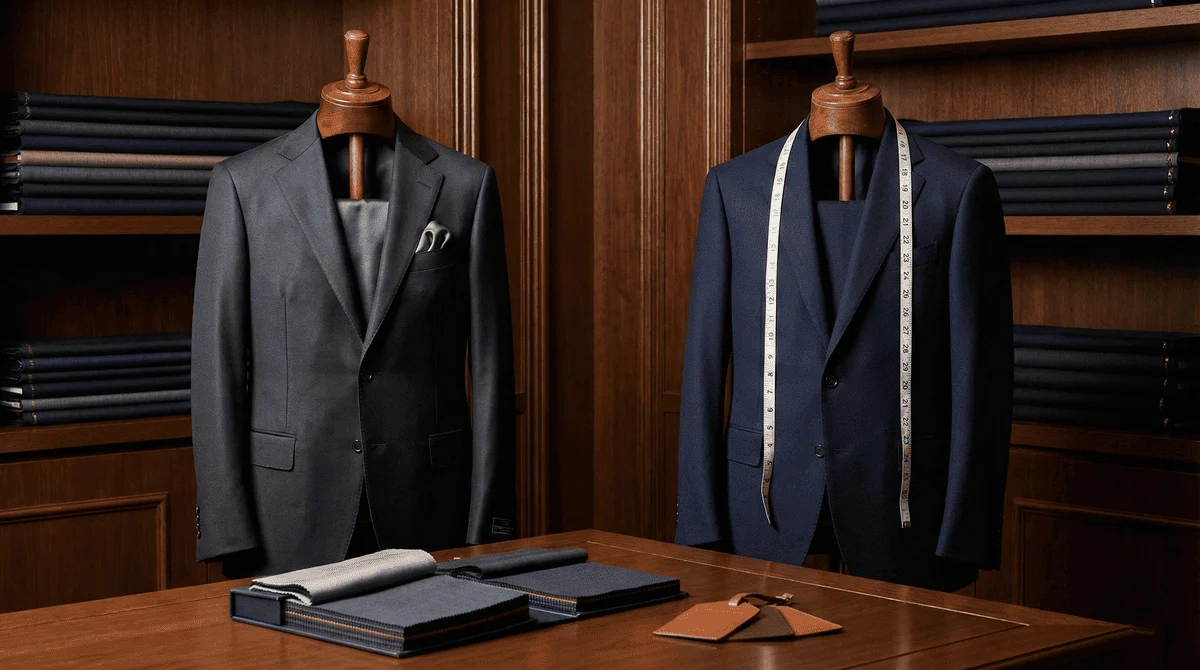
Global luxury houses offer aesthetically focused investments. Grooms acquire immediate cultural capital and garments imbued with famous design codes. Fit, though personalized through made-to-measure, adapts existing signature silhouettes. Fabric priorities lean toward aesthetic opulence, utilizing materials like Super 170s wool-silk blends offering incredible softness and handle.
Local made-to-measure providers offer performance and fit-focused investments. Fit is built entirely around individual measurements and posture, offering superior comfort and longevity. Fabric priorities balance aesthetic beauty with practical resilience, often steering clients toward robust, high-twist, crease-resistant wools like Loro Piana Tasmanian.
A necessary trade-off exists: Super 170s provide incredible softness but are inherently delicate, while high-performance wools maximize resilience and practicality. Luxury advice must acknowledge this choice between aesthetic sumptuousness and functional durability.
6.2. Role-based brand selection
For grooms prioritizing absolute fit, climate performance, and stress-free wedding party coordination, elite local made-to-measure providers like P Johnson or Oscar Hunt represent optimal choices. Their dedicated local service, focus on Australian climate performance fabrics, and ability to seamlessly coordinate custom garments for entire parties minimize logistical friction.
For grooms prioritizing brand statement, unique design iconography, and global recognition, global design houses like Tom Ford or Dior offer garments transcending mere tailoring. These brands provide wearable art and enduring statements of high fashion.
7. Sourcing and service: The Australian advantage
7.1. City-specific acquisition pathways
Sydney and Melbourne serve as primary hubs for luxury wedding suit acquisition. Both cities host showrooms for elite Australian made-to-measure firms and boutiques stocking international luxury brands.
For Tom Ford wedding suits, specific boutiques in Melbourne and Sydney CBD provide access to both ready-to-wear collections and made-to-measure services. Appointments should be scheduled well in advance, particularly during peak wedding seasons from October through April.
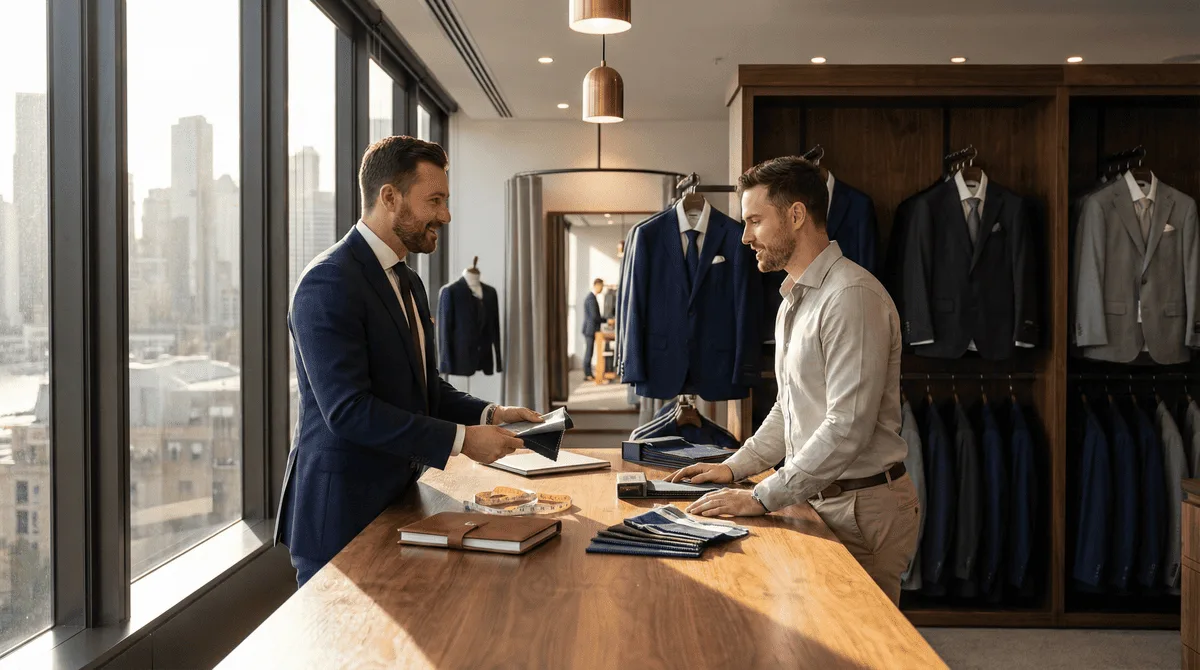
Australian made-to-measure specialists offer distinct advantages through their national showroom networks. Oscar Hunt's presence across five major cities enables consistent fitting experiences for wedding parties with members in different states, a logistical service component difficult for single-location global houses to replicate.
7.2. Timeline considerations
Due to made-to-measure process complexity involving material sourcing from global mills and multiple fittings, grooms must initiate processes well in advance. Commencing made-to-measure at least nine to twelve months prior to wedding dates is essential for ensuring smooth, high-quality outcomes.
This timeline accommodates manufacturing schedules of firms utilizing bespoke workshops, allows for proper fitting adjustments, and provides buffer for any unforeseen alterations. For ready-to-wear luxury purchases requiring alterations, a minimum three-month lead time is recommended.
8. Styling and maintenance: Protecting the investment
8.1. Accessory completion
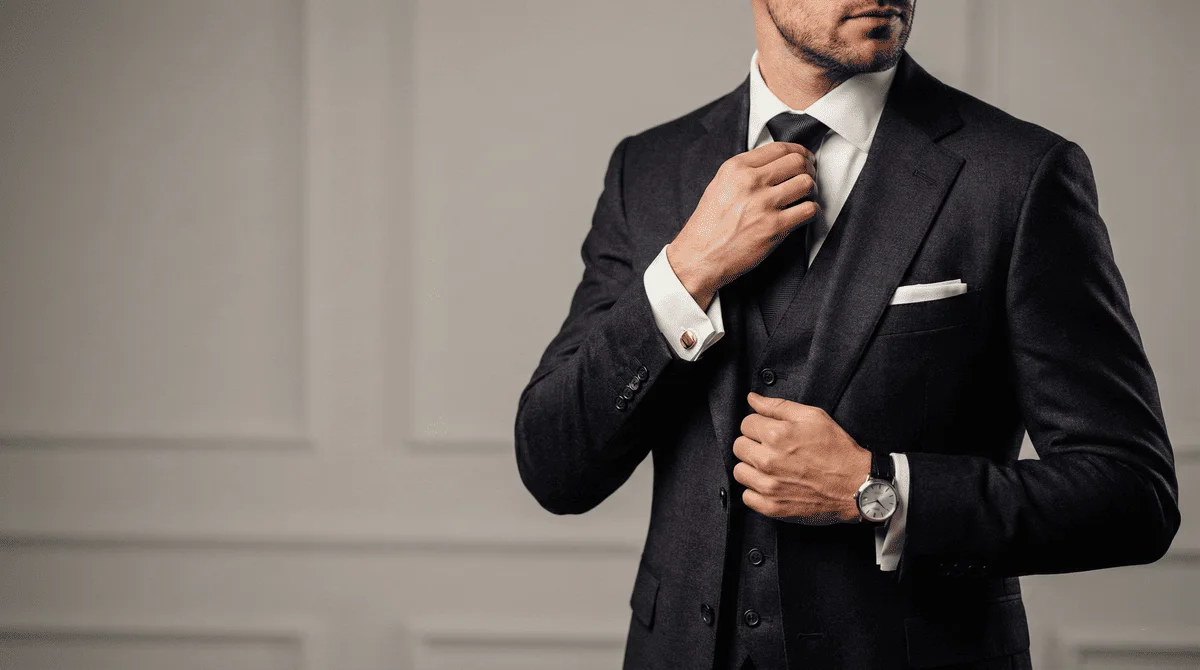
The overall luxury appeal of wedding ensembles is defined by finishing details. For made-to-measure clients, this includes subtle perfection of fit and construction choices precise lapel widths, decisions between tabs or belt loops on trousers, and pleat placement.
For global luxury brands, accessories provide high-fashion injection. This includes specialized jewelry pieces, high-end silk ties and bow ties, and premium footwear. No high-class suit is complete without appropriate premium leather goods patent leather or specialized calfskin with unique patina ensures shoe quality anchors suit quality.
8.2. Garment care and longevity
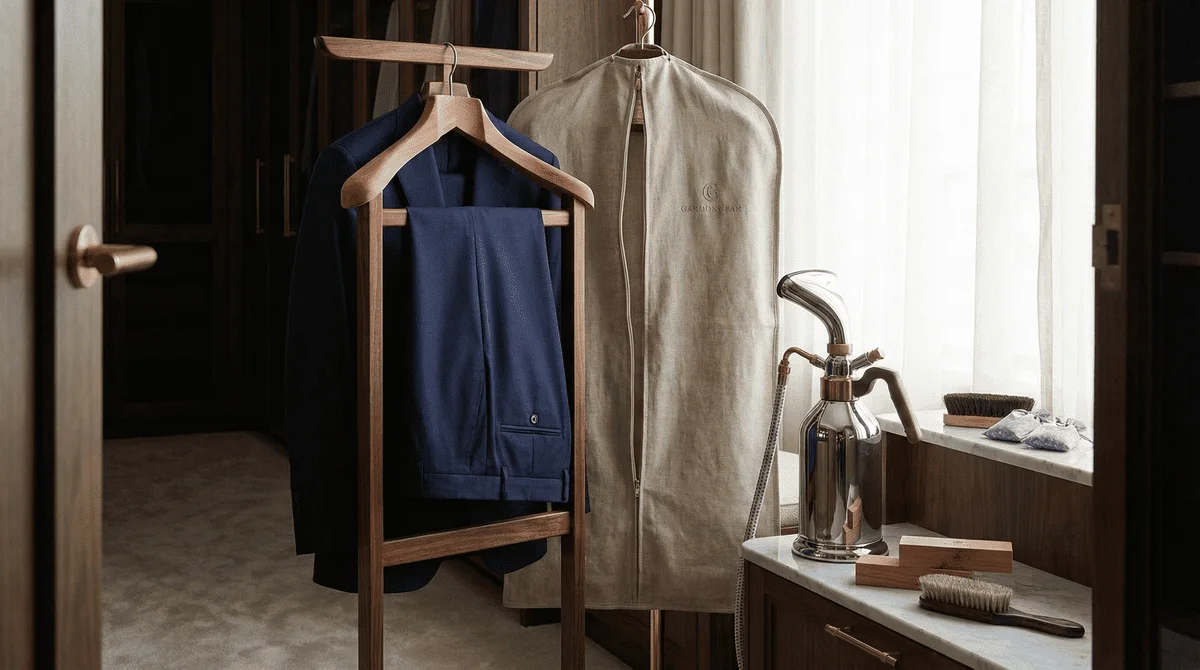
Preserving expensive materials requires specific care protocols. Super 150s wool and fine linen demand professional dry cleaning from specialists experienced with luxury textiles. Between wears, suits should be hung on wide, shaped wooden hangers allowing fabrics to breathe and recover natural drape.
Storage should occur in breathable garment bags in climate-controlled environments, avoiding plastic covers that trap moisture. For destination weddings requiring travel, suits should be transported in specialized garment carriers and steamed upon arrival rather than pressed, protecting delicate fibers and canvas construction.
Conclusion: Making the informed luxury investment
The top high-class fashion brands have wedding suits that serve as both powerful aesthetic statements and lasting wardrobe investments. Whether selecting Tom Ford wedding suits for their cinematic opulence, exploring raymond wedding suits for men for heritage quality, or commissioning bespoke garments from Australian specialists, the decision should be guided by clear priorities.
Understanding the technical foundations full-canvas construction, fabric mill provenance, climate-appropriate textile engineering empowers grooms to evaluate luxury claims critically. The investment extends beyond the garment itself to encompass service experience, logistical support, and the confidence of wearing attire that reflects personal values and aesthetic vision.
For the discerning Australian groom, the luxury wedding suit market offers unprecedented choice. By aligning investment with specific priorities whether global brand cachet or local fit precision and demanding transparency in construction and materials, grooms ensure their wedding attire delivers both immediate impact and enduring value.