
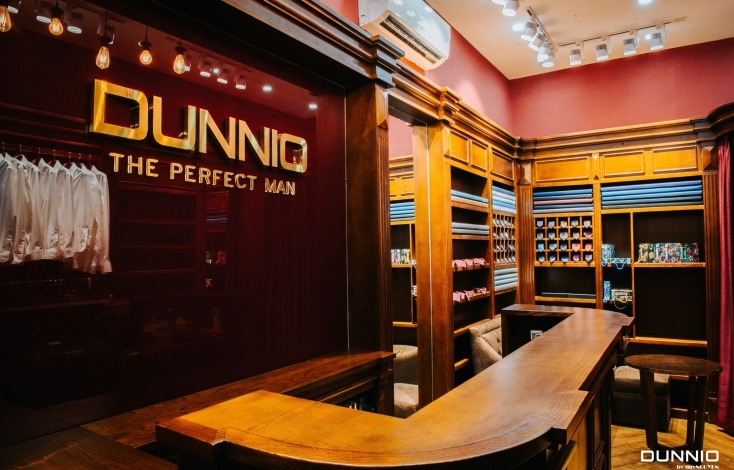
Why choose Dunnio Tailor


We produces each custom suit at a time to the customer's measurements, following the highest quality standards. The only thing you need to do is design your custom made suit online and we will do the rest.
How should I store my wedding pants to keep them crisp?
How do I remove a wine or grease stain during the reception?
- For Grease/Oil: Sprinkle baking soda or cornstarch on the spot and let it sit to lift the oil before brushing it away.
- For Red Wine: Blot (don't rub) with a clean cloth. For linen, a mixture of glycerin and dish detergent is effective for lifting pigment without damaging organic fibers.
- General Rule: Never use bleach on wool or linen, as it permanently weakens and yellows the fibers.
If I buy a custom suit for a wedding, can I wear the pants later?
Absolutely. By choosing versatile colors like navy, charcoal, or mid-grey, the trousers can be styled after the wedding with a blazer or a casual sweater for business-casual environments.
How do we ensure all the groomsmen match if they live in different cities?
It is "strongly recommended" to select from a dedicated Wedding Collection. These fabrics are kept in higher stock specifically to ensure consistency across large parties. Additionally, digital "sizing surveys" or virtual appointments allow each member to be measured remotely while ensuring their data is consolidated under one wedding profile for the tailors to review.
How far in advance should my groomsmen and I order our pants?
To be safe, we recommend ordering 12 weeks (3 months) before the event. This timeline allows 4-5 weeks for production and shipping, plus a 4-week buffer for any final local alterations or remakes.
My wedding is outdoors in the humidity. What fabric should I choose?
Look for "Tropical Wool" or "Fresco." These are high-twist wools with an open weave that allows maximum airflow while maintaining a formal appearance. Unlike linen, these fabrics stay crisp and hold their shape even in high humidity.
What wool weight is best for a year-round wedding suit?
A "mid-season" or "all-season" wool weight (typically around 280g–310g/m²) is ideal. This weight provides enough structure for a sharp look in winter but remains breathable enough for climate-controlled indoor venues in summer.
Is linen too casual for my wedding?
While linen is famous for its "charm wrinkles," it can be elevated for weddings. A navy or dark grey linen suit is often considered appropriate for summer formal events. For a more polished look with the same breathability, consider a wool-linen or silk-linen blend, which resists wrinkling better than pure linen.
What is a "heel guard"?
A heel guard is a sacrificial strip of fabric sewn into the interior rear hem of the trousers. It protects the primary fabric from the abrasive friction caused by contact with your shoes, significantly extending the life of your pants.
What are the benefits of a "Bemberg lining" in wedding pants?
Bemberg is a premium regenerated fiber that is more breathable than polyester and more durable than silk. It provides a smooth interior that prevents the wool from clinging to your skin or undergarments, ensuring the trousers drape perfectly even when you are moving.
Should I choose side adjusters or belt loops for my wedding trousers?
For formal weddings (especially Black Tie), side adjusters (tabs) are preferred as they provide a cleaner, more minimalist look without the bulk of a belt. Belt loops are more versatile for "Business Casual" or rustic weddings where you might want to coordinate with leather accessories.
What is the "break" of the pants, and which should I choose?
The "break" is where the trouser hem meets your shoe.
- No Break: The hem barely touches the shoe, creating a modern, trendy look that also makes legs look longer.
- Half Break: The standard, conservative choice where the fabric rests lightly on the top of the shoe with one slight fold.
- Full Break: The fabric folds significantly around the ankle. This is a more traditional, vintage style but is generally avoided for slim-cut modern suits.
