Table of Contents[Hide]
- 1. Why suit color is the first decision that matters
- 2. The foundational suit colors every man should know
- 3. Beyond the basics: Expanding your suit color palette
- 4. How to choose suit color based on your skin tone and hair color
- 5. Choosing your suit color by occasion
- 6. Suit colours by region and climate
- 7. Suit color trends for 2025 - 2026
- 8. Matching fabric to suit color at Dunnio Tailor
- 9. How to build your suit color wardrobe: A priority guide
- 10. Frequently asked questions about suit colours
- Conclusion
Your suit is the most powerful garment in your wardrobe. Before you think about fit, fabric, or lapel width, the first decision is always color. The right shade communicates confidence before you speak a word. The wrong one undermines everything else you get right. Yet knowing what suit color to choose is rarely straightforward. Your skin tone, hair shade, the climate you live in, the event you are dressing for, and even your body type all shape what will truly work. This guide cuts through the noise and gives you a complete, practical framework color by color, occasion by occasion, and body type by body type. Whether you are ordering your first custom suit or expanding an established wardrobe, you will find a clear answer here.
1. Why suit color is the first decision that matters
Color is a non-verbal signal. Before anyone notices your pocket square or your shoes, they read your overall shade. Research consistently shows that darker tones like navy and charcoal project authority and trustworthiness, while lighter shades such as tan or cream suggest approachability and ease. Understanding this dynamic is not vanity it is strategy. Men who dress with intention use color the same way a speaker uses tone of voice: to set the right expectation before the conversation even starts.
1.1. The psychology behind suit color
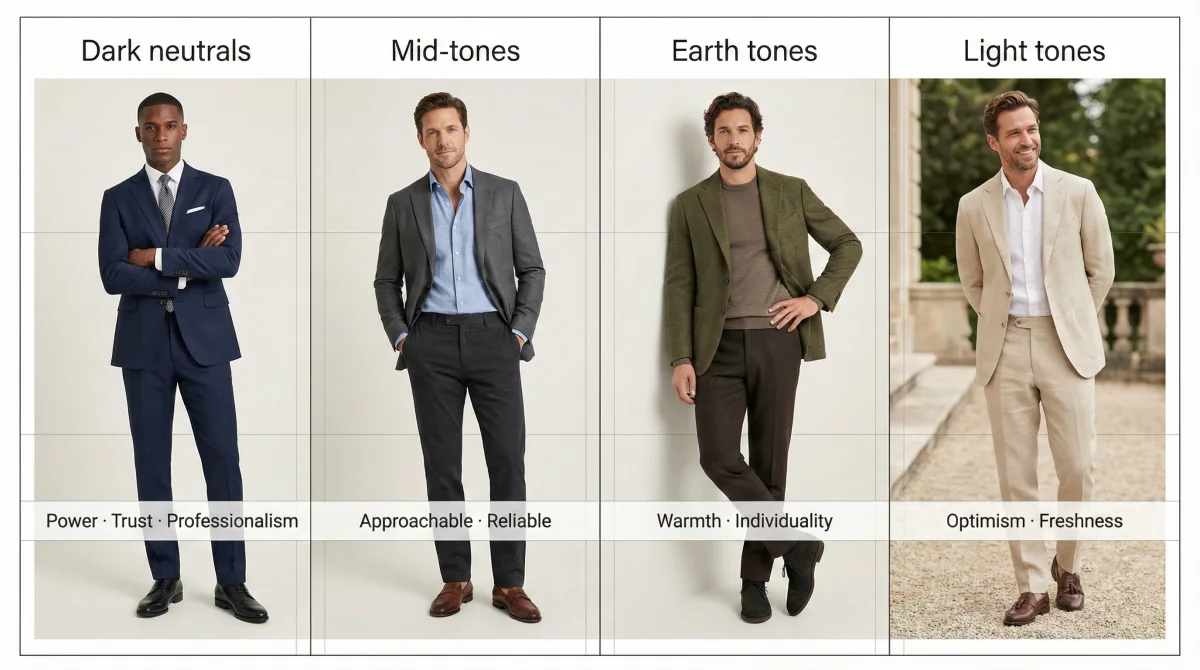
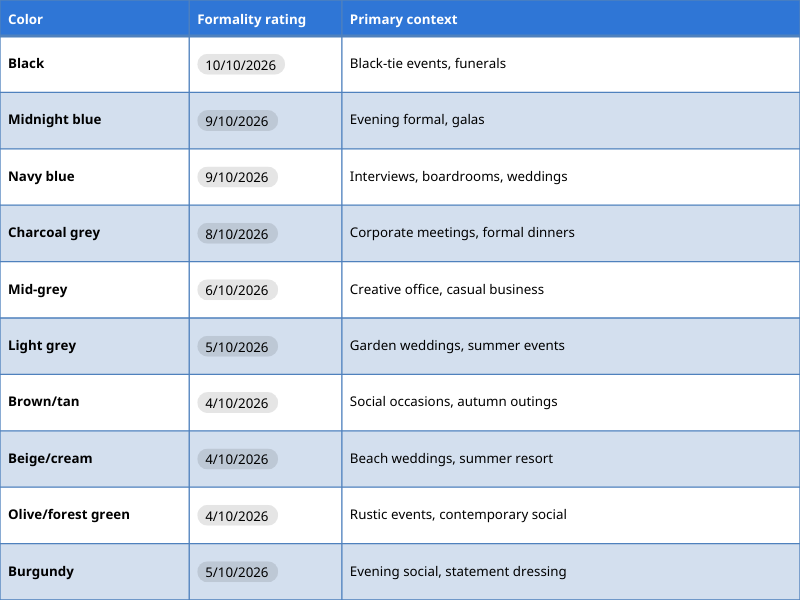
- Dark neutrals (navy, charcoal, black): signal power, stability, and professionalism. Ideal for boardrooms, court appearances, and formal ceremonies.
- Mid-tones (medium grey, mid-blue): project approachability without sacrificing polish. Suited to client meetings, creative offices, and daytime networking.
- Earth tones (olive, brown, camel): communicate warmth, individuality, and a relaxed confidence. Best for social occasions, autumn weddings, and countryside settings.
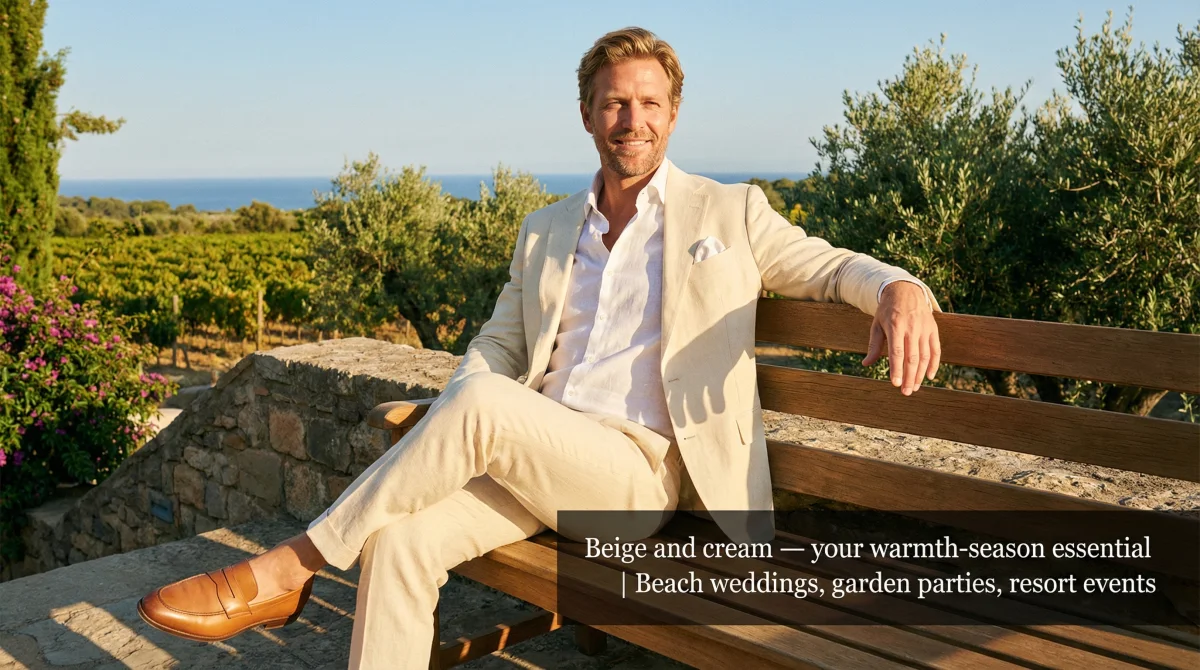
- Light and pastel tones (beige, cream, light blue, blush): suggest optimism and freshness. Perfect for summer weddings, garden parties, and resort events.
1.2. The formality scale at a glance

2. The foundational suit colors every man should know
Every wardrobe begins with a core palette. These are the suits colors for men that deliver the greatest return across the widest range of situations.
2.1. Navy blue the universal workhorse
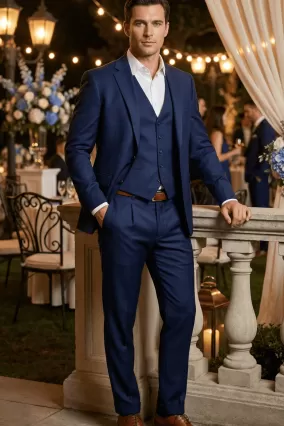
Navy blue is the single most important suit color a man can own. It sits at the precise intersection of authority and approachability formal enough for a board meeting, relaxed enough for a daytime wedding. Unlike black, it works under both natural and artificial light without looking harsh or flat. Navy also pairs with virtually every shirt and tie combination, and it accommodates both black and brown leather footwear. That flexibility makes it the ideal first suit and the natural cornerstone of a rotating wardrobe.
Best for: Job interviews, client presentations, weddings, business travel, and everyday office wear.
Pairs well with: White or light blue shirts, burgundy or silver ties, and both black oxford and brown leather shoes.

2.2. Charcoal grey authority with versatility
Charcoal grey is the sophisticated alternative to navy. It is the most neutral shade in professional suiting neither warm nor cool which makes it a blank canvas for shirt and tie pairings. A charcoal wool suit accepts bold accessories in a way that navy cannot.
From a physiological standpoint, charcoal adds perceived maturity. For younger men entering high-stakes roles, it reads as more experienced than navy. It is also the most practical color for heavy daily use: charcoal worsted wool conceals minor wear, light stains, and creasing better than lighter shades.
Best for: Corporate environments, financial and legal sectors, formal dinners, and winter events.
Pairs well with: White shirts, patterned ties in any hue, black leather shoes, and clean silver accessories.
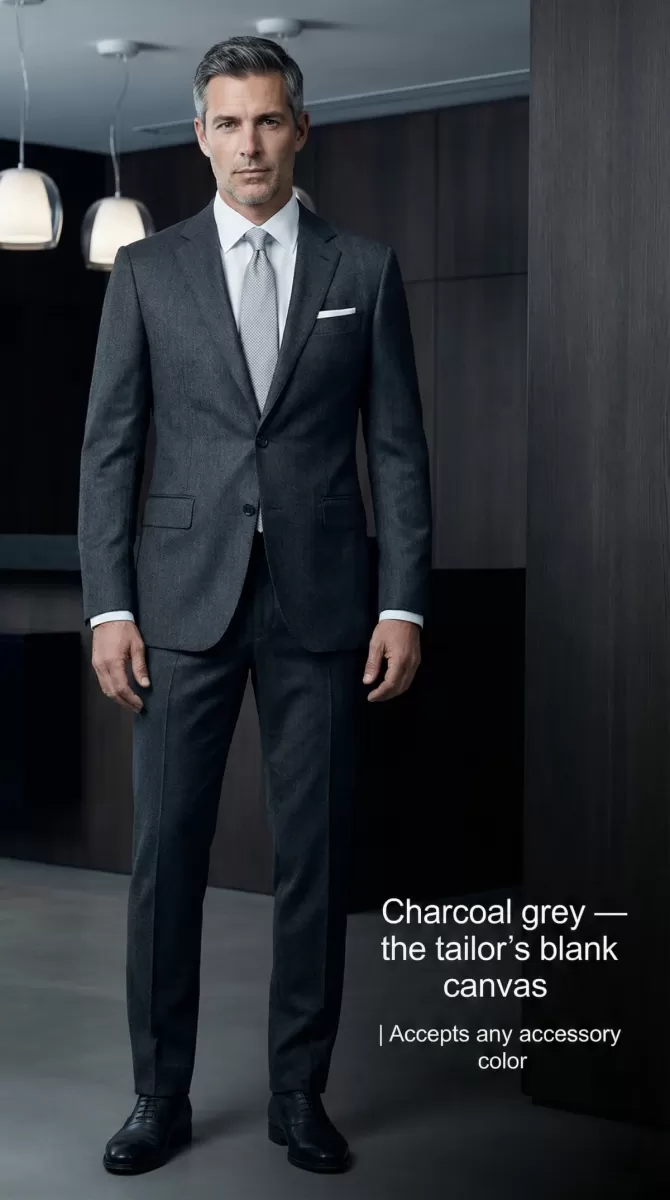
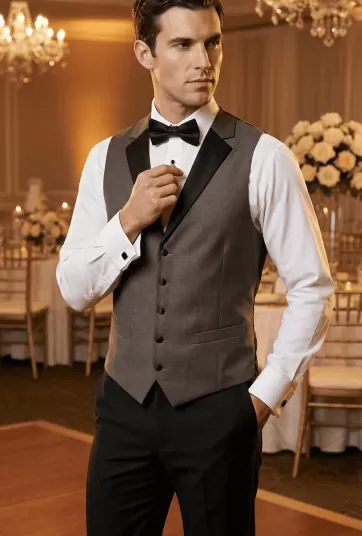


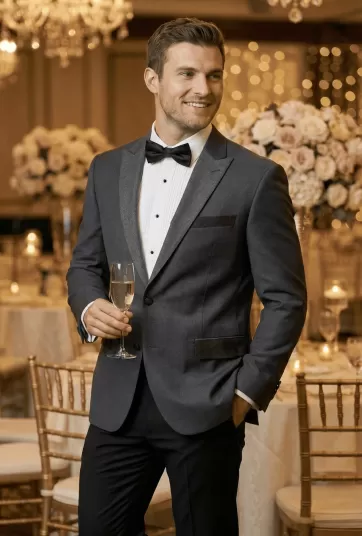
Charcoal Taupe Wool-Blend Six-Button Tuxedo Vest - M4HL84
Products in the outfit
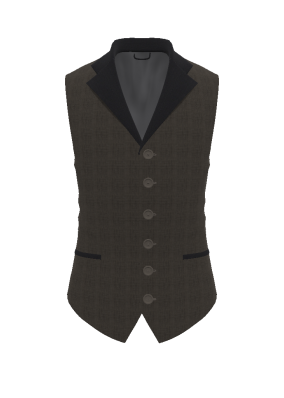
Notch Lapel | 6 Buttons | Single Opening Pocket | Angle Cut | Back Plain
Charcoal Wool-Blend Tuxedo with Black Satin Trim - M4HL82
Products in the outfit
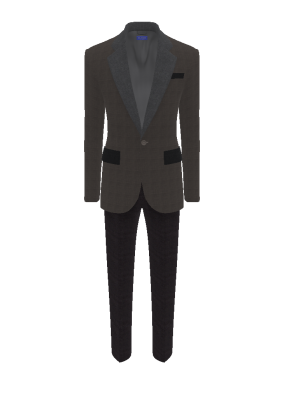
Jacket: 1 Buttons, Single Breasted | RegularNotch LapelNo Buttonhole | Curved | 2 Straight Pockets | 4 Working Buttons | No Vent - Pant: Narrow/Slim | Single Pleat | Slanted Pocket | Back Pocket - Single Opening | Single | Regular Cuff -
2.3. Black evening and evening only
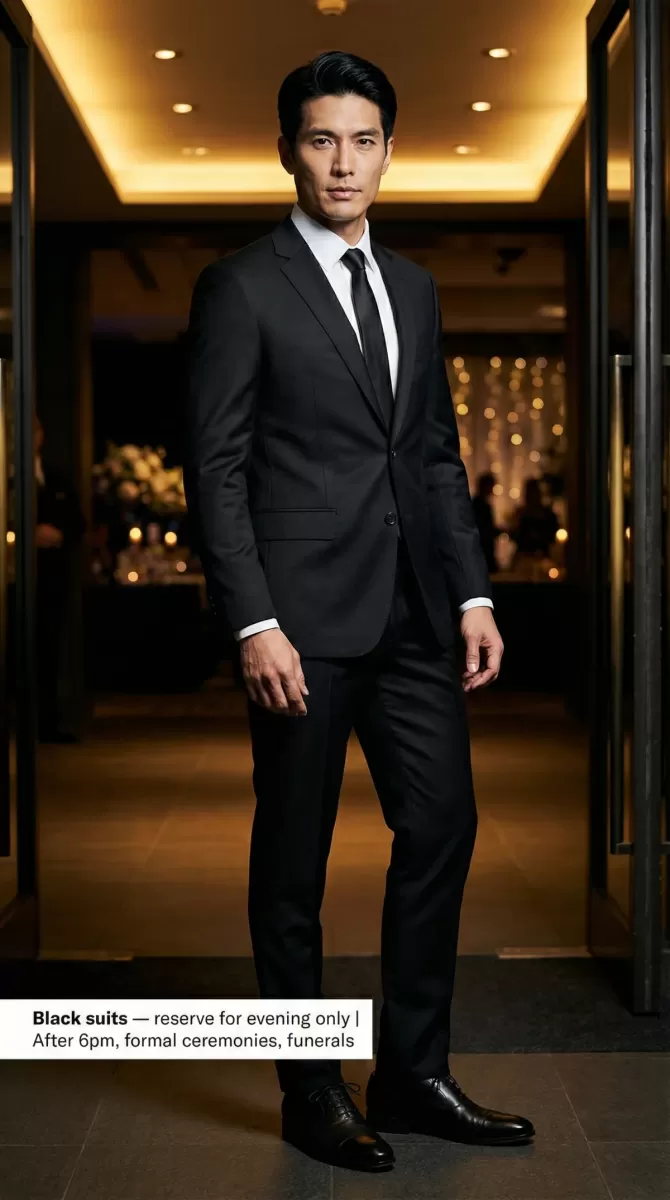
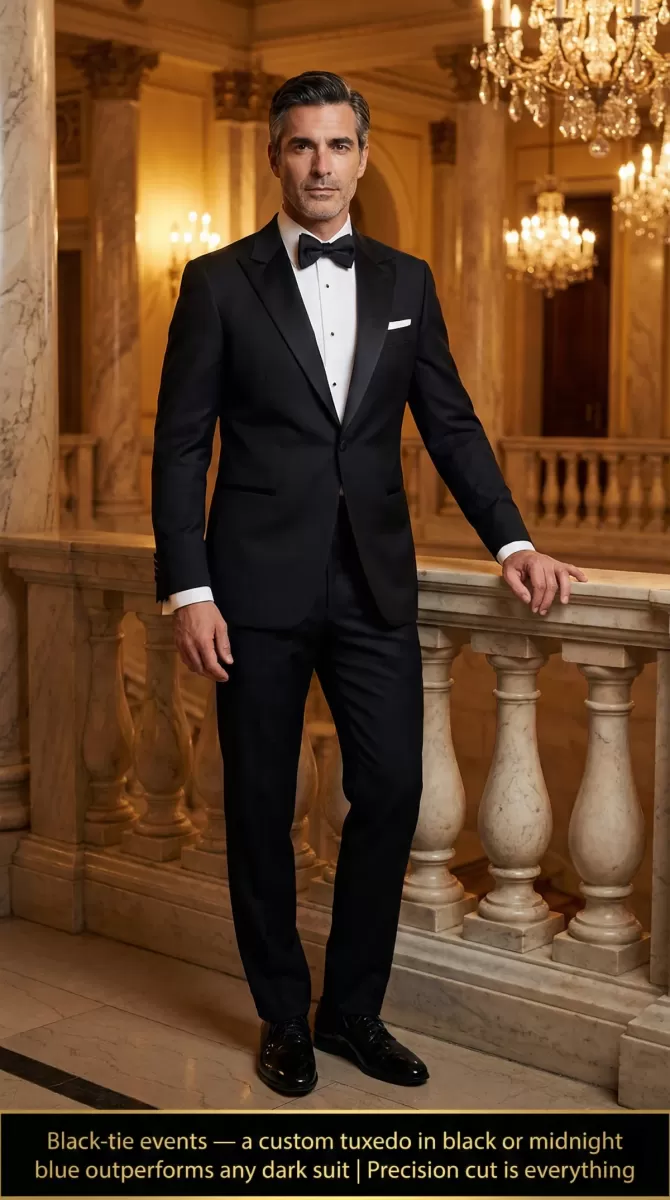
Black is simultaneously the most recognizable and the most misused suit color. In traditional tailoring, black is reserved for evening formalwear and funerals. Under daylight, it can appear flat, even harsh especially against lighter skin tones.
Where black excels is in controlled lighting: evening galas, black-tie-optional events, and late-night celebrations. Men with high-contrast coloring (dark hair against pale skin) carry a black suit particularly well, as their natural contrast mirrors the garment's sharpness.
If black is on your list for formal events, a custom tuxedo in a slim, precise cut will always outperform an off-the-rack black suit in terms of impact and refinement.
Best for: Black-tie events, evening galas, funerals, and formal ceremonies after 6pm.
Avoid: During daylight, in casual settings, or when you want to look approachable.
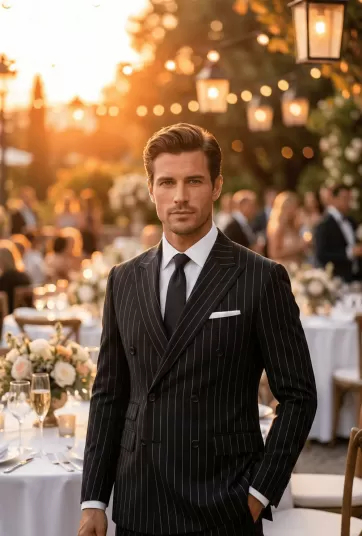
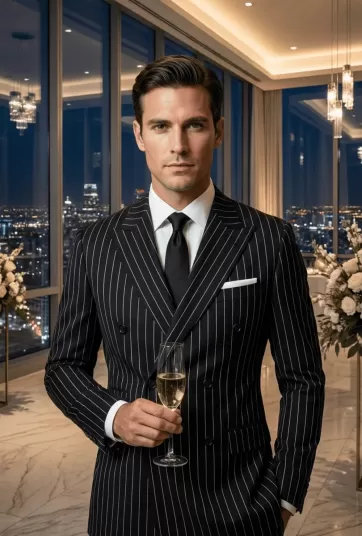
Black Pinstripe Double-Breasted Blazer
Products in the outfit
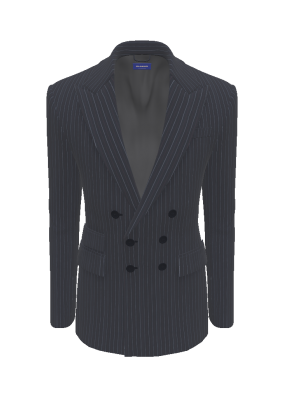
6 Buttons, Double Breasted (2 to Close) | RegularPeak LapelNo Buttonhole | Straight | 2 Straight & 1 ticket pockets | 4 Standard buttons | Side vent
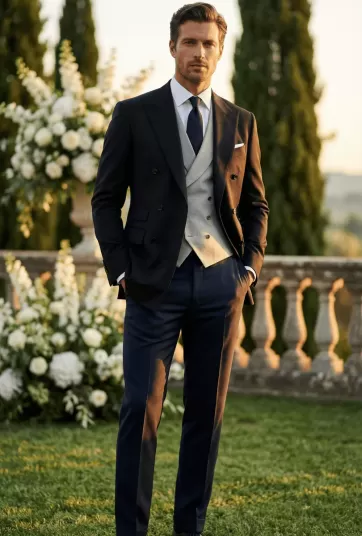


Black Double Breast, Grey Vest, & Navy Pleated Trousers - M3HL44 | M3HL45 | NHDM2 |
Products in the outfit
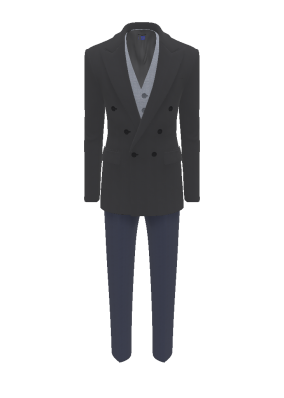
Jacket: 6 Buttons, Double Breasted (1 to Close) | LargerPeak LapelNo Buttonhole | Straight | 2 Straight Pockets | 4 Standard buttons | Side vent - Pant: Narrow/Slim | Single Pleat | Slanted Pocket | Back Pocket - Single Opening | Single | Regular Cuff - Vest: V Neck | 6 Buttons | Single Opening Pocket | Angle Cut | Back Plain -
2.4. Light grey warm-weather professionalism
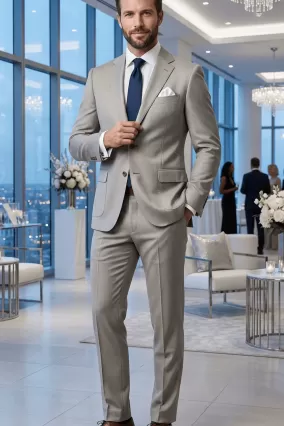
Light grey is the summer professional's solution. It is fresh, airy, and modern qualities that darker shades cannot provide under warm-season conditions. Light grey pairs especially well with pastel shirts in soft pink, lavender, or powder blue, creating a polished yet relaxed aesthetic that works in garden parties, daytime weddings, and creative business environments.
While it lacks the authority of charcoal, light grey conveys a contemporary sensibility that increasingly reads as refined in casual-formal contexts.
Best for: Spring and summer occasions, daytime weddings, garden parties, and creative office environments.
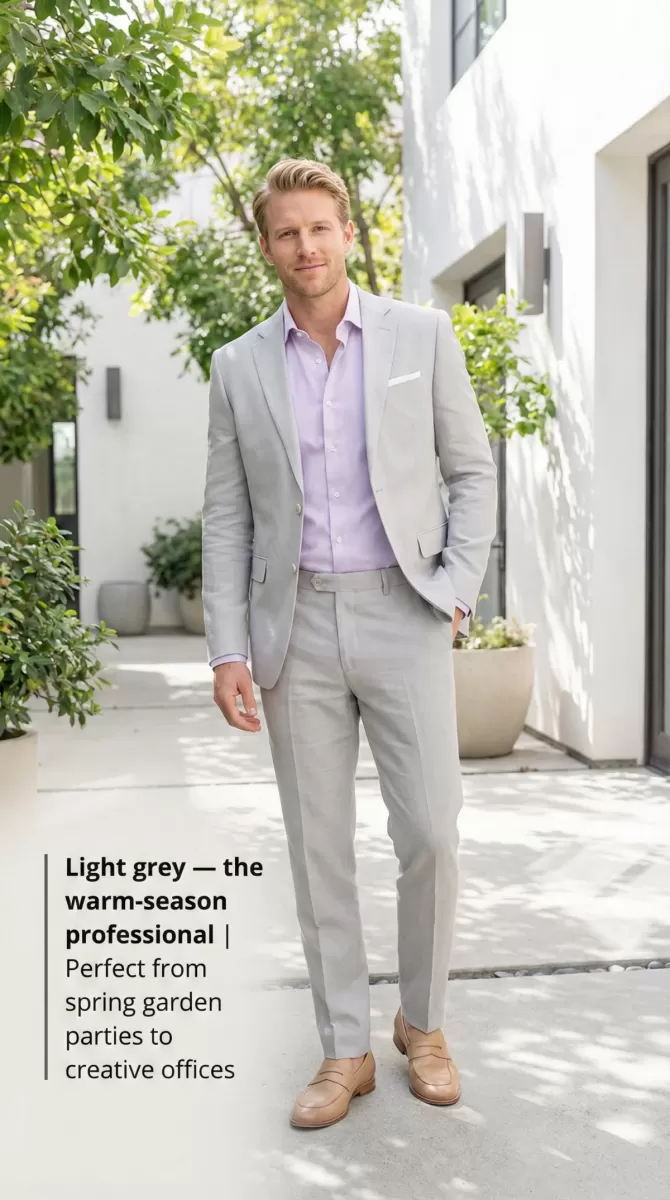
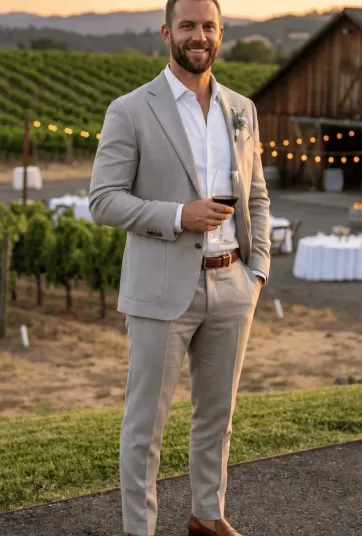


Light Gray Beige Two-Button Patch Pocket Suit - NHDM2
Products in the outfit
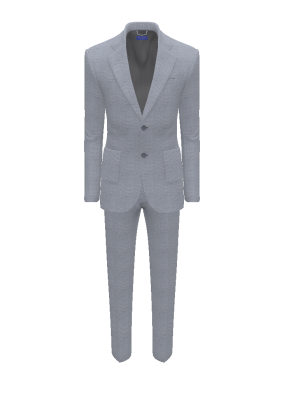
Jacket: 2 Buttons, Single Breasted | RegularNotch LapelNo Buttonhole | Curved | 2 Patched pockets - Pant: Narrow/Slim | Single Pleat | Slanted Pocket | Back Pocket - Single Opening
3. Beyond the basics: Expanding your suit color palette
Once the core two or three suits are in place, expanding into these shades brings both versatility and personality to your wardrobe.
3.1. Midnight blue sharper than black in low light
Midnight blue is the insider's alternative to a black evening suit. Visually, it appears nearly black under most artificial lighting, but unlike true black, midnight blue absorbs light in a way that reads as rich and deep rather than flat. Under the right lighting at a formal event, it actually looks sharper than black.
This makes midnight blue the preferred choice of style-conscious men for evening formalwear. It photographs elegantly in soft, low light a significant advantage for weddings and galas.
Best for: Evening formal occasions, galas, high-end dinners, and groom attire.

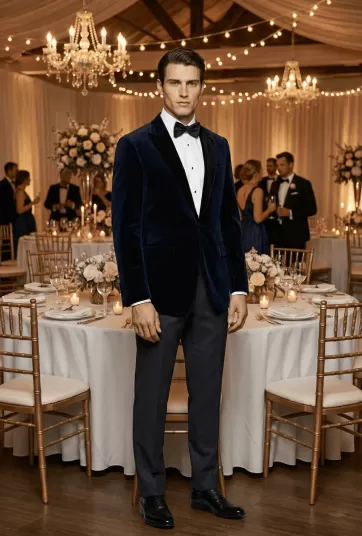
The midnight navy blue peak dinner suits - M3HL54
Products in the outfit
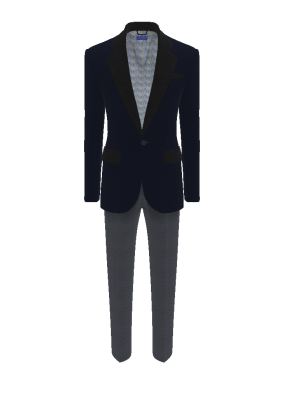
Jacket: 1 Buttons, Single Breasted | RegularNotch LapelNo Buttonhole | Curved | 2 Straight Pockets | 4 Working Buttons | No Vent - Pant: Narrow/Slim | Single Pleat | Slanted Pocket | Back Pocket - Single Opening | Single | Regular Cuff -
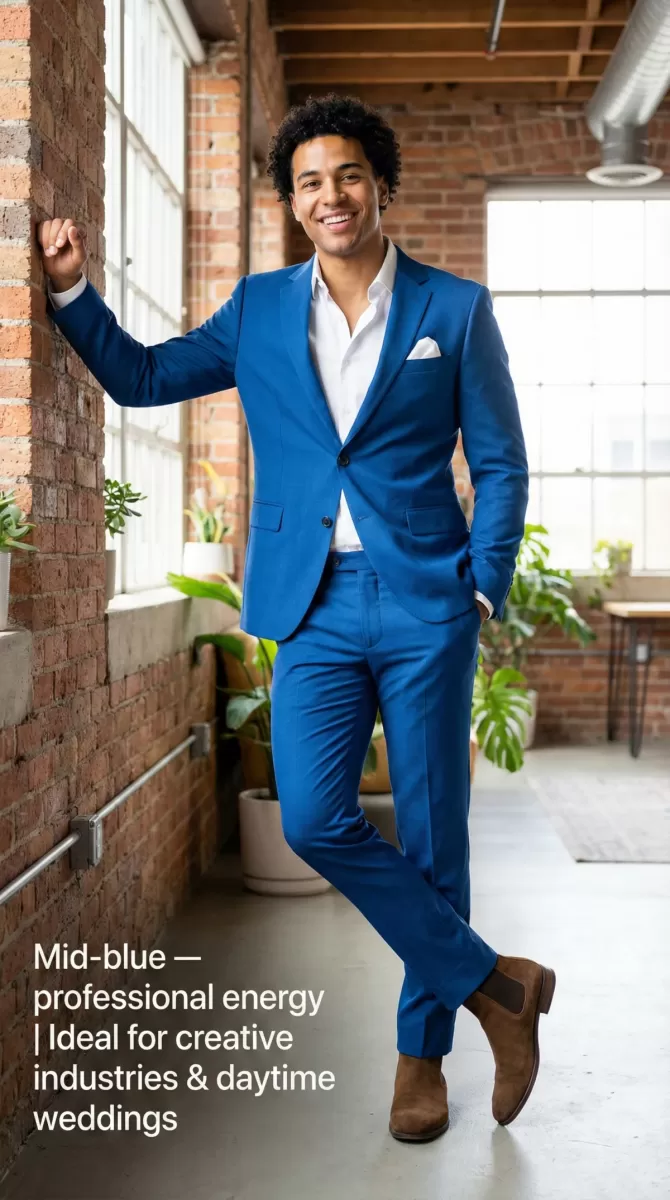
3.2. Mid-blue and royal blue modern and expressive
Mid-blue sits between the restraint of navy and the vibrance of a true sky blue. It is a particularly effective choice in creative industries, modern tech, and daytime weddings where the goal is polished energy rather than corporate solemnity. Royal blue and electric blue push further into statement territory not conventional business choices, but confident and well-suited to younger men who want to make an impression at social events.
Best for: Creative offices, daytime weddings, modern formal events, and men who want distinct personality without straying too far from blue.
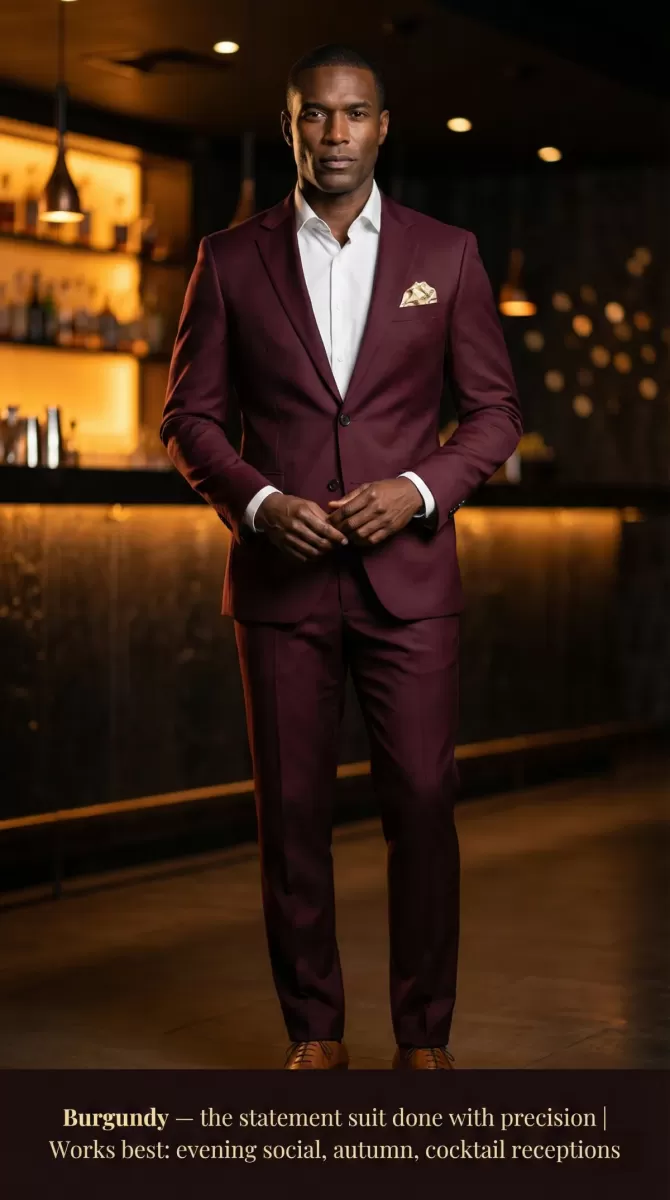
3.3. Burgundy a bold statement done right
Burgundy (sometimes called maroon or oxblood) has moved from niche to mainstream in men's suiting over the past few years. It carries a richness that reads as sophisticated without the rigidity of navy or charcoal. When worn with the right accessories a white dress shirt, brown leather brogues, a patterned pocket square in cream or gold a burgundy suit becomes one of the most memorable looks a man can put together.
Best for: Evening social events, engagement parties, cocktail receptions, and autumn occasions.
Pairs with: White, cream, or dove grey shirts. Brown leather footwear in tan or cognac. A structured pocket square in gold or cream.
3.4. Earth tones: Brown, tan, camel, and olive green
Earth tones represent the modern evolution of relaxed professional dressing. Chocolate brown, espresso, tobacco, camel, and tan are all warm alternatives that carry an inviting, grounded quality. The old British tailor's rule of "no brown in town" has effectively been retired; today, these shades appear regularly in prestigious city offices and high-end social environments across London, Sydney, and New York.
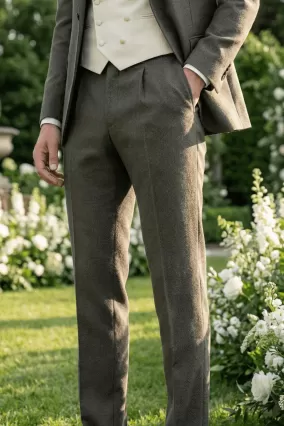
Olive green and forest green occupy a similar space earthy, modern, and distinctly individual. Darker olive tones function almost like a neutral for social occasions and autumn events, while forest green draws comparison to navy in terms of visual depth.
Best for: Autumn weddings, rustic or outdoor events, countryside occasions, and stylish casual social.

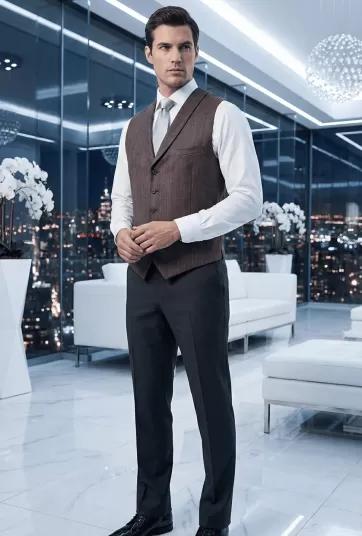
Mahogany-Gray Heathered Twill Five-Button Wedding Vest
Products in the outfit
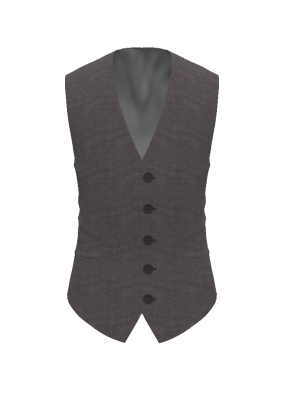
V Neck | 5 Buttons | Single Opening Pocket | Angle Cut | Back Plain

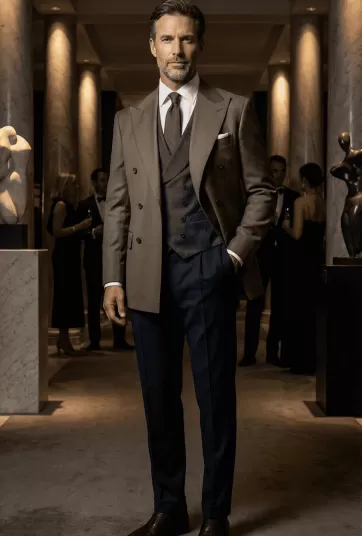
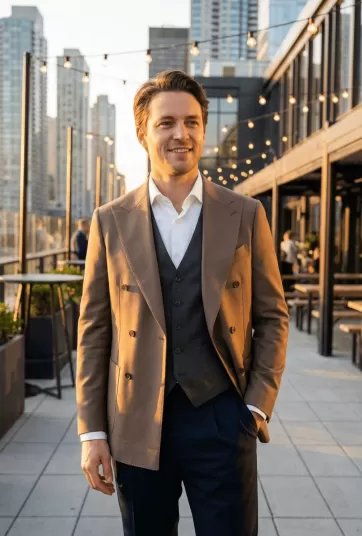
Taupe Brown jacket - Charcoal Grey vest - Navy trousers
Products in the outfit
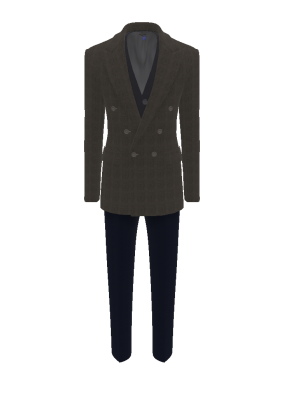
Jacket: 6 Buttons, Double Breasted (1 to Close) | LargerPeak LapelNo Buttonhole | Straight | 2 Straight Pockets | 4 Standard buttons | Side vent - Pant: Narrow/Slim | Single Pleat | Slanted Pocket | Back Pocket - Single Opening | Single | Regular Cuff - Vest: V Neck | 6 Buttons | Single Opening Pocket | Angle Cut | Back Plain -
3.5. Beige and cream summer and resort events
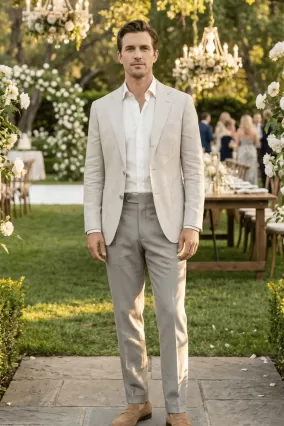
Beige, cream, and champagne suits occupy the most relaxed end of the formal color spectrum. Made typically in lightweight cotton, linen-cotton blends, or pure linen, these shades are the natural pairing for warm-weather occasions beach weddings, destination ceremonies, summer garden parties, and resort events. They keep the wearer cool while maintaining an elegantly dressed appearance.
Note on champagne: Champagne is technically distinct from beige it carries a subtle sheen that catches light differently and reads as more dressy than a flat beige.
Best for: Beach weddings, destination events, summer garden parties, and tropical occasions.
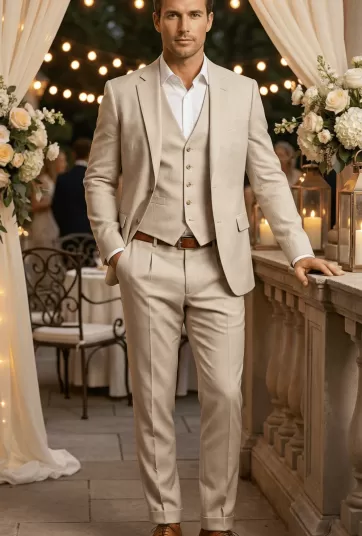


Beige Twill Slim-Fit Pleated Dress Pants - NHDM11
Products in the outfit
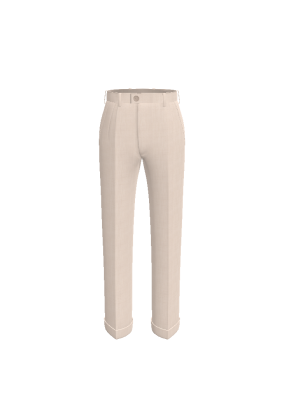
Normal/Straight | Double Pleats | Slanted Pocket | Back Pocket - Single Opening | Single | Cuff Cuff
4. How to choose suit color based on your skin tone and hair color
One of the most overlooked factors when deciding what suit color to choose is the relationship between fabric shade and your natural coloring. The right suit color enhances your complexion; the wrong one draws attention away from your face and toward the garment.
4.1. Understanding your undertone (cool, warm, neutral)
Your skin undertone is the base hue beneath the surface of your skin:
- Cool undertones: Pink, red, or bluish hues. Common in men with fair skin and dark hair, or lighter skin with visible blue veins on the wrist.
- Warm undertones: Yellow, gold, or peach hues. Common in men with olive, tan, or golden complexions.
- Neutral undertones: A balance of both. Men in this category have the greatest flexibility across suit color choices.
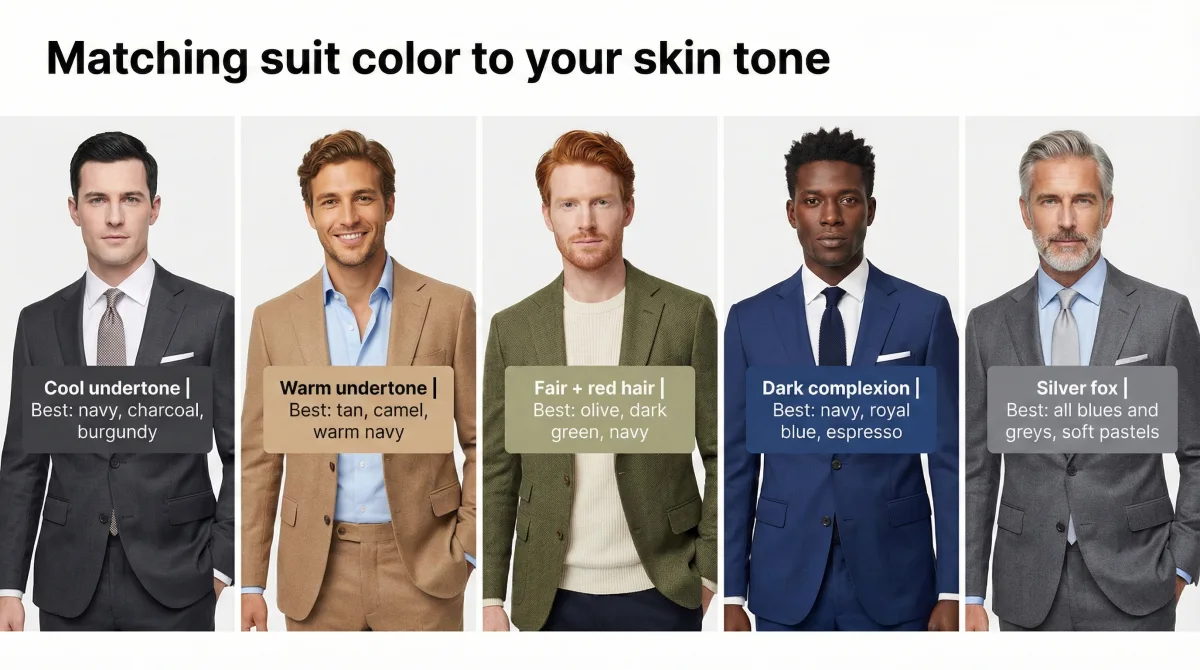
4.2. Suit colors by skin tone
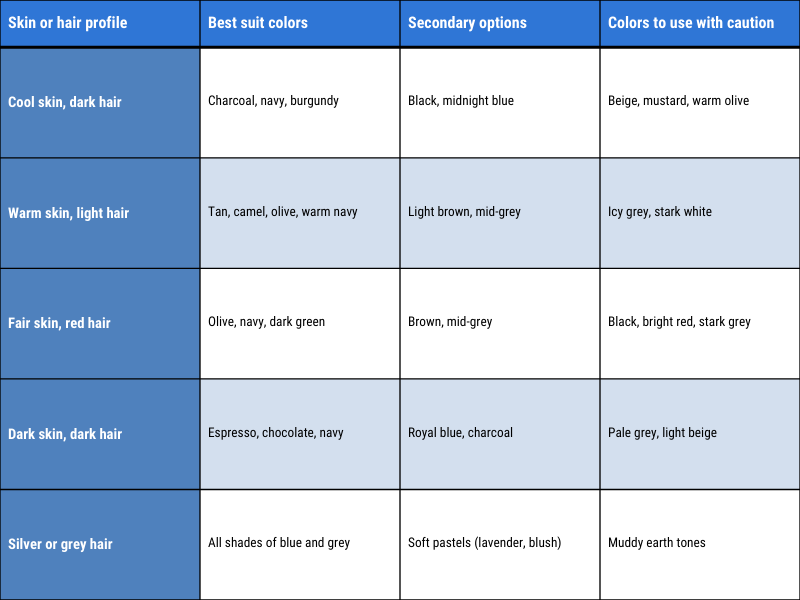
4.3. The hair contrast rule
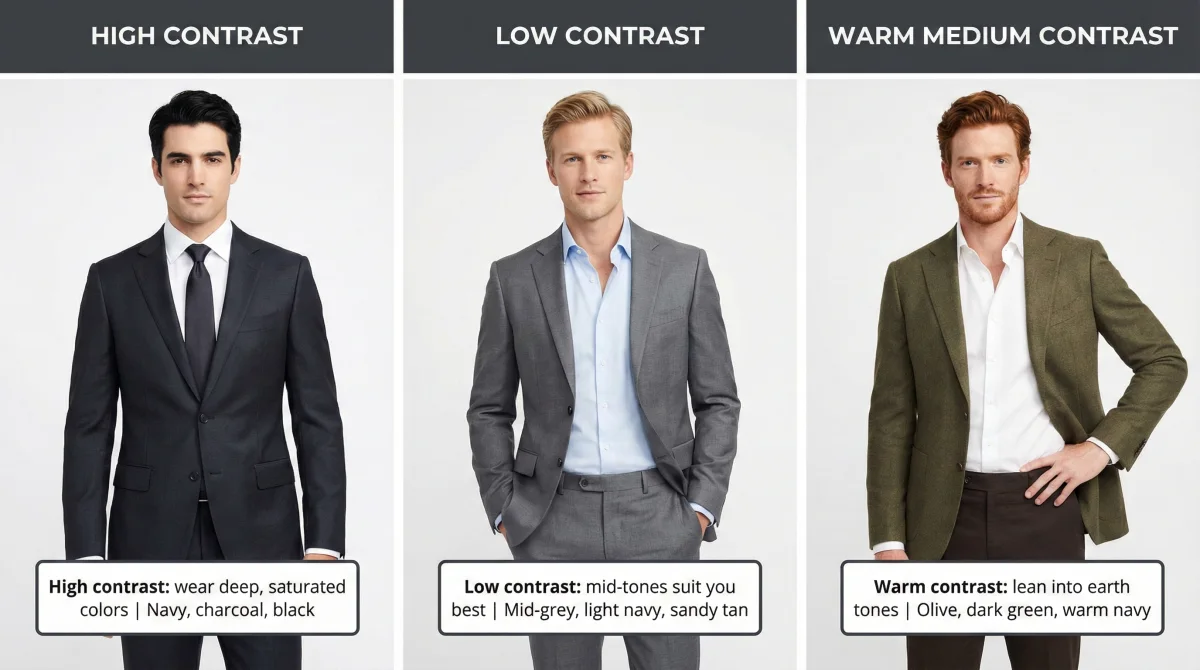
Beyond undertone, the level of contrast between your hair and skin determines how intense your suit color should be:
- High contrast (dark hair against fair skin): You carry deep, saturated colors naturally. Navy, charcoal, and even black work in your favor.
- Low contrast (blonde or light brown hair against fair skin): Very dark colors risk overpowering your features. Mid-grey, lighter navy, and sandy tan are more flattering.
- Warm, medium contrast (auburn or red hair): Lean into warm palettes olive, dark green, brown, and warm navy. Avoid stark black and cold greys.
- Silver or white hair: Sometimes called the "silver fox" effect, this coloring pairs particularly well with rich blues, greys, and occasionally soft pastels.
4.4. Suit colors for specific body types
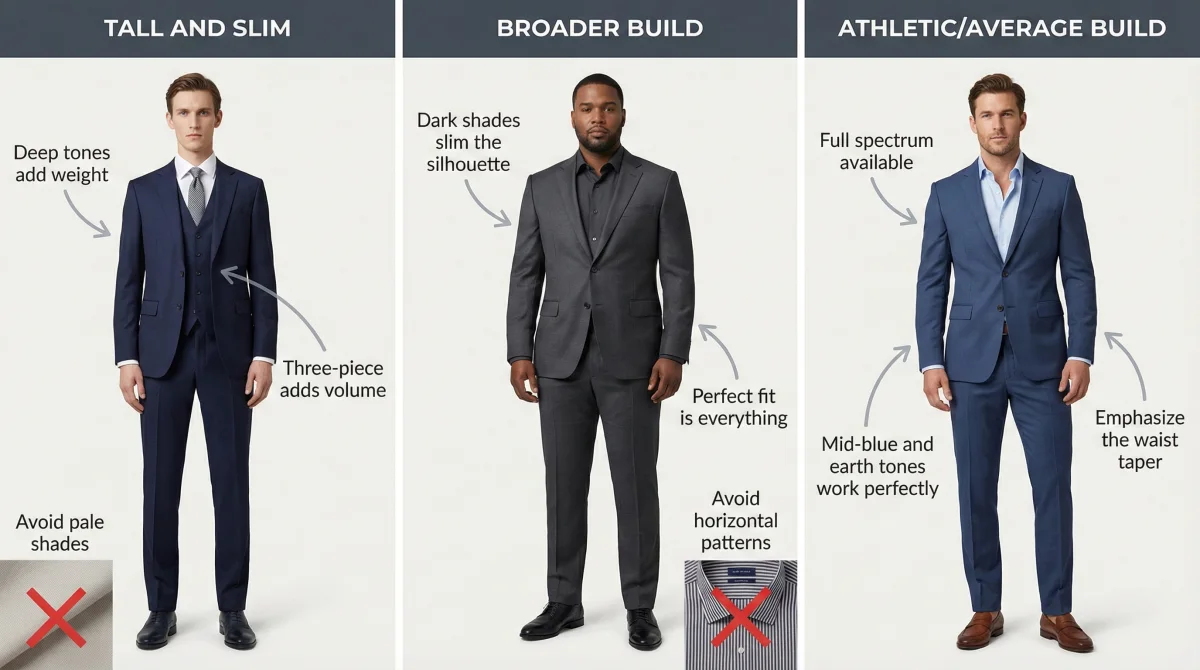
For taller, slimmer men:
- Deep, rich colors (charcoal, midnight blue, dark green) add visual weight and substance.
- Avoid very pale shades such as cream or light grey if you want to appear less slight.
- Three-piece suits in deep tones are an excellent option.
For broader or heavier builds:
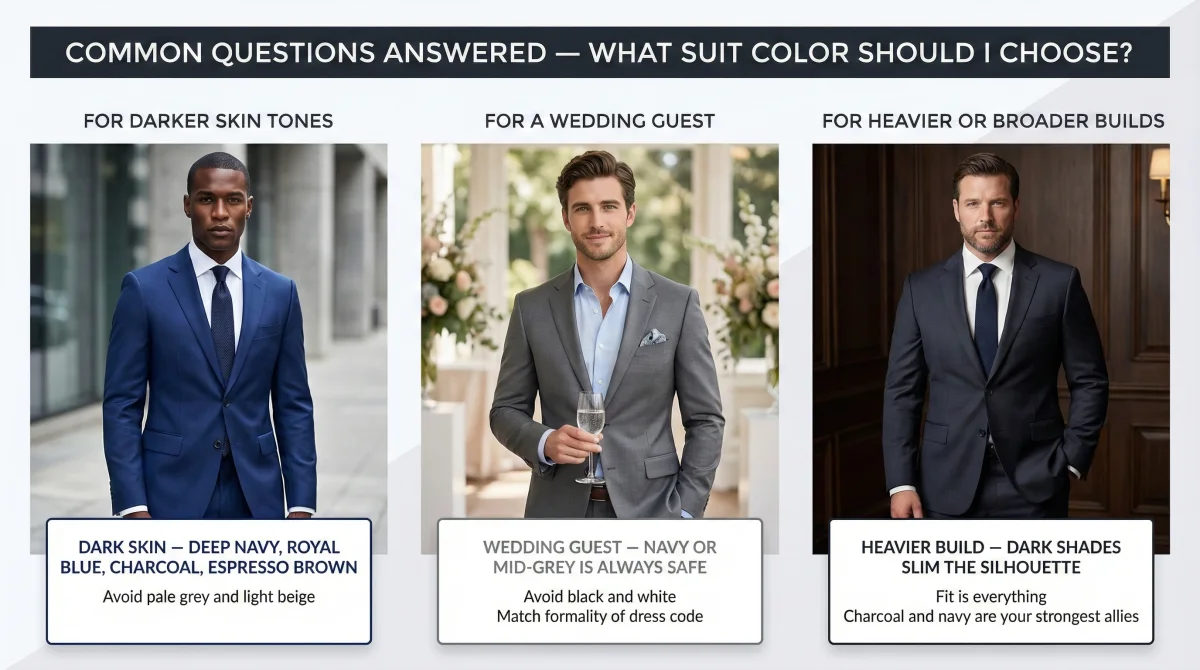
- Darker shades create a slimming silhouette navy and charcoal are your best allies.
- Avoid horizontal patterns or very light tones, which add visual width.
- A well-tailored custom suit in a precision fit matters more than color alone in this context.
For average or athletic builds:
- The full spectrum is available. Focus on occasion and undertone rather than body-type constraints.
- Mid-blue, charcoal, and earth tones all work well with broader shoulders and a tapered waist.
5. Choosing your suit color by occasion
The purpose of the suit always takes priority over personal preference. Matching the formality of your color to the context of the event is one of the clearest signals of social intelligence.
5.1. Job interviews and corporate offices
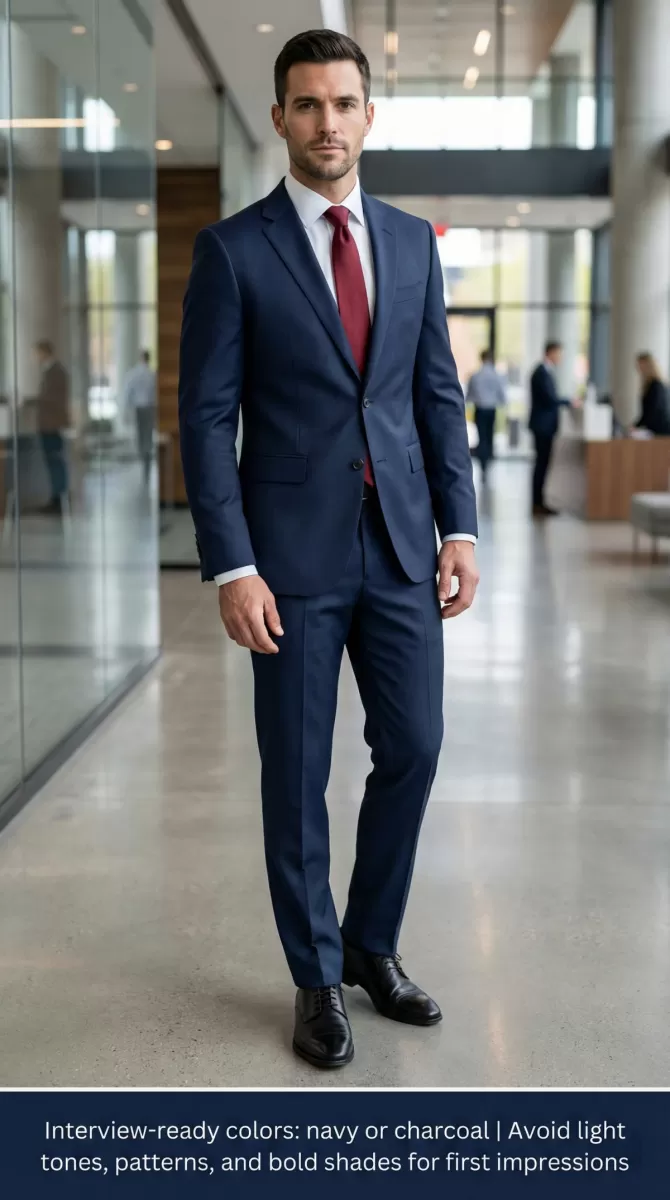
In conservative sectors finance, law, executive management the color palette is deliberately narrow. Navy and charcoal grey remain the standard for interviews and high-stakes client meetings. Both colors project professionalism, authority, and trustworthiness without distraction.
- First interview or competitive role: Navy blue with a white shirt and a conservative tie.
- Creative industry interview: Mid-blue or medium charcoal with an open-collar shirt.
- Hybrid or virtual settings: Structured blazers in textured greys or vibrant blues photograph well on camera. Avoid white shirts that can blow out under lighting; avoid black that flattens on screen.
5.2. Business networking and client meetings
Networking events and client meetings allow slightly more flexibility than formal interviews. Mid-grey, mid-blue, and even a structured olive blazer paired with dark trousers are all viable. The goal is professionalism with a touch of personality colors that invite conversation rather than commanding the room.
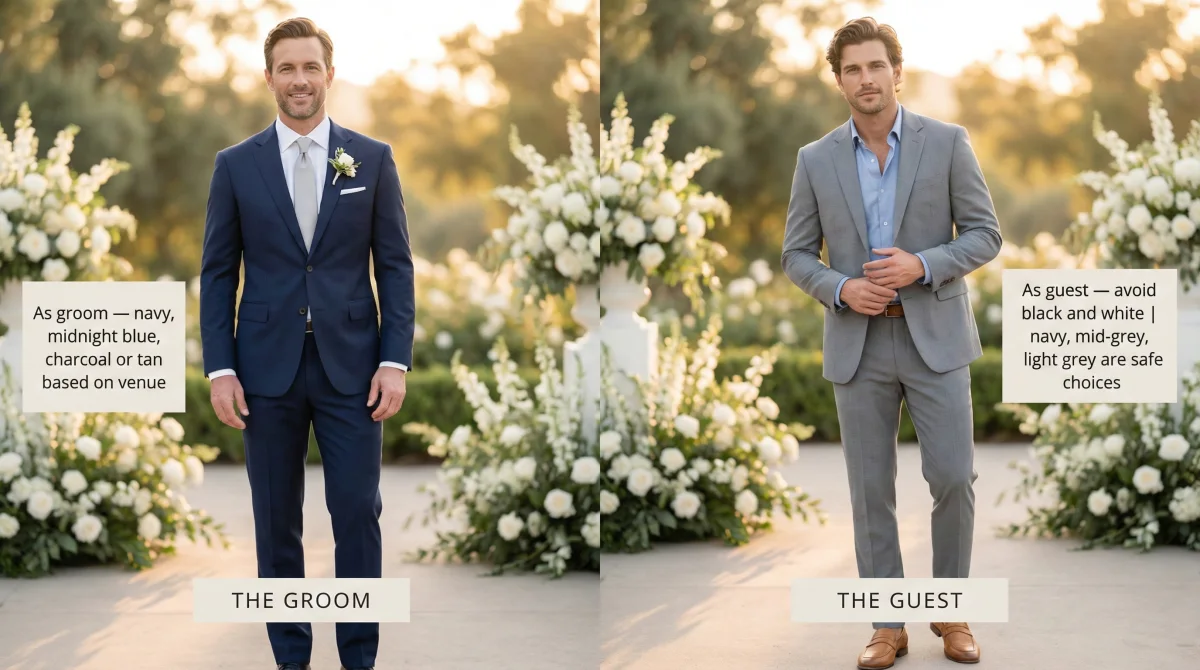
5.3. Weddings as groom and as guest
As the groom:
Weddings are the occasion when suit color becomes a deeply personal and considered decision. The most important factor is harmony with the wedding's color palette and venue style:
- Classic and traditional venues: Navy, charcoal, or black suit. For something more elevated, a custom wedding suit in midnight blue or tuxedo styling reads as refined and timeless.
- Outdoor or rustic venues: Tan, light grey, olive, or warm brown. Linen wedding suits in beige or grey are particularly suited to warm-weather outdoor ceremonies.
- Beach or destination weddings: Cream, beige, or light blue. Breathable, lightweight fabrics are essential.
- Modern or contemporary venues: Midnight blue, forest green, or deep burgundy with sharp tailoring.
A custom wedding vest adds a layer of distinction to any groom's look, particularly in a three-piece arrangement where the waistcoat is used to anchor the color scheme.
As a wedding guest:
- Avoid black (unless explicitly stated as black-tie) and white (reserved for the couple).
- Navy and charcoal are always safe choices.
- Light grey, mid-blue, and tan are increasingly popular and appropriate for daytime weddings.
- Match the formality of your color to the event's dress code.
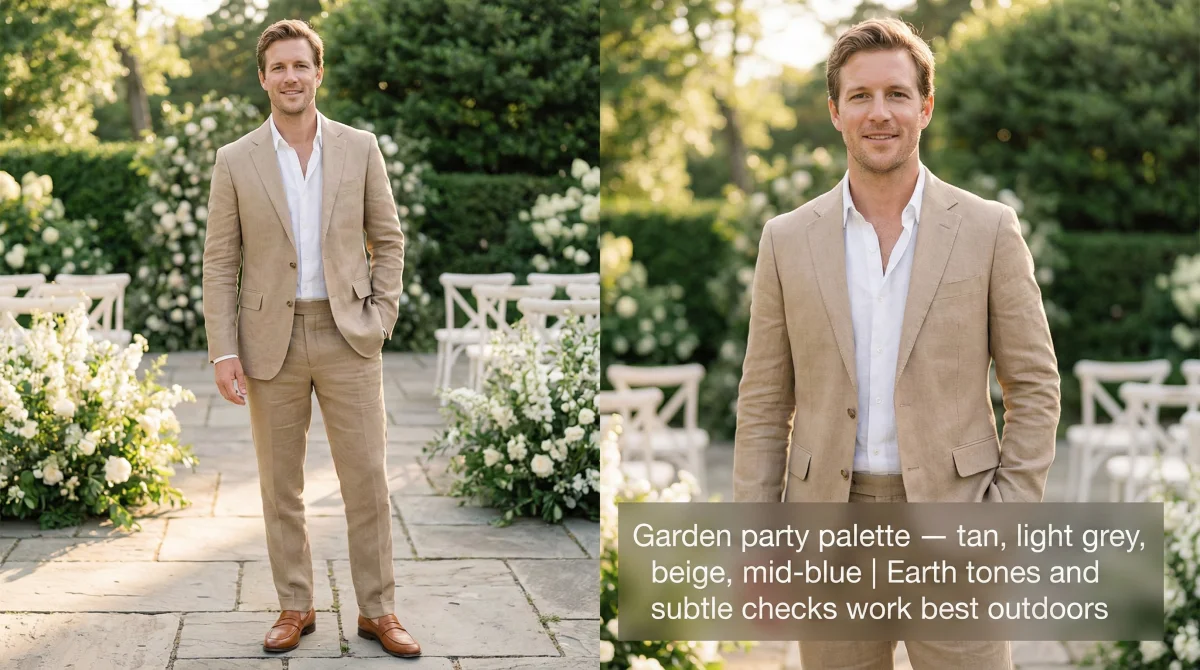
5.4. Garden parties, outdoor events, and casual socials
Outdoor and casual formal events allow the widest range of suit colors. Lighter shades that would appear too relaxed in a corporate context light grey, tan, beige, mid-blue are exactly right here. Earth tones and subtle patterns (herringbone, check) suit rustic outdoor settings particularly well.
5.5. Evening galas and black-tie events
Evening formalwear operates on a strict formality hierarchy. When the dress code reads black-tie or black-tie optional, a dark suit or custom tuxedo is required. The most refined options are black, midnight blue, and deep charcoal.
6. Suit colours by region and climate
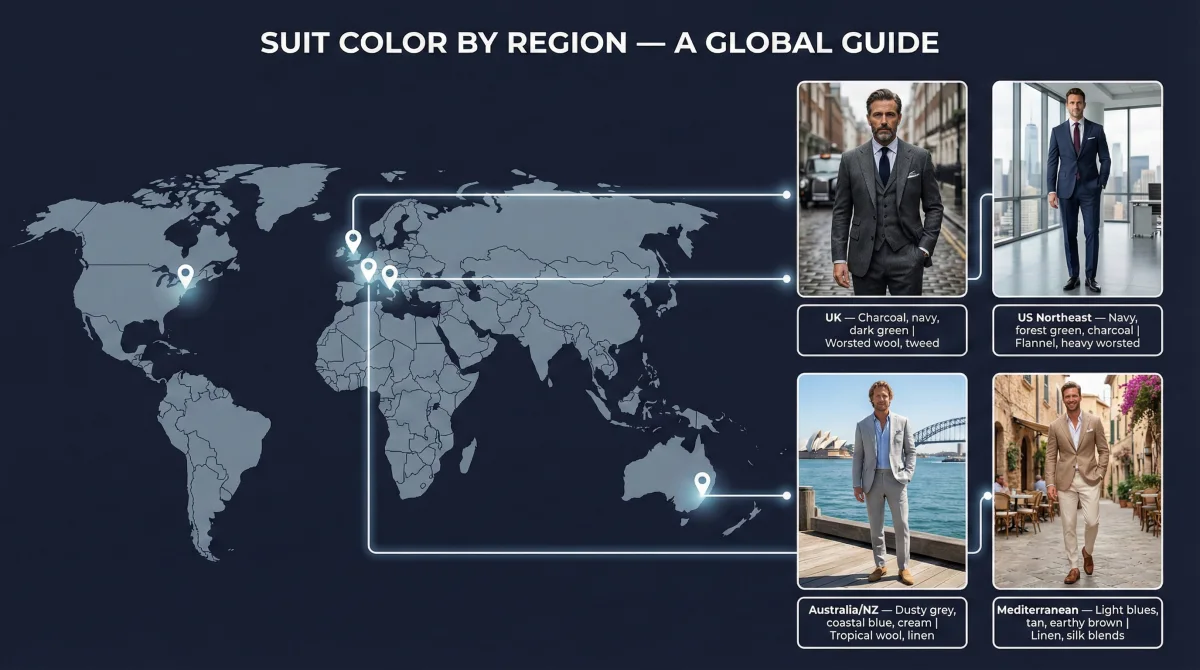
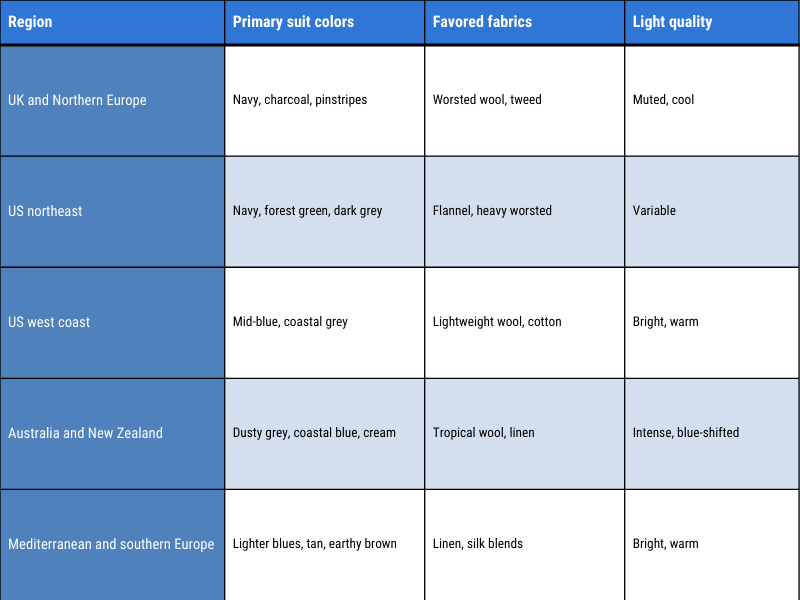
Geography shapes suit color choices more than most men realize. The intensity and quality of natural light varies significantly by region, and both climate and cultural tradition influence what colors are perceived as appropriate.
6.1. UK and cool-climate dressing autumn and winter
The British suiting tradition is built on structured, sober simplicity. The muted, cool-toned light of London and the UK generally enhances darker shades navy, charcoal, and dark forest green all perform exceptionally well. Earth tones and tweeds are standard for "country" settings outside the city, while the formal city palette remains navy and charcoal.
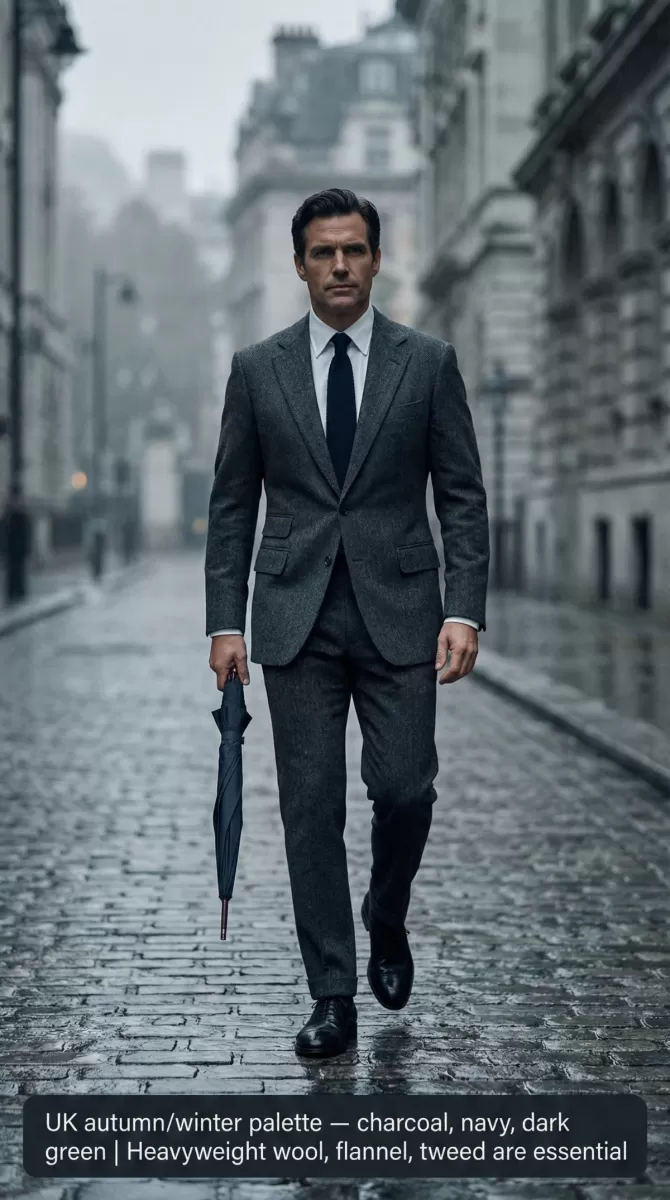
What suit color to choose for autumn in the UK?
Charcoal wool, dark navy, or rich brown. Flannel and heavyweight worsted wool are the preferred fabrics.
What suit color to choose for winter in the UK?
Deep navy, charcoal, or midnight blue in heavier weights. A well-insulated wool suit in these shades looks authoritative in the pale, grey winter light.
6.2. Australian summer what suit color to choose in warm weather
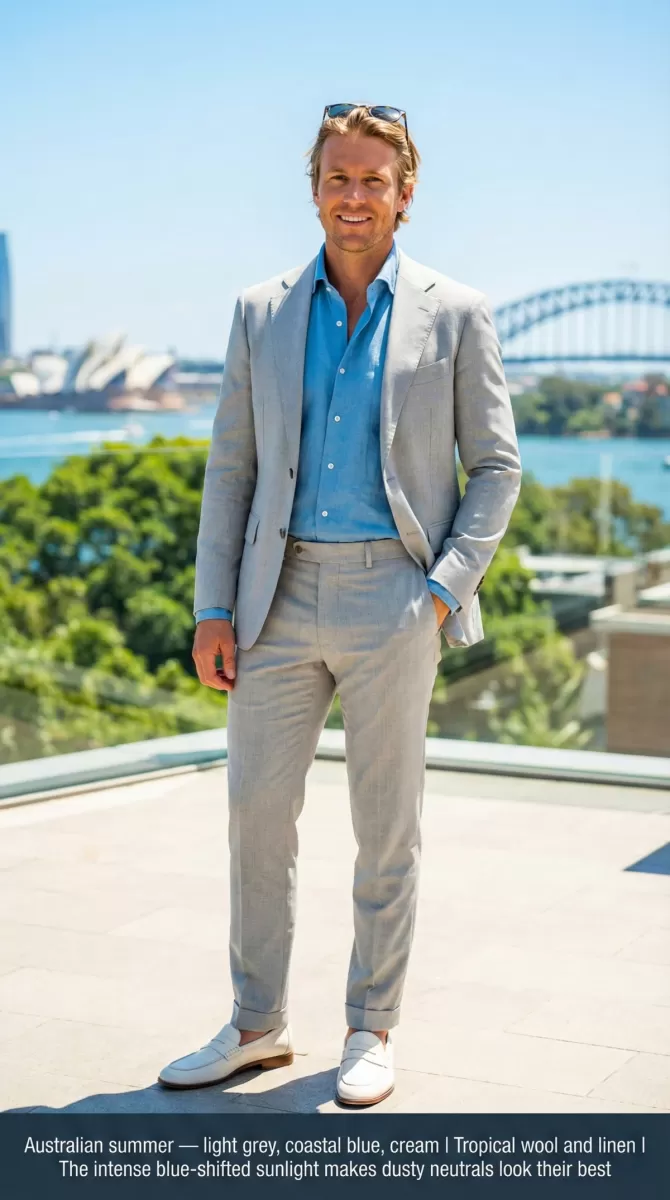
Australia's sunlight is notably more intense and "bluer" than Northern Hemisphere light due to the tilt of the Earth's axis. This heightened intensity makes "greyed" and dusty tones appear crisper and cleaner rather than washed-out, while very warm tones like bright orange or mustard can appear garish under strong sun.
What suit color to choose for summer in Australia?
Light grey, coastal blue, cream, or beige in lightweight linen or tropical wool. These shades harmonize with bright skies and greenery without competing.
What suit color to choose for spring in Australia?
Mid-grey, mid-blue, or tan. Clean, mid-saturation tones that look polished in transitional light.
What suit color to choose for autumn in Australia?
Olive, warm navy, or mocha brown. Slightly richer tones that transition naturally as the light mellows.
What suit color to choose for winter in Australia?
Even in cooler Australian winters, the light remains relatively intense. Charcoal and navy are appropriate, but mid-weight fabrics are often sufficient rather than the heavyweight wools required in the UK.
6.3. US regional preferences
American suit preferences vary considerably by region:
- Northeast (New York, Boston, Washington): Conservative and close to the British tradition. Navy, charcoal, and forest green are the default professional palette.
- South: Tan, cream, and warm tones carry more cultural acceptance than in the Northeast. Warm-season linen suits in beige and light grey are widely worn.
- West Coast (Los Angeles, San Francisco): The "coastal blue" aesthetic mid-blue and dusty navy is prevalent. Relaxed fits and lighter fabrics reflect the California lifestyle.
- Midwest: Darker navies, taupe, and burgundy tend to resonate in a region that balances practicality with formality.
6.4. Global colour protocol summary
7. Suit color trends for 2025 - 2026
The dominant themes shaping men's formalwear through 2026 are a return to structure, a move toward mood-boosting color, and a growing interest in sustainable construction.
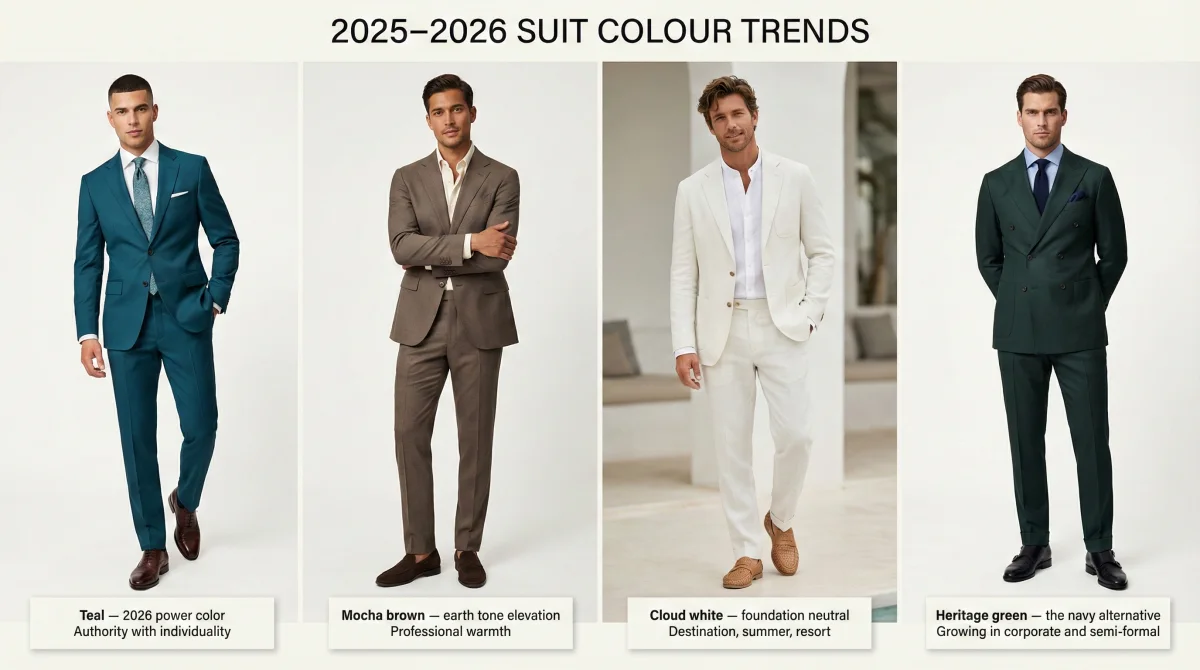
7.1. The power palette: Teal, earthy mocha, and cloud white
Forecasters and tailoring houses have converged on a shared vision for 2026: a "vibrant yet serene" color story that balances emotional expressiveness with professional authority.
The key emerging suit colors for men this season include:
- Rich teal: Positioned as a luxury power color confident, distinctive, and entirely appropriate for high-stakes leadership environments. Less common than navy, which makes it more memorable.
- Earthy mocha and warm brown: The continued rise of earth tones as professional alternatives to grey. Mocha, tobacco, and chocolatey espresso are all gaining serious traction in city suiting.
- Cloud white and off-white: Serving as a foundation neutral for summer collections and destination events. Works best in breathable linen or cotton constructions.
- Heritage greens: Forest green and deep bottle green continue to cement themselves as legitimate navy alternatives for professional and semi-formal settings.
- Accessories trends: Canary yellow and deep red are emerging as statement accessory colors used in ties, pocket squares, and socks to inject energy into traditional grey or blue suits without committing to a bold suit color outright.
7.2. The return of structured tailoring and the three-piece revival
After several seasons of oversized and relaxed silhouettes, 2026 brings a decisive return to precision. Defined shoulders, a tapered waist, and a clean, slim-lined trouser are the hallmarks of the modern tailored look.
Within this structured shift, the three-piece suit is experiencing a renewed moment. The waistcoat has transitioned from a purely formal element to a versatile layering piece worn as a smart-casual blazer substitute over a clean shirt, or as part of a fully coordinated ensemble. A custom 3-piece suit in deep navy or charcoal gives maximum flexibility, with the waistcoat functioning both within and outside the complete three-piece look.
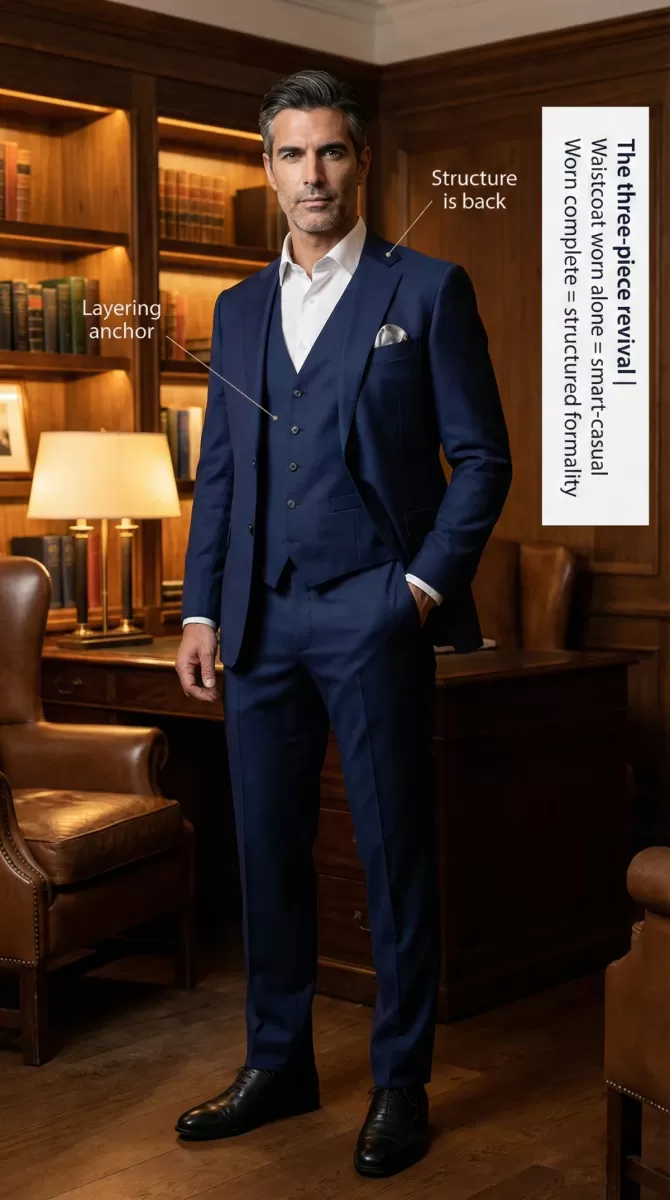
Curate your 3 piece-suits outfit
8. Matching fabric to suit color at Dunnio Tailor
Color does not exist in isolation it is always filtered through the texture, weight, and reflectivity of the fabric. The same shade of navy looks entirely different in a heavyweight flannel versus a lightweight tropical wool.
8.1. Premium fabrics ($99–$135)
Dunnio Tailor's premium fabric range covers a wide variety of weaves and compositions suitable for most occasions and climates:
- Twill (technical) and Oxford weaves: Smooth, structured surfaces that hold navy, charcoal, and mid-grey exceptionally well. Ideal for everyday business suits.
- Barathea: A close-weave fabric with a subtle ribbed texture. Traditionally used in dinner jackets; particularly suited to midnight blue and black.
- Chambray and plain cotton blends: Lighter constructions that work well in mid-blues, tans, and light greys. Appropriate for warmer climates and spring or summer occasions.
- Plain and Hopsack cotton blends: Open weaves that breathe well. Best for beige, cream, and light earthy tones in warm-weather settings.
- Pure linen: The classic summer fabric. Best rendered in cream, beige, light blue, or pale grey. Clean, relaxed, and warm-weather appropriate.
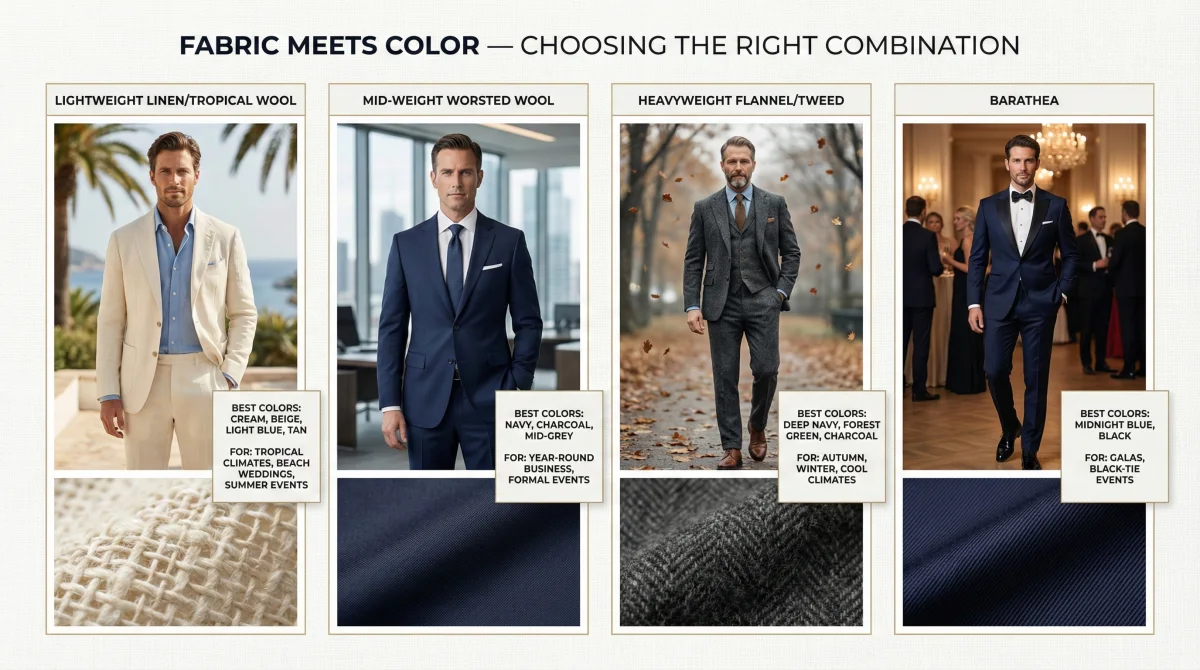
8.2. Luxury mill fabrics ($231)
- Twill wool blends: A premium weave in quality wool blend construction. Holds color depth in navy, charcoal, and deep green with exceptional richness.
- Wool 150s: One of the finest grades available in bespoke tailoring. The superfine weave produces an extraordinary drape and a light-catching sheen that enhances the depth of midnight blue, charcoal, and rich navy. Reserved for heirloom-quality suits built for significant occasions.
For specialty fabrics outside the standard range, contact Dunnio Tailor directly to place a custom order with your specific fabric requirements.
8.3. Fabric weight and seasonal suitability
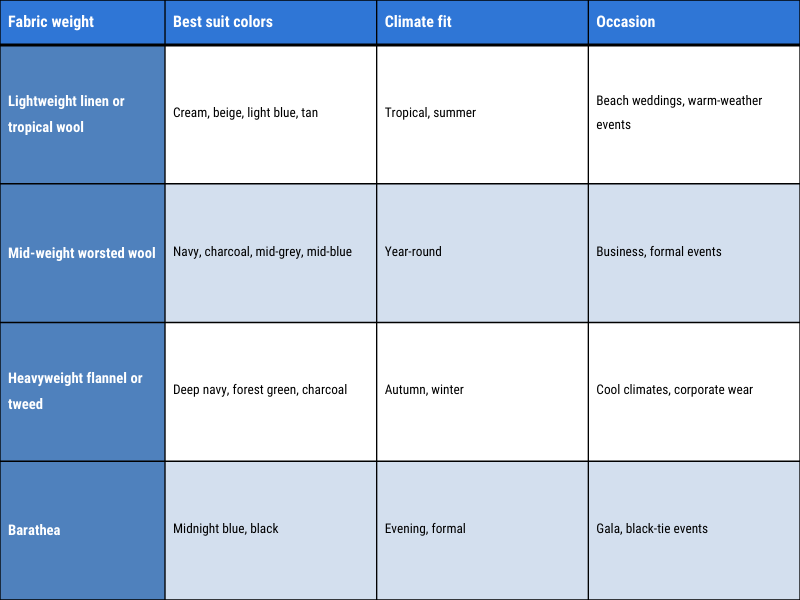
9. How to build your suit color wardrobe: A priority guide
When considering what suit color to choose for your next purchase, follow this investment order to build maximum wardrobe utility efficiently:
- Navy blue your first and most important suit. Works for almost every scenario from interviews to weddings.
- Charcoal grey your second suit. Adds the authority and versatility that completes a core professional wardrobe.
- Light grey or tan your first casual-formal addition. Covers spring and summer events, garden weddings, and creative business environments.
- Midnight blue or burgundy your first statement color. Elevates your evening and social wardrobe.
- Earth tones (olive, brown, camel) your most individual purchase. Adds warmth and personality for autumn events and casual-formal occasions.
- Seasonal or occasion-specific cream linen for summer events, forest green for a modern take on formal dressing, or a custom three-piece for maximum versatility.
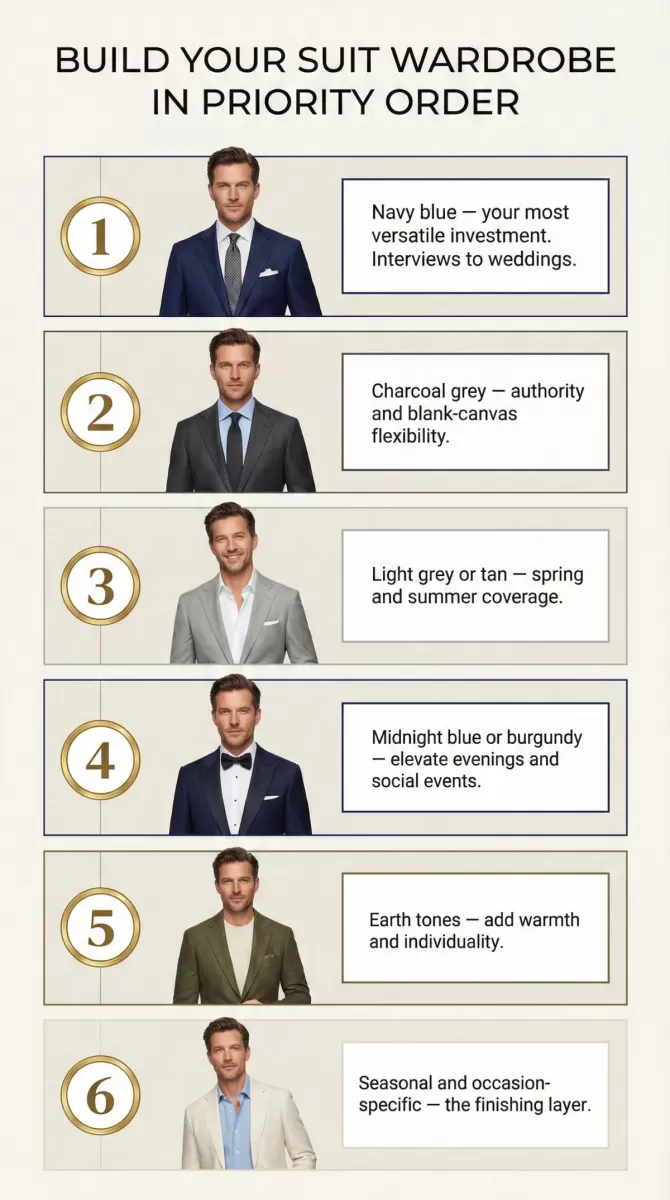
10. Frequently asked questions about suit colours
What is the most versatile suit color for men?
Navy blue is widely considered the most versatile suit color for men. It works across a broader range of occasions than any other shade from job interviews to weddings and pairs with virtually every shirt and shoe combination.
What suit color is best for a job interview?
Navy blue or charcoal grey are the standard choices for job interviews. Both communicate professionalism and trustworthiness. Navy is slightly more approachable, while charcoal projects greater authority. Avoid light colors, patterns, and bold shades for first impressions in conservative industries.
What suit color should I choose for a wedding?
The answer depends on your role and the setting. Grooms tend to choose navy, charcoal, midnight blue, or tan based on the venue and color theme. Guests should avoid black (unless stated) and white, opting instead for navy, mid-grey, or a season-appropriate earth tone.
What suit color is best for dark skin tones?
Men with dark skin tones look exceptional in rich, saturated colors: deep navy, royal blue, charcoal, espresso brown, and forest green. Pale shades like light beige or icy grey tend to create a washed-out contrast and are generally less flattering.
What suit color should tall and slim men choose?
Taller, slimmer men benefit from deeper, richer colors charcoal, navy, forest green, and midnight blue which add visual substance and weight. Very pale shades like cream or light grey can accentuate a slight frame.
What suit color should heavier or broader men choose?
Darker colors are the most flattering for heavier or broader builds. Navy blue and charcoal grey create clean, slimming silhouettes. Avoid very pale tones and horizontal patterns. Fit matters greatly: a precisely tailored custom suit in charcoal or navy will always outperform any off-the-rack alternative.
Can I wear a brown or green suit to work?
Yes, in most modern professional environments. Chocolate brown and olive green have been widely adopted in contemporary city dressing. Stick to mid-to-darker shades of each and pair with appropriate dress shirts and leather footwear. Avoid in the most conservative sectors (finance, law) where navy and charcoal remain strongly preferred.
Conclusion
Knowing what suit color to choose is ultimately about reading three things clearly: yourself, the occasion, and the environment. Start with the foundations navy and charcoal and build outward as your wardrobe and confidence grow. Let your skin tone and hair guide your shade intensity, your climate inform your fabric weight, and the dress code anchor your formality level. Above all, color works best when the suit fits impeccably. A perfectly tailored navy suit in the right fabric for your climate will outperform any trendy shade in a generic cut every single time.