Table of Contents[Hide]
- 1. Mastering heat management in summer wedding suits
- 2. Essential summer fabrics for Australian wedding suits
- 3. Summer color palettes for wedding suits
- 4. Styling summer suits for comfort and elegance
- 5. Summer suits for different body types
- 6. Regional summer wedding considerations across Australia
- 7. Completing your summer wedding look
- 8. The Dunnio Tailor approach to summer wedding suits
- 9. Making the investment in your summer wedding suit
- Conclusion
The Australian summer wedding season, from December through February, brings unique challenges as temperatures soar above thirty degrees. Whether celebrating on a Queensland beach, New South Wales coastal estate, or Western Australian garden venue, success lies in understanding breathable fabrics, heat management, and strategic styling. At Dunnio Tailor, we specialize in summer wedding suits that perform exceptionally in Australian heat. Our expertise in fabric engineering, lightweight construction techniques, and personalized tailoring ensures every summer groom celebrates in comfort without compromising style. This comprehensive guide covers everything you need to know: from breathability science and fabric blends to color choices that reflect heat, beach ceremony styling, and accessories that complete your look.
1. Mastering heat management in summer wedding suits
Thermal regulation is the primary challenge for wedding attire designed for summer wear. Traditional suit construction becomes unbearable when temperatures climb and outdoor ceremonies stretch for hours under the Australian sun.
1.1. Breathability fundamentals
Breathability is the single most important characteristic of a summer wedding suit.
What breathability means:
- Fabric's ability to allow air circulation and moisture vapor to pass through.
- Prevents buildup of heat and perspiration against your skin.
- Natural fibers excel due to microscopic channels that facilitate airflow.
- Synthetic materials trap heat and moisture, creating uncomfortable greenhouse effect.
Fabric weight considerations:
- Measured in grams per square meter (GSM).
- Recommended for Australian summer: 200-250 GSM.
- Provides structure while remaining comfortable in high temperatures.
- Lighter weights offer better heat management.
1.2. Internal construction
Internal construction plays an equally crucial role in heat management.
Traditional construction challenges:
- Full canvas interlining adds significant weight.
- Complete lining from shoulder to hem traps heat.
- Creates excellent structure but poor temperature regulation.

Summer construction solutions:
- Unlined jackets: Maximum airflow, dramatically reduced weight.
- Half-lined jackets: Structure in shoulders and chest, ventilation in back and lower body.
- Specialized finishing: Beautiful interior seams without heat-trapping layers.
At Dunnio Tailor, we specialize in creating unlined summer jackets that maintain their shape and appearance without traditional heat-trapping layers. Our tailors use specialized techniques to finish interior seams beautifully, ensuring refined, professional appearance.
1.3. Color and heat absorption
Color selection significantly impacts heat absorption.
Heat absorption by color:
- Dark colors (black, navy, charcoal): Absorb sunlight and convert to heat.
- Light colors (cream, sand, sky blue, pale gray): Reflect rather than absorb heat.
- Strategic timing: Dark colors for evening receptions, light colors for daytime ceremonies.
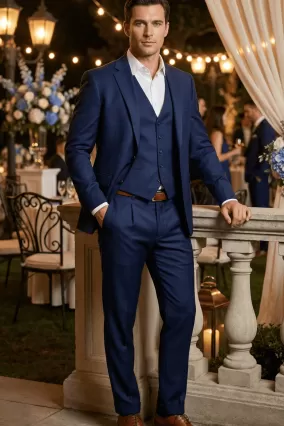
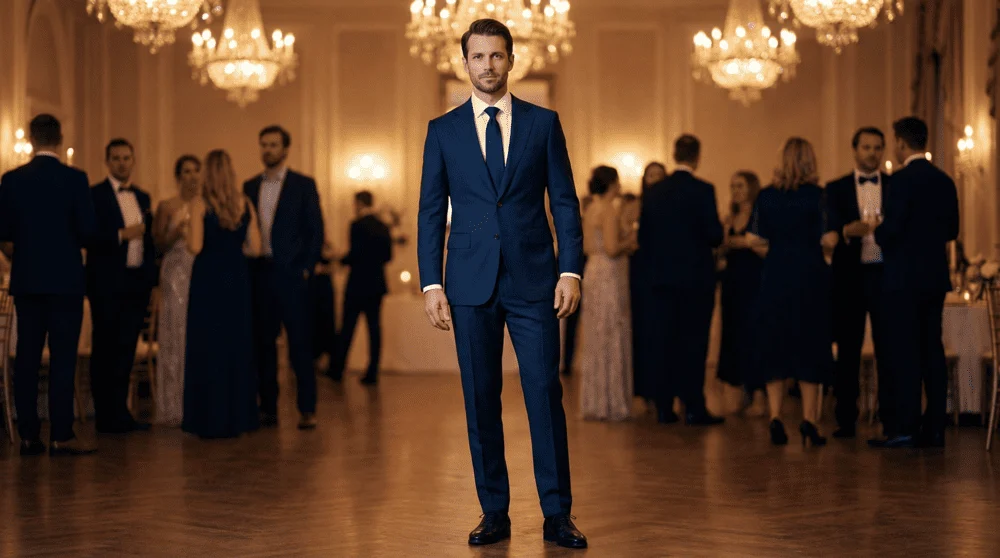
Example: Midnight blue suit perfect for evening reception after sunset, but uncomfortable for midday beach ceremony.
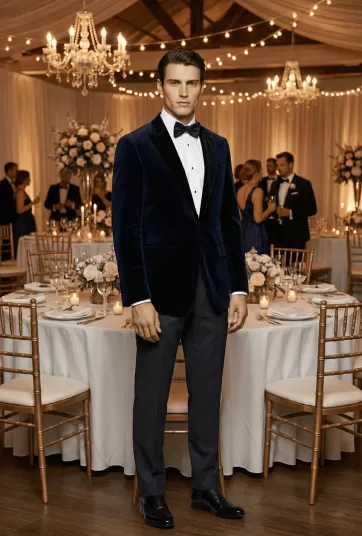
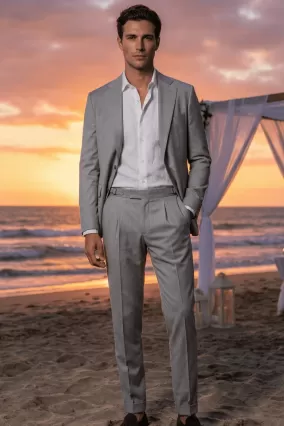
The midnight navy blue peak dinner suits - M3HL54
Products in the outfit
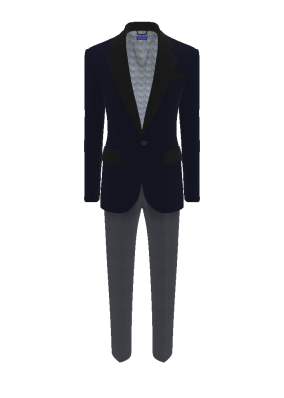
Jacket: 1 Buttons, Single Breasted | RegularNotch LapelNo Buttonhole | Curved | 2 Straight Pockets | 4 Working Buttons | No Vent - Pant: Narrow/Slim | Single Pleat | Slanted Pocket | Back Pocket - Single Opening | Single | Regular Cuff -
1.4. Moisture management
Even with breathable fabrics, summer heat causes perspiration. The question is how your suit handles moisture.
Natural fiber advantages:
- Cotton, linen, and wool absorb significant moisture before feeling wet.
- Allow moisture to evaporate relatively quickly.
- Maintain comfort even when perspiring.
Synthetic fiber disadvantages:
- Absorb very little moisture.
- Perspiration sits on skin and fabric surface.
- Creates visible wet spots and discomfort.
Realistic expectations at Dunnio Tailor:
- No suit makes you feel air-conditioned in 35-degree heat.
- Right fabric and construction make the difference between uncomfortably hot and tolerably warm.
- Practical advice: Time photos during cooler parts of day, seek shade, stay hydrated.
2. Essential summer fabrics for Australian wedding suits
Fabric selection determines the comfort level of your's wedding attire, suit appearance throughout the day, and how well your outfit photographs in bright Australian sunlight.
2.1. Pure linen
Pure linen stands as the classic choice for hot-weather formal wear.
Why linen excels in heat:
- Derived from flax plant, used for thousands of years in warm climates.
- Loose, open weave allows maximum airflow.
- Naturally moisture-wicking, draws perspiration away from skin.
- Allows rapid evaporation for cooling effect.
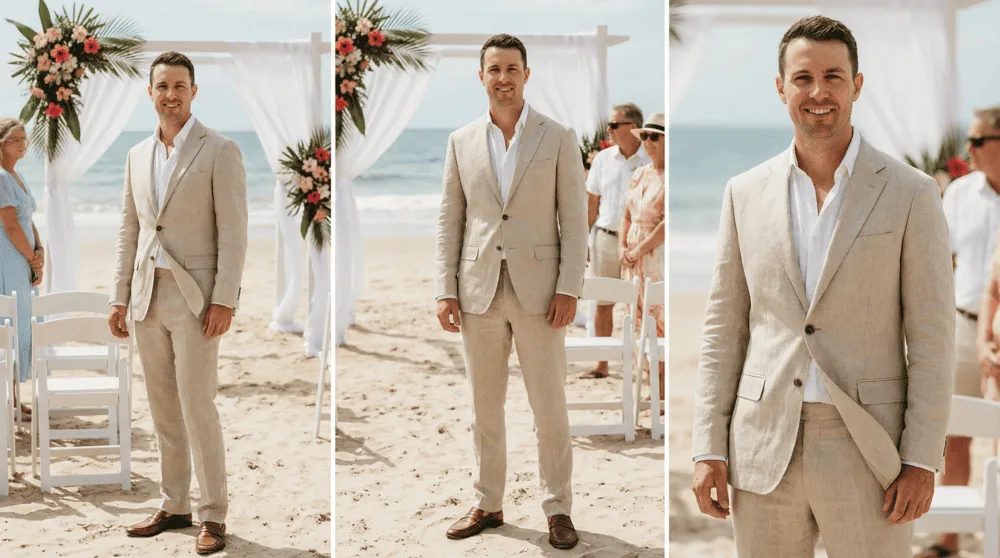
Aesthetic characteristics:
- Distinctive texture with slightly irregular surface and natural slubs.
- Relaxed, organic appearance suits casual and semi-formal summer weddings.
- Matte finish photographs exceptionally well in bright sunlight.
- Avoids glare and shine of smoother fabrics.
Ideal settings:
- Beach ceremonies.
- Garden parties.
- Daytime vineyard celebrations.
The linen wrinkle factor:
- Wrinkles easily and prominently throughout the day.
- Loose weave makes it prone to creasing with every movement.
- By mid-ceremony: wrinkles across back, elbows, behind knees.
- For some: relaxed, lived-in charm.
- For others: problematic if crisp appearance preferred.
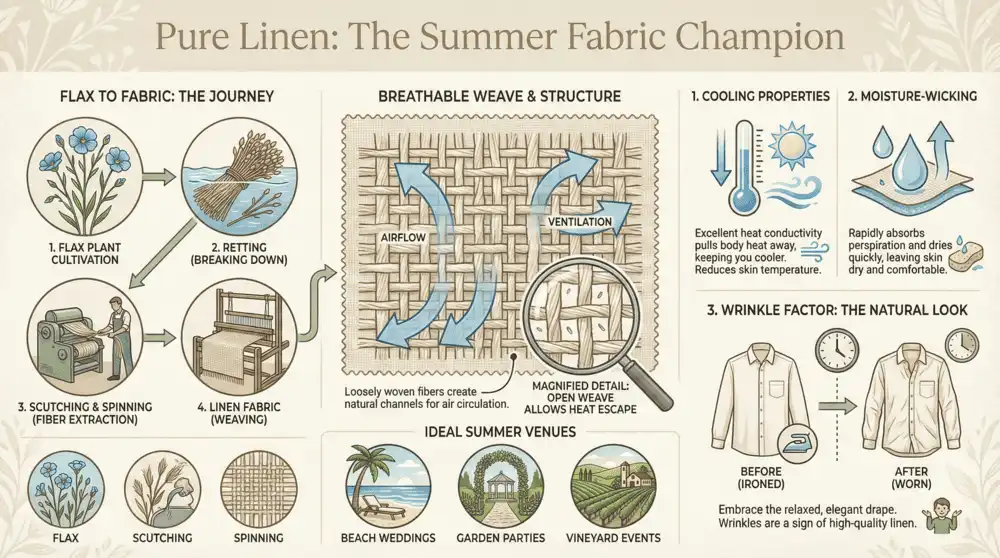
At Dunnio Tailor, we help grooms understand that linen wrinkling is not a defect but an inherent characteristic. We show examples of how linen suits age throughout a wedding day and help you decide whether this aesthetic aligns with your vision.
2.2. Cotton-linen blends
Cotton-linen blends combine the breathability of linen with the smoother appearance and wrinkle resistance of cotton.
Typical blend composition:
- 50% cotton / 50% linen.
- Still very cool and comfortable.
- Maintains cleaner appearance throughout the day.
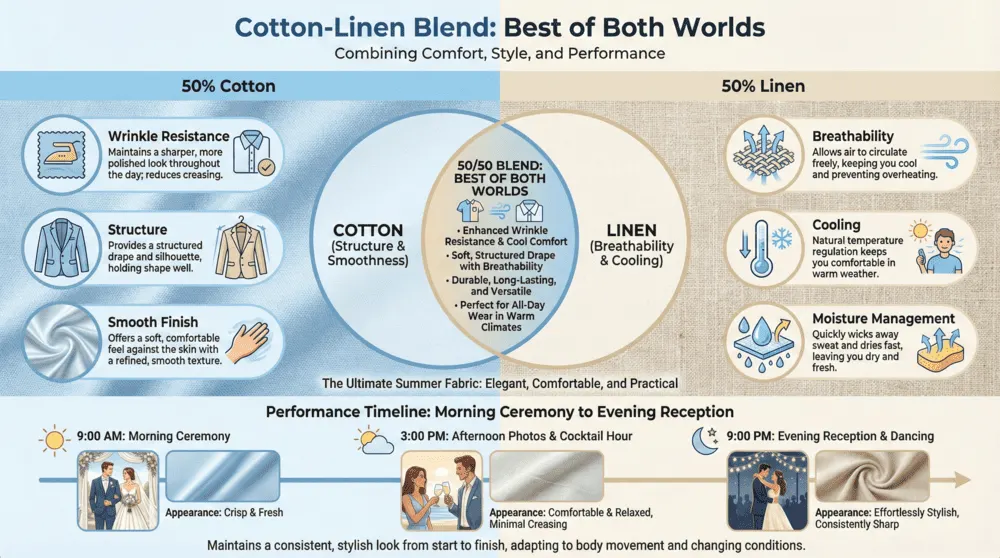
Performance benefits:
- Cotton adds subtle structure that resists creasing.
- Linen ensures adequate airflow and moisture management.
- Performs well in heat during ceremony.
- Still looks polished for indoor reception photos.

Popular colors at Dunnio Tailor:
- Classic cream and stone.
- Contemporary sky blue.
- Pale sage.
2.3. Tropical weight cotton
Tropical weight cotton provides excellent summer suit performance.
Key advantages:
- High-quality cotton in lightweight, open weave.
- Good breathability with smooth, refined appearance.
- Less prone to wrinkling than linen.
- Appropriate for more formal summer events.
- Accepts color beautifully for rich, saturated tones.
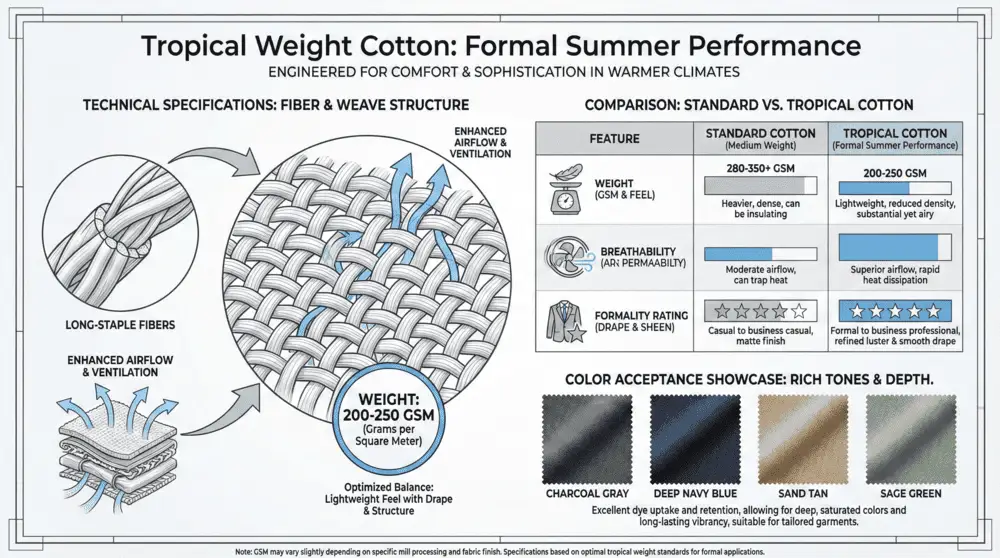
Critical distinction:
- Must be true tropical weight, not standard cotton.
- Standard cotton too heavy for Australian summer heat.
- Dunnio Tailor sources from specialized mills producing fabrics engineered for warm-weather wear.
- Long-staple fibers in open weaves maximize airflow while maintaining structure.

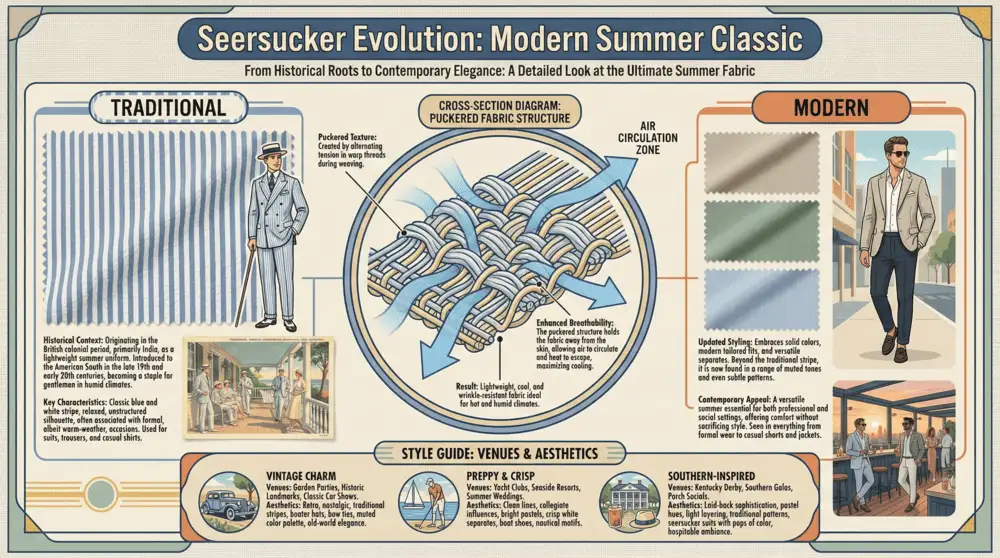
2.4. Seersucker evolution
Seersucker has evolved significantly from traditional blue-and-white striped incarnation.
How seersucker works:
- Puckered cotton fabric creates three-dimensional texture.
- Holds material slightly away from skin.
- Allows air to circulate between fabric and body.
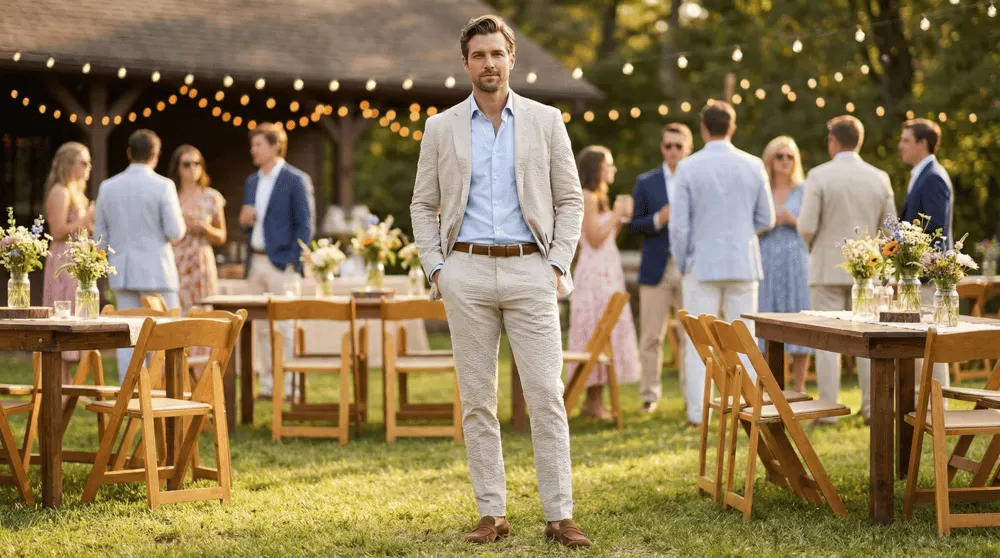
Modern seersucker options:
- Now available in solid colors and subtle patterns.
- Far more versatile than vintage versions.
- Contemporary colors: stone, pale blue, subtle sage.
Best suited for:
- Vintage, preppy, or Southern-inspired aesthetics.
- Daytime, outdoor, and semi-formal celebrations.
- Inherently casual styling.
2.5. Lightweight tropical wool
Lightweight tropical wool remains relevant even in summer.
Why wool works in summer:
- Finest tropical wool fabrics quite cool due to open weave.
- Natural temperature-regulating properties of wool fiber.
- Super 150s tropical wool in very light weight can be more comfortable than heavy cotton.
- Far more resistant to wrinkling than linen.
Best applications:
- Evening events.
- Air-conditioned indoor venues.
- Grooms who prefer refined drape and appearance of wool over casual fibers.
Critical requirements:
- Must be designated as tropical or summer weight.
- Unlined or minimally lined construction essential.
2.6. Fabric blends with silk or mohair
Small percentages of silk or mohair add strength and subtle sheen without significantly impacting breathability.
Example blend: Linen-silk
- 85% linen / 15% silk.
- Silk adds durability and refined luster.
- Linen provides cooling.
- Excellent for grooms wanting performance with polished, formal appearance.

At Dunnio Tailor, our summer fabric consultation process focuses heavily on matching fabric to:
- Venue type.
- Time of day.
- Formality level.
- Regional climate conditions.

Check out further recommendations from Dunnio's stylists on men's wedding suits for different seasons in Australia:
3. Summer color palettes for wedding suits
Color selection balances aesthetic preferences with practical heat management, affecting both appearance and comfort.
3.1. Light neutrals
Light neutrals dominate the summer wedding palette for good reason.
Popular light neutral options:
- Cream
- Sand
- Stone
- Pale gray
Benefits:
- Reflect sunlight rather than absorbing it.
- Help you stay cooler during outdoor ceremonies.
- Create fresh, airy aesthetic that suits the season.
- Cream and ivory particularly popular for beach and coastal weddings.
Managing light color challenges:
- Can show perspiration and dirt more readily than darker shades.
- Solution: Fabrics with subtle texture or pattern camouflage minor imperfections.
- Example: Cream suit in fine herringbone weave more forgiving than smooth, solid cream.

3.2. Pastel tones
Pastel tones have experienced significant revival in summer wedding fashion.
Popular pastel options:
- Sky blue
- Mint green
- Lavender
- Blush pink
Advantages:
- Create romantic, fresh aesthetic perfect for morning and garden ceremonies
- Photograph beautifully in bright sunlight
- Maintain vibrancy without appearing washed out
- Coordinate well with popular summer wedding palettes featuring florals and botanical themes
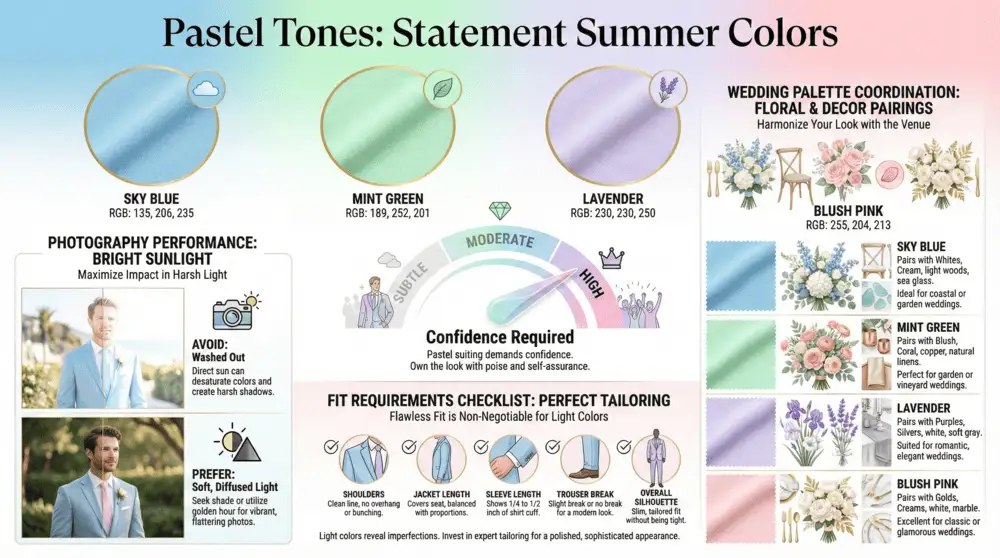
Considerations:
- Require confidence to wear successfully.
- Statement colors that draw attention.
- Work best for grooms comfortable being visual focal point.
- Lighter colors reveal every detail of construction and tailoring.
- Require absolutely perfect fit.

3.3. Coastal blues
Coastal blues ranging from navy to powder blue offer versatility for summer weddings.
Color spectrum:
- Deep navy (warm in direct sunlight, better for evening).
- Powder blue and sky blue (reflect heat, maintain classic appearance).
Benefits:
- Particularly effective for beach and waterfront ceremonies.
- Echo natural palette of sea and sky.
- Excellent wear-again potential.
- Transition easily into professional and social wardrobes.
3.4. Earthy tones
Earthy tones create natural, organic aesthetic ideal for outdoor summer weddings.
Popular earthy options:
- Sand
- Khaki
- Pale olive
Advantages:
- Harmonize beautifully with outdoor settings and botanical decor
- Light enough to reflect heat
- Pair well with brown leather accessories
- Create cohesive, grounded look
Skin tone considerations:
- Warm-toned individuals: sand and khaki.
- Cooler-toned grooms: pale olive or stone.

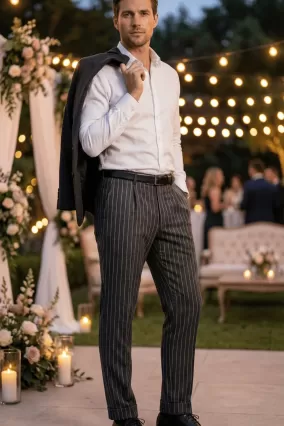
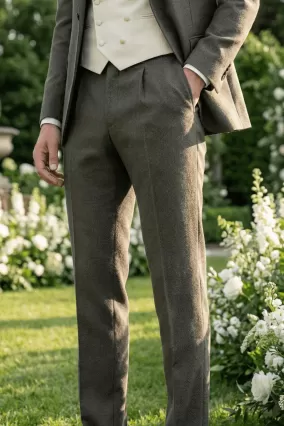
Rust-Brown Wool-Blend Tuxedo with Charcoal Satin Contrast
Products in the outfit
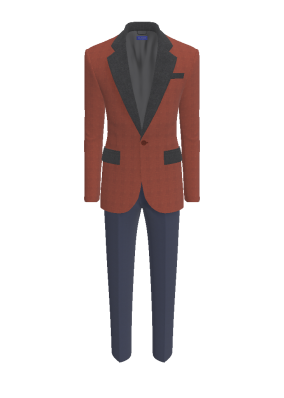
Jacket: 1 Buttons, Single Breasted | RegularNotch LapelNo Buttonhole | Curved | 2 Straight Pockets | 4 Working Buttons | No Vent - Pant: Narrow/Slim | Single Pleat | Slanted Pocket | Back Pocket - Single Opening | Single | Regular Cuff -
3.5. White and off-white
White and off-white suits represent the boldest choice for summer weddings.
Benefits:
- Maximum heat reflection.
- Striking, memorable appearance.
Requirements:
- Meticulous attention to fit and styling.
- Fabric must have enough texture and weight to avoid appearing cheap or flimsy.
- Detailed styling guidance for sophisticated rather than gimmicky appearance.
Best suited for:
- Very casual beach ceremonies.
- Highly formal tropical destination weddings with intentionally dramatic aesthetic.
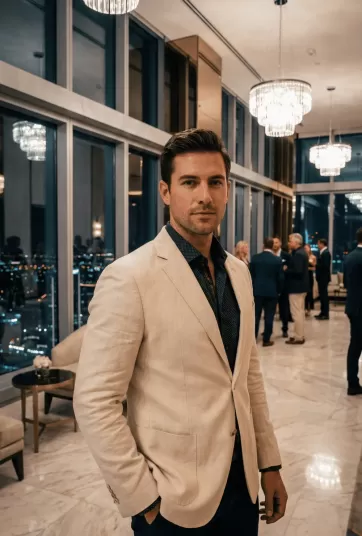
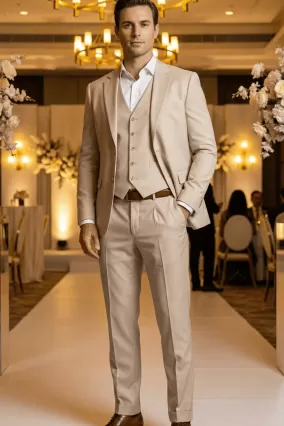
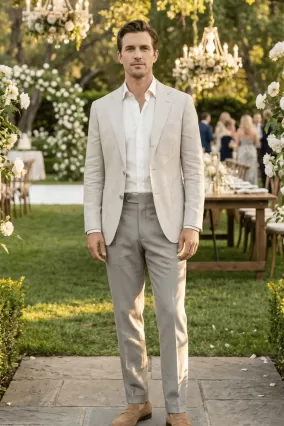
Elegant cream linen-cotton blend jacket
Products in the outfit
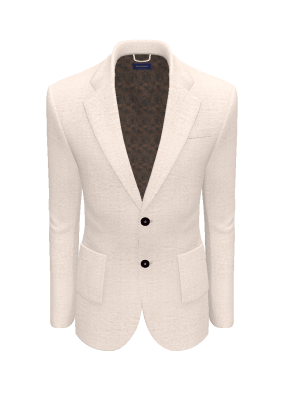
2 Buttons, Single Breasted | RegularNotch LapelNo Buttonhole | Curved | 2 Patched pockets | 4 Standard buttons | Side vent
3.6. Evening colors
For evening summer receptions, darker colors become more practical.
Appropriate evening options:
- Midnight blue.
- Charcoal.
- Black.
Strategy:
- Timing wardrobe to match conditions.
- Potentially changing from lighter ceremony suit to darker reception suit.
- Works for weddings spanning afternoon into evening.
4. Styling summer suits for comfort and elegance
Beyond fabric and color, styling choices significantly impact both comfort and appearance. Modern summer suiting embraces relaxed approach to formality, acknowledging that rigid traditional rules are impractical in extreme heat.
4.1. Resort casual aesthetic
The resort casual aesthetic has become increasingly popular for daytime summer weddings.
What resort casual means:
- Tailored suit trousers or linen pants.
- Unstructured blazer.
- Often worn without tie.
- Sometimes with collar open.
- Polished and intentional but acknowledges warm-weather realities.

Best suited for:
- Beach ceremonies.
- Outdoor garden parties.
- Relaxed elegance balancing formal and comfortable.
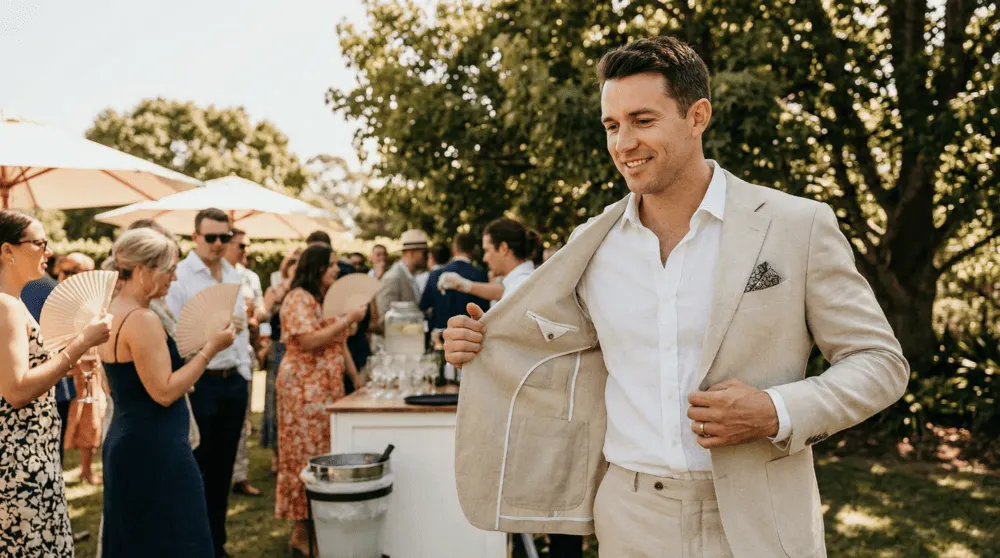
Dunnio Tailor unstructured blazers:
- Soft, natural shoulders.
- No lining.
- Relaxed fit allowing easy movement.
- Cut to look intentional when worn open or with minimal buttoning.

4.2. Two-piece versus three-piece
Two-piece suit without waistcoat is the standard choice for summer weddings.
Why skip the waistcoat:
- Third layer significantly increases heat.
- Restricts airflow.
- Impractical for outdoor summer celebrations.
- Two-piece allows jacket removal during warmest parts while still appearing appropriately dressed.
When three-piece works:
- Wedding primarily indoors.
- Evening celebrations.
- Dunnio Tailor summer waistcoats: lightest possible fabrics, often with open backs for airflow.
4.3. Shirt selection
Shirt selection plays crucial role in summer comfort.
Recommended shirt features:
- High-quality cotton with moisture-wicking properties.
- Fits well without being tight (constriction restricts airflow).
- For very casual weddings: linen shirts offer additional cooling (wrinkle more readily).
The tie question:
- Formal and semi-formal events: Ties remain appropriate and expected.
- Casual beach ceremonies and daytime garden parties: Going without tie perfectly acceptable.
- If wearing tie: Choose lightweight silk or linen in complementary colors.
Alternatives:
- Bow ties (some men find more comfortable in heat than traditional neckties).
- Lightweight tie materials minimizing constriction around neck.
4.4. Trouser styling
Trouser styling for summer suits tends toward slimmer, more tapered silhouette.
Recommended specifications:
- Modern and polished appearance.
- Not so tight that they restrict movement or airflow.
- Mid-rise sitting comfortably at natural waist.
- Slight taper from knee to ankle.
- Slight break or no break for clean line.
- Works well with both dress shoes and casual summer footwear.
5. Summer suits for different body types
The principles of flattering fit remain constant regardless of season, but summer fabrics and styling present unique considerations.
5.1. For men with fuller figures
Summer presents particular challenges because lightweight fabrics can cling and reveal contours more than heavier materials.
Fabric solutions:
- Select fabrics with enough body and structure to skim over torso without clinging.
- Medium-weight linen-cotton blend often works better than very lightweight pure linen.
- Provides more structure while still offering good breathability.
Color strategy:
- Very light colors (white, cream) can be less forgiving.
- Mid-tone neutrals (stone, sand, pale blue) provide heat reflection while being more flattering.
Dunnio Tailor approach:
- Careful attention to jacket length ensuring adequate coverage.
- Trouser rise providing comfortable support without constriction.

5.2. For men with larger midsections
Summer suit should create vertical lines that elongate the torso.
Recommended styling:
- Single-breasted jacket with two-button configuration.
- Leave jacket unbuttoned when seated to avoid pulling and bunching.
- Trousers sit at natural waist with flat front.
- Creates smooth, streamlined appearance.
5.3. For tall and slim men
Summer fabrics can sometimes make you appear even leaner, as lightweight materials have less visual weight.
Solutions for adding dimension:
- Add texture and pattern.
- Linen suit in subtle check.
- Seersucker with tonal stripes.
- Lighter colors create appearance of more mass.
Tailoring details:
- Well-fitted jacket with slightly wider lapels adds visual weight.
- Adequate room through seat and thigh creates proportion rather than emphasizing leanness.

5.4. For athletic builds
Athletic builds with broad shoulders and developed chests require adequate room in upper body without creating excess fabric in waist.
Why made-to-measure is essential:
- Off-the-rack summer suits sized for shoulders will be far too large everywhere else.
- Lightweight fabrics advantageous: drape more softly over muscular development rather than pulling tight.
Dunnio Tailor approach:
- Careful attention to armhole placement and sleeve pitch.
- Ensures full range of motion without restriction.
- Consider drape of lightweight fabrics over muscular frames.
- Select materials that flow naturally rather than clinging.
6. Regional summer wedding considerations across Australia
Australian summer conditions vary dramatically by region, requiring location-specific approaches to suit selection.
6.1. Queensland and Northern Territory
Queensland and Northern Territory summer weddings face the most extreme heat and humidity.
Climate challenges:
- Temperatures regularly exceed 35 degrees.
- Humidity makes air feel oppressive.
Essential fabric choices:
- Pure linen or cotton-linen blends in lightest available weights.
- Unlined construction non-negotiable.
- Many grooms opt for resort casual styling without ties.
Venue and aesthetic:
- Beach and coastal venues dominate.
- Aesthetic tends toward relaxed elegance.
Dunnio Tailor recommendations:
- Cream, sand, and sky blue suits reflecting heat.
- Harmonize with coastal settings.
- Practical considerations: backup clothing, timing photos during cooler morning or evening hours.

6.2. New South Wales
New South Wales summer weddings, particularly in Sydney, contend with high humidity as well as heat.
Climate considerations:
- Coastal venues benefit from sea breezes providing relief.
- Inland and garden venues can be uncomfortably warm.
Fabric requirements:
- Tropical weight fabrics with good moisture-wicking properties.
- Colors that do not show perspiration readily.
Formality balance:
- Sydney summer weddings often maintain slightly more formality than Queensland.
- Comfort important but grooms still want polished, sophisticated styling.
Dunnio Tailor approach:
- Premium lightweight fabrics in classic colors.
- Modern, comfortable construction.
- Balance between comfort and sophistication.

6.3. Victoria
Victoria summer weddings benefit from generally more moderate temperatures than northern states.
Climate variability:
- Melbourne can still experience very hot days.
- Temperature fluctuations: starting warm, cooling significantly by evening.
Recommended fabrics:
- Lightweight tropical wool or linen-cotton blends offer versatility.
- Perform well in warmth but do not leave you cold if temperatures drop.
Construction recommendation:
- Half-lined jackets for Melbourne summer grooms.
- Provides some structure for cooler moments.
- Maintains breathability for warm periods.
6.4. South Australia and Western Australia
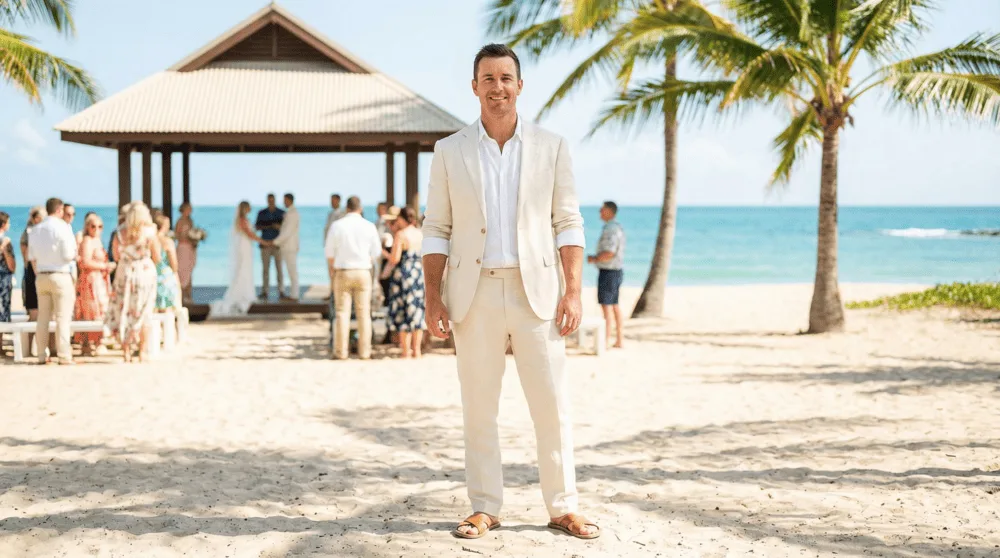
South Australia and Western Australia summer weddings enjoy dry heat that, while intense, is often more tolerable than humid conditions.
Climate characteristics:
- Dry heat more tolerable than humid conditions.
- Perth and Adelaide summer weddings frequently at vineyard and coastal venues.
- Aesthetic leans toward natural, organic elegance.
Ideal fabric choice:
- Linen suits in earth tones perform beautifully both practically and aesthetically.
- Dry heat less likely to cause clinging and discomfort associated with humidity.
- Linen's breathability ideal.
Dunnio Tailor offerings:
- Extensive linen options for SA and WA summer grooms.
- Colors and textures complementing wine country and coastal landscapes.

7. Completing your summer wedding look
Accessories and footwear for summer weddings should prioritize breathability and heat management while maintaining appropriate style.
7.1. Footwear
Footwear for summer weddings has evolved toward lighter, more breathable options.
Breathable footwear choices:
- Woven leather loafers: Significantly more airflow than solid leather shoes, more comfortable for outdoor summer events.
- Suede loafers in lighter colors (tan, stone): Good breathability, require more careful maintenance than smooth leather.
- Very casual beach weddings: High-quality leather sandals or barefoot for ceremony (requires guidance on appropriateness).

7.2. Socks
Socks for summer weddings should be as lightweight as possible.
Recommended options:
- Thin cotton or bamboo-blend dress socks.
- Provide minimal coverage while wicking moisture.
- Some grooms go sockless with loafers for very casual summer events.
- Requires careful attention to foot hygiene.
- Often use no-show liner socks to prevent blisters and odor.
7.3. Accessories
Accessories should be minimal in summer heat.
What to avoid:
- Heavy watches.
- Multiple bracelets.
- Excessive jewelry (traps heat, feels uncomfortable).
- Metal bracelets (conduct heat, become uncomfortably warm in direct sunlight).
Recommended accessories:
- Simple dress watch with leather or fabric strap.
- Pocket squares in lightweight linen or cotton.
- Colors complementing suit and tie with pop of visual interest.

7.4. Sunglasses
Sunglasses become a practical necessity for outdoor summer weddings.
Selection guidelines:
- Choose classic styles in colors complementing your suit.
- Tortoiseshell, gold, and silver frames work well with summer suiting.
- Keep readily accessible for outdoor portions.
- Remove for photos and during ceremony.
8. The Dunnio Tailor approach to summer wedding suits
At Dunnio Tailor, we recognize that summer weddings present unique challenges requiring specialized expertise.
Our summer fabric library:
- Materials specifically sourced for Australian heat.
- Mills specializing in tropical-weight fabrics.
- Engineering required to create materials simultaneously lightweight, breathable, and durable.
- Premium European linen from finest flax processing mills.
- Cotton and cotton-blend offerings from warm-weather suiting specialists.
Our construction techniques:
- Prioritize breathability without sacrificing appearance.
- Mastered art of creating unlined jackets maintaining shape and drape.
- Finishing techniques ensure beautifully finished, professional interior even without lining.
Our fitting process:
- Particular attention to ease and comfort.
- Adequate room for airflow without sloppy, oversized appearance.
- Trousers cut with comfortable rises and appropriate leg room.
- Special attention to areas where constriction causes discomfort in heat: collar, armholes, waistband.
Comprehensive guidance:
- Practical strategies for staying comfortable throughout summer wedding day.
- Advice on timing, hydration, backup clothing options.
- Realistic expectations for how you will feel in various conditions.
- Goal: not just beautiful suit but ensuring you can fully enjoy celebration without discomfort.

9. Making the investment in your summer wedding suit
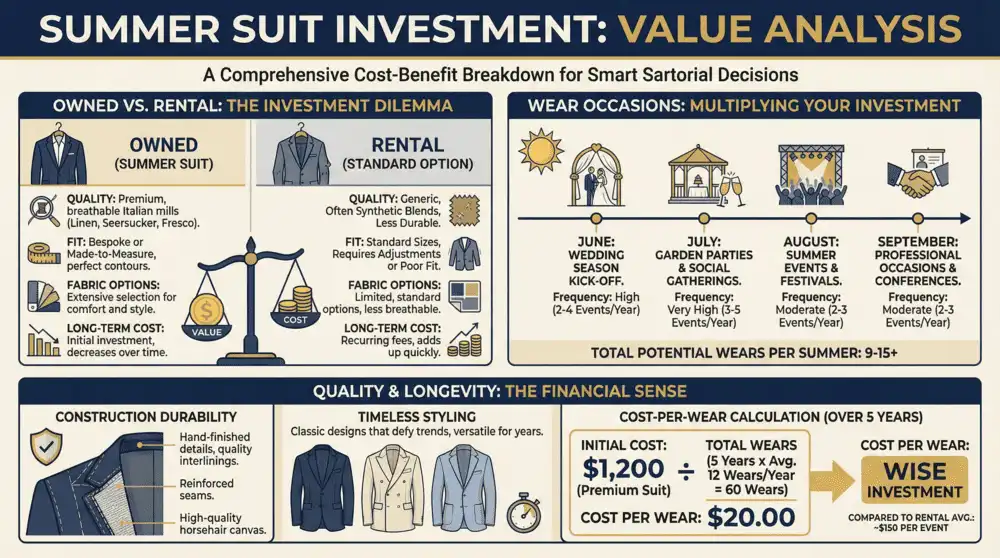
Summer wedding suits from Dunnio Tailor represent an investment in both your wedding day and your long-term wardrobe.
Long-term value:
- Lightweight, breathable fabrics ideal for any warm-weather formal occasion.
- Well-made linen or tropical cotton suit serves you for years.
- Summer events, garden parties, warm-weather professional occasions.

Quality and longevity:
- Construction ensures longevity even with regular wear.
- Designed to be worn, enjoyed, and worn again.
- Not single-use garments.
- Timeless styling remains current and appropriate for years.
- Practical investment rather than disposable purchase.
Hiring versus purchasing:
- Summer weddings particularly benefit from owned suits.
- Rental suits rarely available in lightweight fabrics necessary for true comfort in Australian summer heat.
- Fit compromises inherent in rental garments especially problematic when you need every advantage in managing warmth.
Conclusion
Navigating summer wedding attire in Australia requires understanding the intersection of fabric science, construction technique, and strategic styling. The extreme heat and humidity demand thoughtful choices prioritizing breathability, moisture management, and heat reflection while maintaining elegance and formality.
At Dunnio Tailor, we have dedicated ourselves to mastering every aspect of summer wedding suiting:
- Expertise in lightweight fabrics.
- Skill in creating comfortable unlined construction.
- Understanding of regional climate variations.
- Commitment to personalized service.
Whether your wedding is on a Queensland beach, in a Sydney garden, at a Melbourne estate, or in a Perth vineyard, we have the knowledge, materials, and tailoring expertise to create a suit that performs beautifully in Australian summer conditions.
Your wedding day should be focused on celebration and joy, not on discomfort and overheating. With the right suit, you can look exceptional and feel comfortable throughout your special day.
We invite you to begin your summer wedding suit journey with Dunnio Tailor. You can explore our summer fabric collection, visualize your wedding costume with our 3D customize outfit from suits, tuxedo and several clothes.
When choosing groom's suits at Dunnio Tailor, you will receive:
- Tailoring is based on personal measurements.
- Customize according to preferences.
- Instructions from a professional technical team.
- Tailored by skilled craftsmen.
- Fitting and adjusting as required.
- Fabric pattern options with a collection of more than 500 different fabric patterns.
- Free 720-day warranty.
- Free hangers and specialized storage bags.
- Support and shipping policies for international customers.
Hotline - WhatsApp: +84 968996668
Email: support@dunniotailor.com