Table of Contents[Hide]
The terms jacket and blazer are often used interchangeably in casual conversation, but for the discerning Australian gentleman, understanding the distinction is essential. Whether you're preparing for a wedding in the Hunter Valley, a corporate presentation in Melbourne's CBD, or a semi-formal event on Sydney's harbour, choosing between a suit jacket, blazer, or sports coat can make the difference between looking polished and appearing out of place. This comprehensive guide explores the technical differences, styling strategies, and body type considerations that will help you build a versatile wardrobe suited to Australia's unique climate and social landscape. From fabric selection for Brisbane's humidity to tailoring approaches favoured by leading Australian brands, we'll cover every angle you need to master this fundamental menswear decision.
1. Understanding the fundamentals: Jacket vs blazer
The confusion between jackets and blazers stems from their visual similarities, but their purposes, construction, and styling rules differ significantly. Let's break down each garment type with precision.
1.1 The suit jacket: Cornerstone of formal dressing
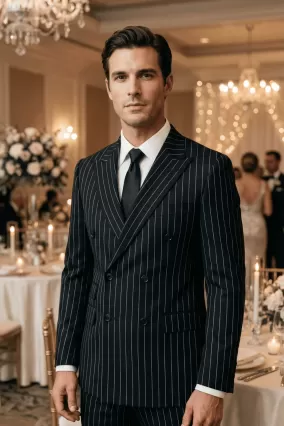
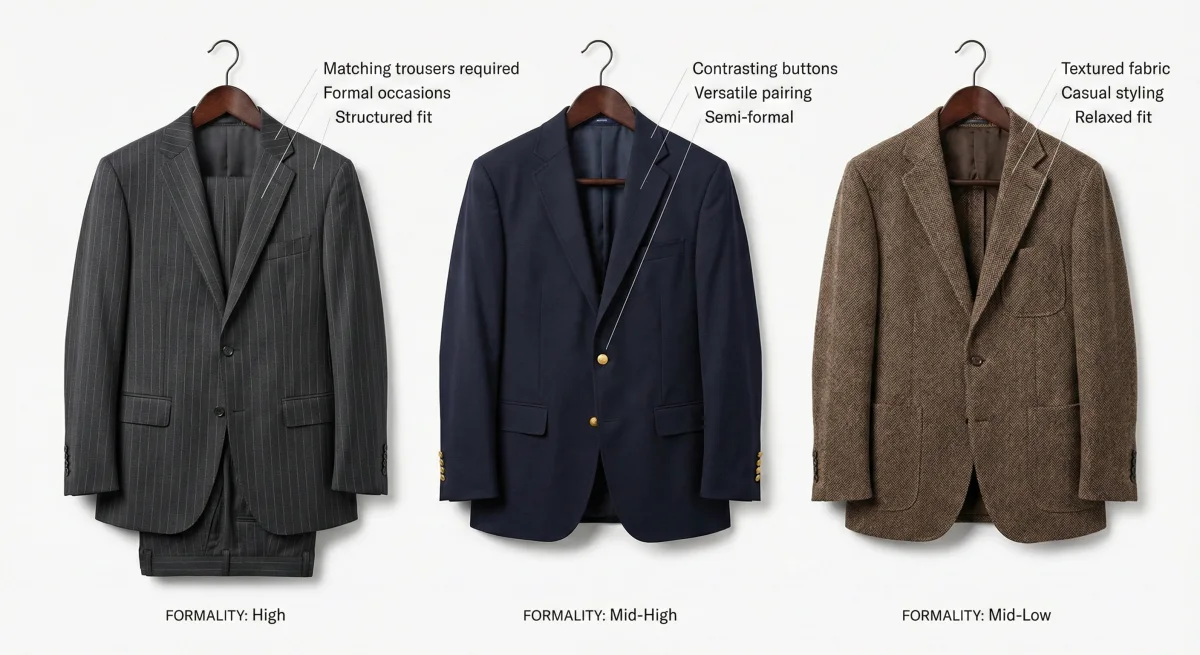
A suit jacket is the upper component of a coordinated suit ensemble, designed to be worn exclusively with its matching trousers. The jacket and pants are cut from identical fabric, ensuring a seamless, cohesive appearance that signals formality and professionalism. Key characteristics of suit jackets:
- Matching trousers are mandatory: The fabric, colour, and pattern must be identical between jacket and pants. Wearing a suit jacket without its matching trousers creates an unbalanced look and can cause uneven wear and fading.
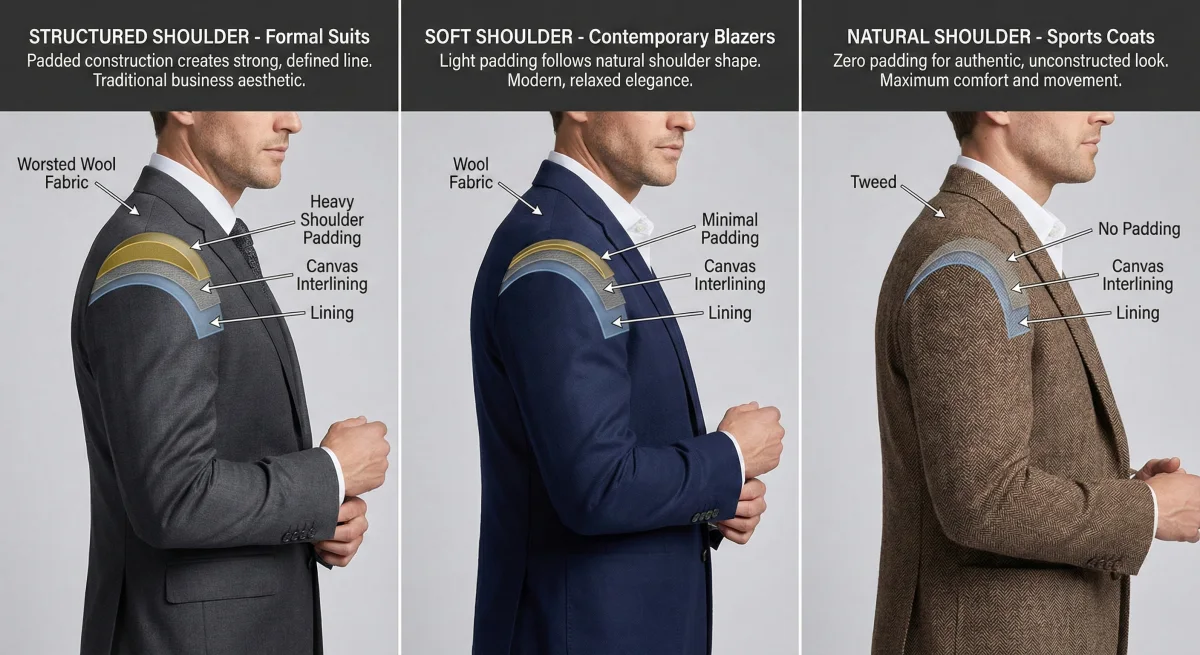
- Structured construction: Suit jackets typically feature padded shoulders, full or half canvas construction, and a longer cut that creates a streamlined silhouette when paired with matching trousers.
- Refined fabrics: Common materials include fine worsted wool in Super 110s to 150s counts, offering a smooth texture and subtle sheen appropriate for formal settings.
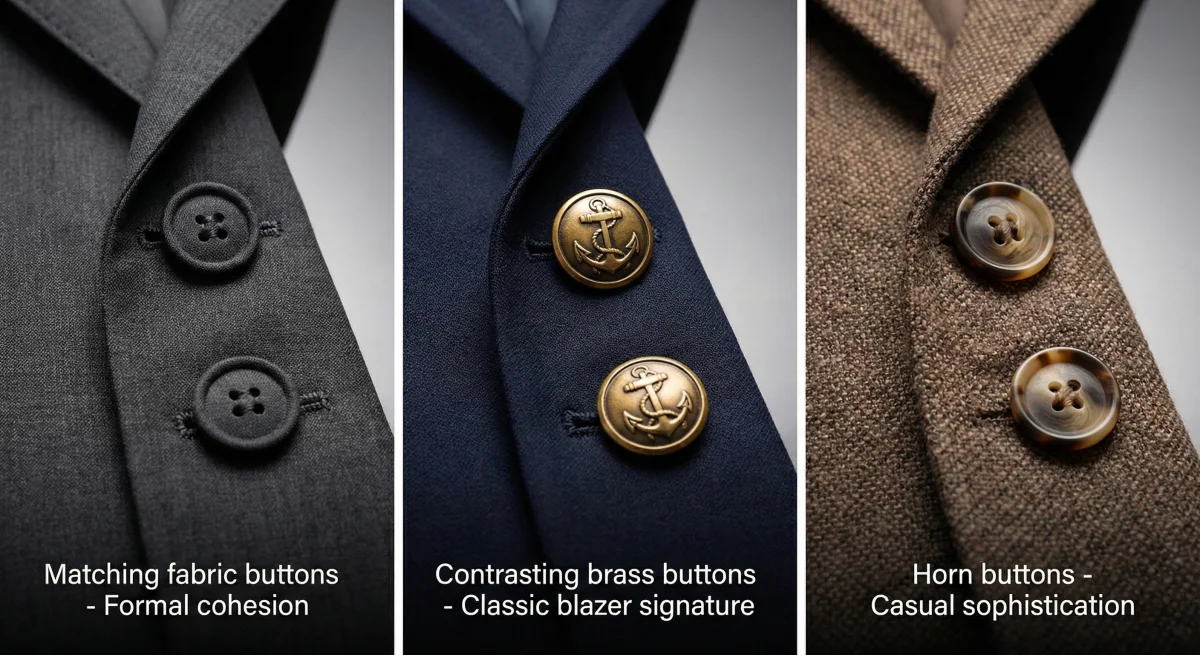
- Minimalist details: Buttons match the fabric colour, pockets are typically flap or jetted style, and patterns tend toward conservative options like pinstripes, micro-checks, or solid colours in navy, charcoal, and black.
- Highest formality level: Suit jackets are reserved for business meetings, job interviews, formal weddings, and black-tie adjacent events.
1.2 The blazer: Versatile wardrobe essential
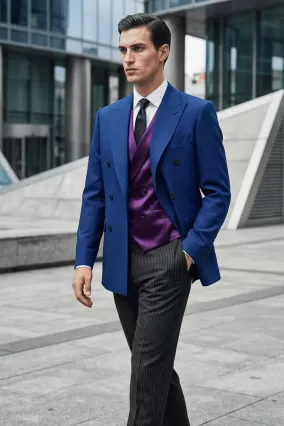
A blazer is a standalone jacket designed to be paired with contrasting trousers, offering significantly more versatility than a suit jacket. Originating from British naval uniforms and rowing club attire, the blazer bridges the gap between formal and casual dressing. Key characteristics of blazers:
- No matching trousers: Blazers are intentionally designed to be mixed and matched with different pants, from dress trousers to chinos and even dark denim.
- Distinctive buttons: Traditional blazers feature contrasting metal buttons in brass, silver, or gold, though modern interpretations may use horn or corozo buttons.
- Solid colours dominate: Navy blue remains the quintessential blazer colour, followed by black, charcoal, and increasingly, earthy tones like tobacco brown and forest green.
- Softer construction: Many contemporary blazers feature unpadded or lightly padded shoulders, half-lined or unlined interiors, and a slightly more relaxed fit than suit jackets.
- Mid-level formality: Blazers excel at semi-formal occasions, smart-casual events, business-casual environments, and cocktail gatherings.
1.3 The sports coat: Textured individualist
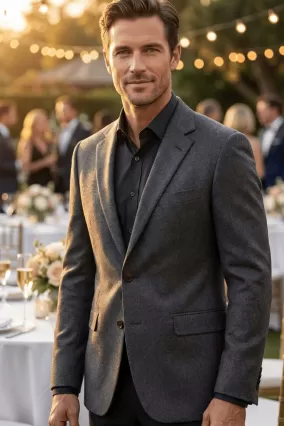
The sports coat, also called a sport jacket, was originally designed for outdoor pursuits like hunting and shooting, which explains its rugged construction and generous fit. Key characteristics of sports coats:
- Heavy, textured fabrics: Tweed, flannel, corduroy, herringbone, and brushed wool are common choices, providing both warmth and visual interest.
- Bold patterns: Checks, plaids, windowpanes, houndstooth, and Glen plaids add personality and distinguish sports coats from more formal options.
- Relaxed fit: Sports coats offer more room in the shoulders and chest, allowing for layering over knitwear or turtlenecks.
- Casual styling details: Patch pockets, elbow patches, and contrast stitching are common features that emphasize the garment's informal nature.
- Lowest formality level: Sports coats are ideal for casual Fridays, weekend gatherings, creative industry events, and relaxed social occasions.
1.4 Comparison table: Jacket vs blazer vs sports coat
|
Feature |
Suit Jacket |
Blazer |
Sports Coat |
|
Matching Trousers |
Essential (identical fabric) |
Never (contrasting only) |
Never (contrasting only) |
|
Formality Level |
High (formal/business) |
Mid-high (semi-formal) |
Mid-low (casual/creative) |
|
Fabric Texture |
Smooth, fine worsted wool |
Solid colours, smooth to mid-texture |
Highly textured, heavy weaves |
|
Typical Patterns |
Solid, pinstripe, micro-check |
Solid (navy/black/grey) |
Checks, plaids, houndstooth |
|
Button Style |
Matching fabric colour |
Contrast metal or horn |
Horn, leather, or wood |
|
Shoulder Construction |
Structured, padded |
Soft to structured |
Natural, soft, unpadded |
|
Best Occasions |
Weddings, interviews, formal events |
Cocktail parties, business-casual, semi-formal |
Casual Fridays, creative events, weekends |
2. The Australian tailoring perspective
Australia's menswear landscape has evolved dramatically over the past decade, moving beyond the stereotypical "relaxed" aesthetic toward a sophisticated appreciation for quality tailoring. Understanding how leading Australian brands approach the jacket versus blazer distinction provides valuable context for your own wardrobe decisions.
2.1 Climate-driven design philosophy
Australian tailors must navigate one of the world's most diverse climate ranges, from tropical Brisbane to temperate Melbourne to the dry heat of Perth. This geographical reality fundamentally shapes fabric selection and construction methods.
- Breathability is paramount: Australian tailors prioritize natural fibres like Merino wool, linen, and cotton that regulate temperature and wick moisture. Half-lined and unlined jackets are increasingly popular, particularly for blazers worn in warmer months.
- Seasonal versatility matters: A well-designed jacket for the Australian market should perform across multiple seasons. This explains the popularity of mid-weight wools in the 250-280 gram range, which work for Sydney's mild winters and air-conditioned summer offices.
- Regional considerations: A blazer suitable for Melbourne's changeable weather may be too heavy for Brisbane's subtropical climate. Savvy Australian gentlemen often maintain separate warm-weather and cool-weather jacket wardrobes.
2.2 Leading Australian tailoring philosophies
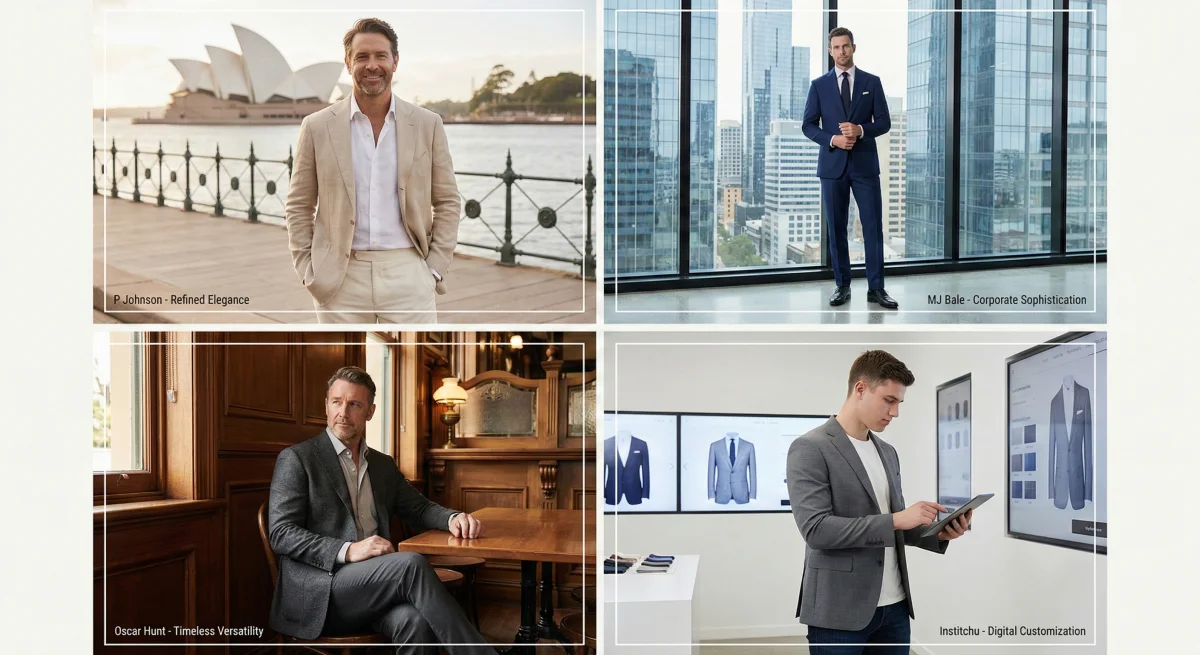
- P Johnson: Soft, refined elegance. Founded in Sydney in 2009, P Johnson has championed a "naturally cultivated style" that emphasizes soft shoulder construction, Italian-inspired cuts, and relaxed elegance. Their approach favours blazers and unstructured jackets that move naturally with the body, rejecting the stiff, armoured silhouettes of traditional British tailoring. P Johnson's philosophy aligns perfectly with the Australian lifestyle, where even formal occasions maintain a degree of ease.
- MJ Bale: Corporate sophistication. Positioned as the go-to brand for Australian professionals, MJ Bale focuses on 100% Merino wool suits and blazers with a Southern Italian aesthetic. Their jackets feature soft shoulders, wider lapels, and premium Bemberg linings. MJ Bale represents the modern Australian corporate standard, where a navy blazer paired with grey trousers is as acceptable as a full suit for most business contexts.
- Oscar Hunt: Timeless versatility. Oscar Hunt's made-to-measure approach blends British structure with Italian flair and Australian practicality. They encourage clients to view suits as separates, wearing the jacket as a blazer with different trousers to maximize wardrobe versatility. This philosophy reflects a distinctly Australian pragmatism about menswear investment.
- Institchu: Digital customization. Institchu brings a tech-forward approach to custom tailoring, allowing extensive online customization of jackets and blazers. While quality can vary depending on the stylist, their model demonstrates the Australian market's appetite for personalized, made-to-measure garments at accessible price points.
2.3 The Australian Merino advantage
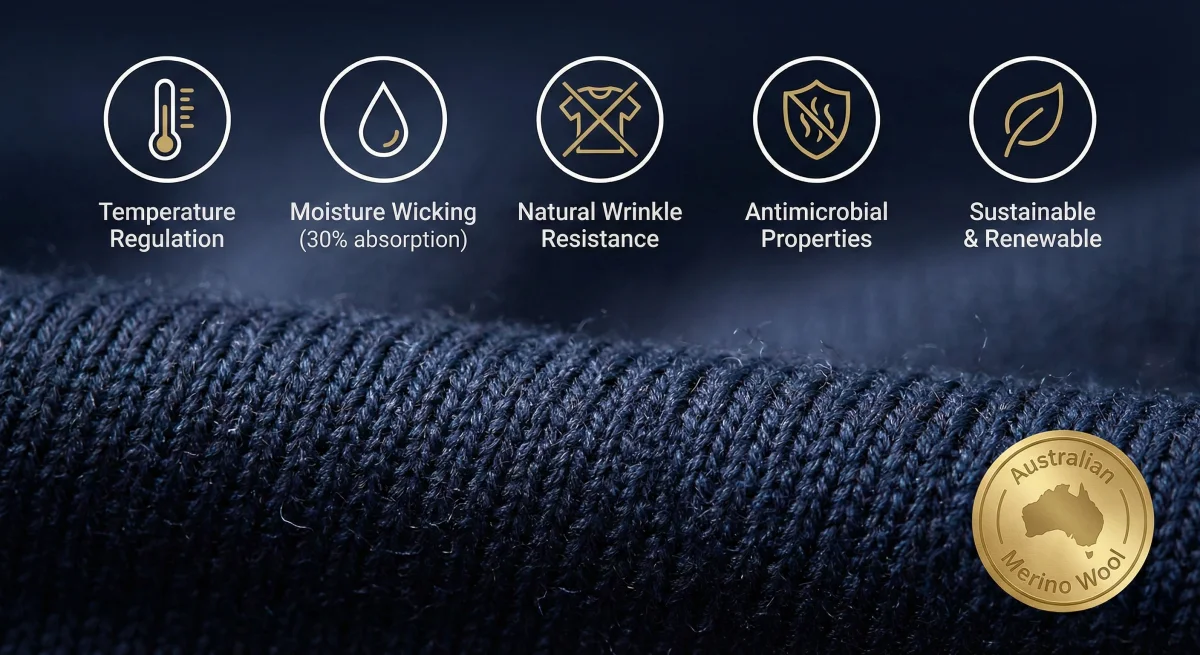
Australia produces some of the world's finest Merino wool, and local tailors leverage this natural resource extensively. Merino wool offers unique benefits for both suit jackets and blazers:
- Temperature regulation: Merino fibres naturally regulate body temperature, keeping you cool in summer and warm in winter. This makes Merino-based jackets ideal for Australia's variable climate.
- Moisture wicking: Merino absorbs up to 30% of its weight in moisture without feeling damp, crucial for outdoor weddings and humid coastal events.
- Wrinkle resistance: High-twist Merino wool resists creasing, maintaining a sharp appearance throughout long events.
- Natural odour resistance: Merino's antimicrobial properties reduce odour, allowing jackets to be worn multiple times between dry cleaning.
- Sustainable and renewable: Australian Merino wool is a natural, biodegradable fibre with a significantly lower environmental impact than synthetic alternatives.
When commissioning custom suits or blazers from Dunnio Tailor, consider Australian Merino wool as your foundation fabric, particularly for year-round pieces.
3. Fabric selection for Australian conditions
Choosing the right fabric is as important as selecting between a jacket and blazer. Australia's climate demands strategic fabric choices that balance formality, comfort, and seasonal appropriateness.
3.1 Year-round worsted wool: The versatile foundation
Worsted wool in the 250-280 gram weight range serves as the backbone of the Australian gentleman's wardrobe. This fabric weight works for:
- Sydney and Melbourne: Suitable for approximately nine months of the year, with the exception of peak summer (December-February).
- Brisbane and Perth: Best for cooler months (May-September) and heavily air-conditioned indoor environments.
- Adelaide and Hobart: Genuinely year-round, given these cities' more temperate climates.
- For suit jackets: opt for Super 110s to 130s wool, which offers durability and a refined drape. For blazers, Super 120s to 150s provides a softer hand feel and more luxurious appearance, appropriate for the blazer's semi-formal positioning.
Dunnio Tailor's premium fabric range ($99-$135) includes high-quality worsted wools in twill, plain weave, and hopsack constructions, all suitable for year-round Australian wear.
3.2 Summer specialists: Linen, cotton, and lightweight blends
Australian summers demand lighter fabrics that maintain structure while maximizing breathability.
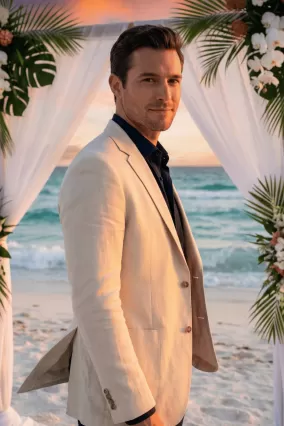
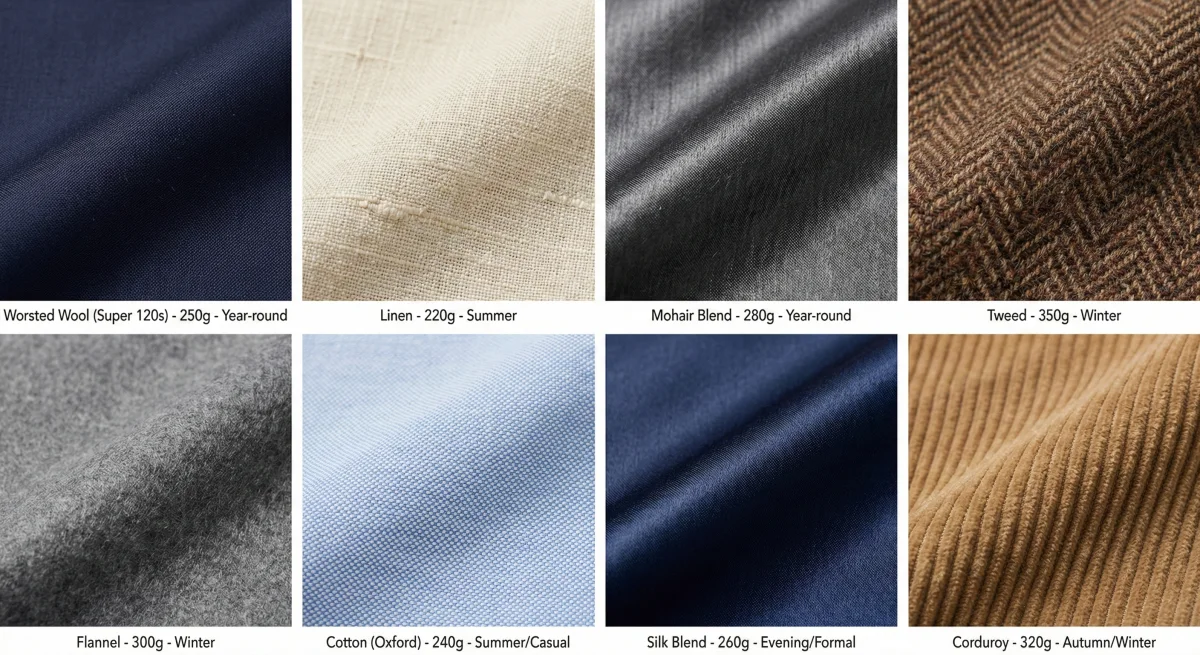
- Pure linen: The ultimate summer fabric, linen is highly breathable and develops a characterful, lived-in appearance through natural wrinkling. Pure linen blazers are ideal for beach weddings, outdoor events, and tropical destinations. Accept the wrinkles as part of linen's charm rather than fighting against them.
- Linen-wool blends: Combining linen's breathability with wool's structure creates a fabric that wrinkles less than pure linen while remaining cool. A 55% linen, 45% wool blend is ideal for summer blazers.
- Linen-silk blends: Adding silk to linen creates a subtle sheen and smoother drape, elevating the fabric's formality. This blend works beautifully for summer wedding blazers.
- Cotton and cotton blends: Lightweight cotton in plain weave or Oxford construction offers a more casual alternative to linen, suitable for sports coats and unstructured blazers.
- Tropical wool: Despite the name, tropical wool (180-220 grams) is a lightweight worsted wool designed for hot climates. It maintains a more formal appearance than linen while offering excellent breathability.
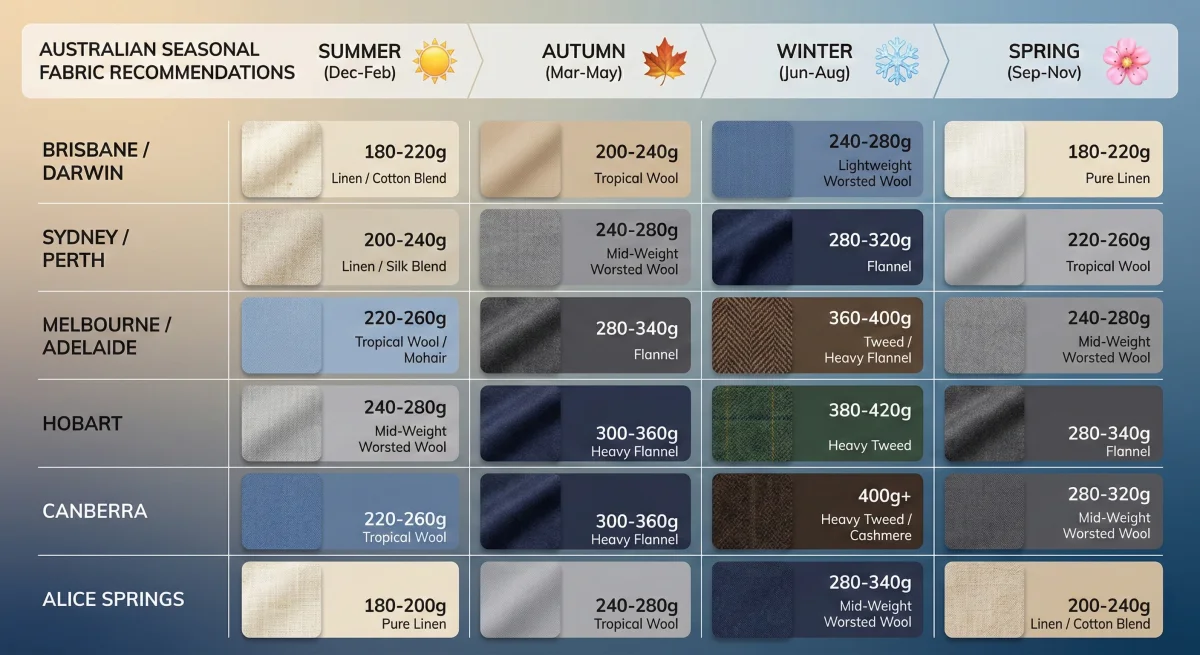
For Brisbane, Darwin, and northern Queensland events, prioritize fabrics under 220 grams. For Sydney and Melbourne summers, 220-250 gram fabrics provide a good balance.
3.3 Luxury blends: Elevating formality and performance
For special occasions and investment pieces, luxury fibre blends offer unique benefits.
- Mohair blends: Wool-mohair blends (typically 85% wool, 15% mohair) provide a subtle sheen, excellent drape, and superior wrinkle resistance. Mohair-blend suit jackets photograph beautifully, making them ideal for wedding parties and formal events. The fabric's natural lustre catches light elegantly in both daylight and evening settings.
- Silk blends: Wool-silk blends offer a luxurious hand feel and refined sheen. A 95% wool, 5% silk blend adds just enough lustre to elevate a navy blazer without appearing overly formal.
- Cashmere blends: For winter jackets and blazers, wool-cashmere blends (typically 90% wool, 10% cashmere) provide exceptional softness and warmth without bulk. These are ideal for Melbourne and Hobart winters.
Dunnio Tailor's luxury mill fabric range ($231) includes premium wool blends from renowned mills, offering superior performance and longevity for discerning clients.
3.4 Winter textures: Tweed, flannel, and heavy weaves
For Australia's cooler regions and winter months, textured fabrics add visual interest and warmth.
- Tweed: This heavy, textured wool fabric is ideal for sports coats and casual blazers. Tweed's rugged character suits weekend wear and creative industry events. Consider tweed for Adelaide and Hobart winters, or for alpine region events.
- Flannel: Brushed wool flannel offers a soft hand feel and matte finish, perfect for winter suit jackets and blazers. Flannel's texture adds depth without the boldness of tweed.
- Herringbone and hopsack: These textured weaves add visual interest while maintaining formality. A herringbone blazer in charcoal or navy offers more personality than a plain weave while remaining appropriate for business-casual settings.
- Corduroy: While traditionally associated with sports coats, fine-wale corduroy blazers have gained popularity in Australian menswear, offering a sophisticated alternative to standard fabrics.
3.5 Fabric weight recommendations by region and season
|
Region |
Summer (Dec-Feb) |
Autumn/Spring (Mar-May, Sep-Nov) |
Winter (Jun-Aug) |
|
Brisbane/Darwin |
180-220g linen/cotton blends |
220-250g tropical wool |
250-280g worsted wool |
|
Sydney/Perth |
220-250g tropical wool/linen |
250-280g worsted wool |
280-320g worsted wool/flannel |
|
Melbourne/Adelaide |
250-280g worsted wool |
280-320g worsted wool |
320-360g flannel/tweed |
|
Hobart |
280-320g worsted wool |
320-360g worsted wool/flannel |
360-400g flannel/tweed |
4. Body type recommendations for wedding attire
Understanding your body type is crucial when choosing between a suit jacket, blazer, or sports coat, particularly for high-stakes occasions like weddings. The right garment can enhance your natural proportions, while the wrong choice can emphasize areas you'd prefer to minimize.
4.1 Short frame: Creating vertical lines
For gentlemen under 5'8", the primary goal is to create the illusion of height through strategic garment selection and styling.
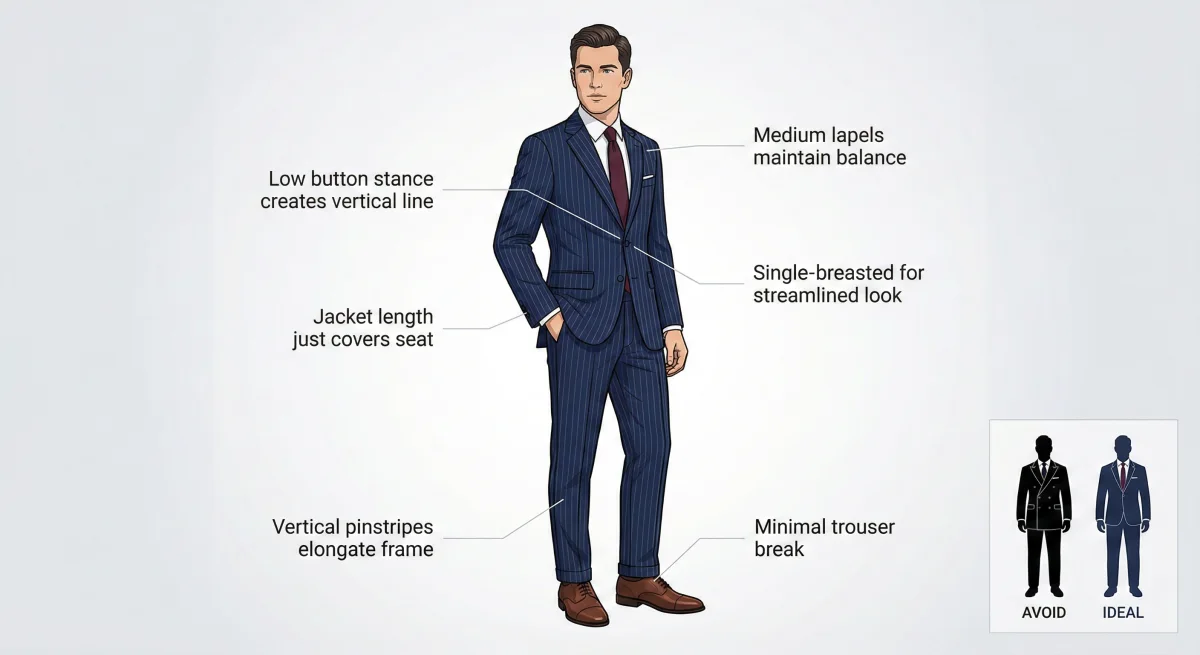
- Jacket vs blazer choice: Both suit jackets and blazers can work, but the key is in the details. A single-breasted, two-button jacket with a low button stance creates a deep V-shape that draws the eye upward, elongating the torso.
- Jacket length: Opt for a slightly shorter jacket length, just covering the seat. Traditional longer jackets can overwhelm a shorter frame and make legs appear shorter.
- Lapel width: Medium-width notch or peak lapels (3-3.5 inches) provide balance. Avoid overly wide lapels, which can make the chest appear broader and the frame more compact.
- Vertical patterns: Pinstripe suit jackets are highly effective for shorter men, as the vertical lines create an elongating effect. Avoid horizontal patterns like bold windowpanes.
- Avoid double-breasted: Double-breasted jackets add horizontal visual weight, which can make a shorter frame appear more compact. Save these for taller builds.
- Trouser coordination: When wearing a blazer, pair it with trousers in a similar tonal family to create an unbroken vertical line. A navy blazer with charcoal trousers works better than navy with khaki for height-conscious styling.
Wedding role recommendations:
- Groom: Single-breasted navy or charcoal suit with subtle pinstripe, paired with a waistcoat to add vertical interest.
- Groomsmen: Matching single-breasted suit jackets in a complementary colour, ensuring consistent jacket length across the party.
- Guest: Navy blazer with grey dress trousers, avoiding overly casual combinations that can appear sloppy on a shorter frame.
Explore Dunnio Tailor's custom suit options with specific adjustments for shorter frames, including optimized jacket length and button placement.
4.2 Tall and lean frame: Adding proportionate balance
For gentlemen over 6'1" with a lean build, the challenge is avoiding an overly elongated appearance while adding visual weight to balance height.
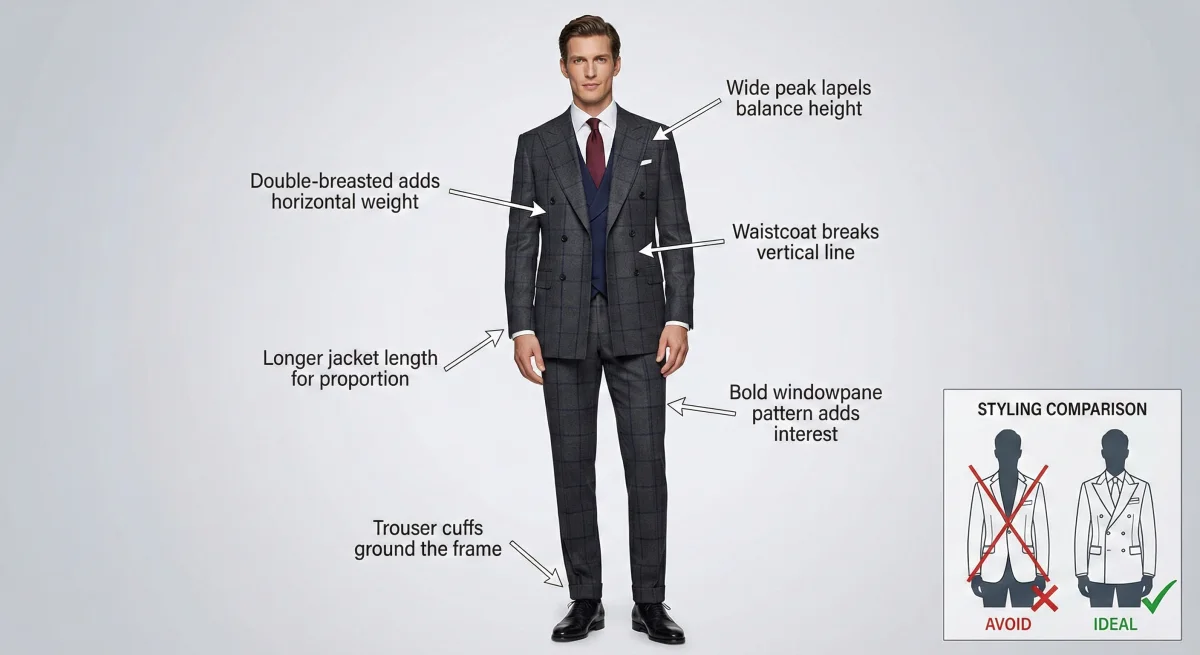
- Jacket vs blazer choice: Tall men are ideal candidates for double-breasted blazers and suit jackets, which add horizontal visual weight across the chest and create a more balanced silhouette.
- Jacket length: Opt for slightly longer jacket lengths that provide adequate coverage. A jacket that's too short will make arms and legs appear disproportionately long.
- Lapel width: Wider peak lapels (3.75-4 inches) complement a tall frame, adding necessary visual weight to the upper body. Narrow lapels can make a tall man appear even more elongated.
- Three-piece suits: Adding a waistcoat creates depth and breaks up the vertical line, preventing the "tall column" effect. This is particularly effective for wedding suits.
- Patterns and textures: Tall men can confidently wear bold patterns like large windowpane checks, Glen plaids, and textured fabrics like tweed and flannel, which add visual interest and weight.
- Horizontal elements: Details like ticket pockets, double vents, and contrasting buttons on blazers add horizontal visual breaks that balance height.
- Trouser styling: Trousers with a slight break or permanent cuffs (turn-ups) help "ground" a tall frame, preventing the appearance of legs that go on forever.
Wedding role recommendations:
- Groom: Double-breasted suit in navy or charcoal with peak lapels, or a three-piece single-breasted suit with a contrasting waistcoat.
- Groomsmen: Single-breasted suit jackets with wider lapels, ensuring jacket length is adequate for taller builds.
- Guest: Textured blazer in tweed or flannel paired with dress trousers, adding visual interest without overwhelming formality.
Consider Dunnio Tailor's three-piece suit options (https: //dunniotailor.com/men/3-pieces-suit) to add depth and proportion to a tall frame.
4.3 Athletic and inverted triangle build: Balancing broad shoulders
Men with broad shoulders and narrow waists require tailoring that acknowledges their muscularity without exaggerating it.
- Jacket vs blazer choice: Both work well, but construction is critical. Avoid heavily padded shoulders, which will make an athletic build appear overly broad or costume-like.
- Soft shoulder construction: Opt for natural or lightly padded shoulders that follow your body's existing structure. Australian brands like P Johnson specialize in this softer approach.
- Significant waist suppression: The jacket must be tapered at the waist to highlight the V-shaped torso. Without this tailoring, the jacket will hang straight from the shoulders, creating a boxy, unflattering silhouette.
- Lapel width: Wider peak lapels (3.5-4 inches) complement broad shoulders and prevent the head from appearing small in proportion to the body.
- Avoid tight fits: While the jacket should be fitted, overly tight garments will pull across the chest and shoulders, creating unsightly stress lines and restricting movement.
- Fabric choice: Avoid overly stiff fabrics that add bulk. Instead, choose drapey fabrics like Super 120s-150s wool that conform to the body's natural shape.
- Trouser balance: Pair jackets and blazers with trousers that have a clean, straight leg to balance the broader upper body. Avoid overly tapered or skinny trousers, which can make the upper body appear even larger.

Wedding role recommendations:
- Groom: Single-breasted suit with soft shoulders and significant waist suppression, in a drapey fabric like mohair-blend wool.
- Groomsmen: Matching soft-shoulder suit jackets, ensuring consistent fit across different athletic builds.
- Guest: Navy blazer with natural shoulders paired with straight-leg dress trousers in grey or tan.
Use Dunnio Tailor's 3D customization tool to visualize how different shoulder constructions and waist suppression levels will look on an athletic build.
4.4 Broad and stocky build: Creating a streamlined silhouette
For gentlemen with broader builds and fuller midsections, the goal is to create vertical lines and avoid adding visual bulk.
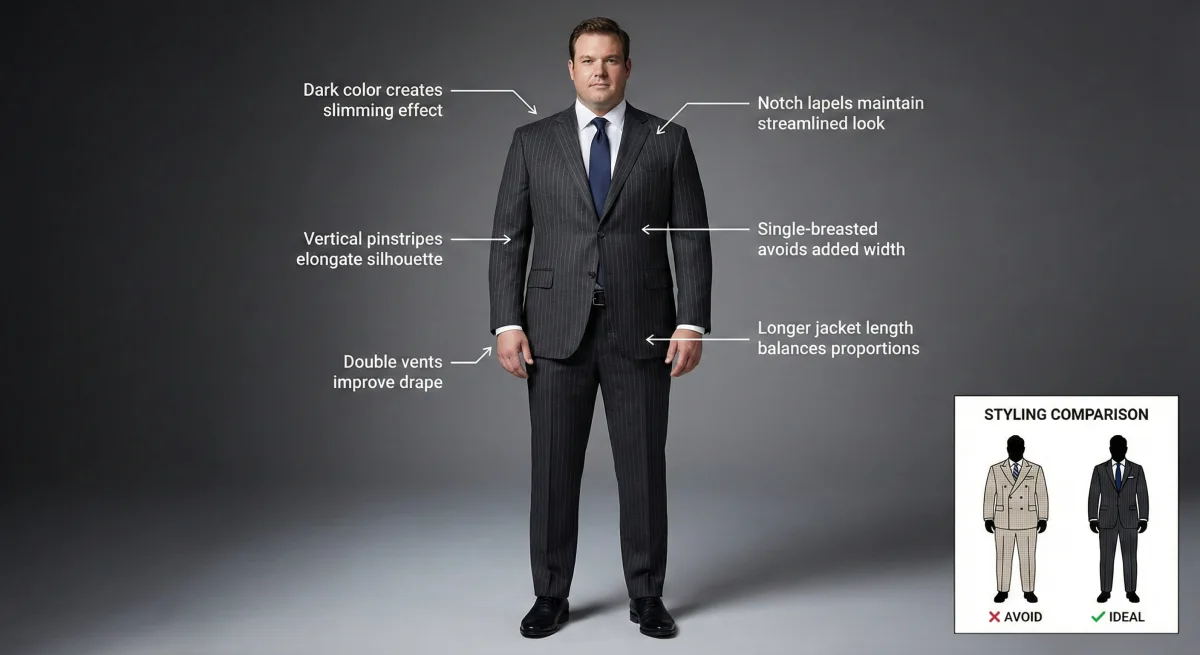
- Jacket vs blazer choice: Single-breasted jackets and blazers are strongly preferred. Double-breasted styles add horizontal visual weight and can make a broader build appear larger.
- Dark, solid colours: Navy, charcoal, and black are your allies. These colours have a slimming effect and create a streamlined appearance. Avoid light colours and bold patterns, which draw attention to size.
- Vertical patterns: Pinstripes and subtle vertical textures like herringbone create elongating lines that slim the silhouette.
- Longer jacket length: A slightly longer jacket that fully covers the seat creates a more balanced proportion and avoids the appearance of the jacket "riding up" over the midsection.
- Notch lapels: Medium-width notch lapels (3-3.25 inches) are more flattering than wide peak lapels, which can add unnecessary width to the chest.
- Single vent or double vents: Avoid centre vents, which can pull open over the seat. Double vents (side vents) provide better drape and movement.
- Avoid bulk: Skip heavy shoulder padding, thick fabrics, and patch pockets, all of which add visual weight. Instead, choose lightweight wools and streamlined details.
- Trouser coordination: When wearing a blazer, choose trousers in the same colour family to create an unbroken vertical line. A navy blazer with navy or charcoal trousers is more slimming than navy with khaki.
Wedding role recommendations:
- Groom: Single-breasted charcoal or navy suit with subtle pinstripe, ensuring proper jacket length and waist fit.
- Groomsmen: Matching single-breasted suit jackets in dark colours, with consistent styling across different body types.
- Guest: Navy blazer with charcoal dress trousers, avoiding casual combinations that can appear sloppy.
Explore Dunnio Tailor's custom jacket options with specific tailoring for broader builds, including optimal jacket length and vent placement.
4.5 Balanced and proportionate build: Maximum versatility
Gentlemen with balanced proportions have the most flexibility in jacket and blazer selection, able to wear virtually any style successfully.
- Jacket vs blazer choice: All options work well. Experiment with double-breasted blazers, three-piece suits, and textured sports coats to add personality to your wardrobe.
- Focus on fit: With balanced proportions, the quality of fit becomes paramount. Invest in made-to-measure or bespoke tailoring to achieve the perfect shoulder line, sleeve length, and waist suppression.
- Experiment with details: Try different lapel styles (peak, notch, shawl), button configurations (one-button, two-button, three-button), and pocket styles (flap, patch, jetted) to discover your personal style.
- Colour and pattern freedom: Balanced builds can confidently wear bold colours, large patterns, and textured fabrics without overwhelming the frame.
Wedding role recommendations:
- Groom: Any style that reflects personal taste, from classic navy suit to bold velvet dinner jacket to three-piece tweed ensemble
- Groomsmen: Coordinated to complement the groom's choice while maintaining individual fit
- Guest: Full range of options, from formal suit to casual blazer and trousers combination
Use Dunnio Tailor's 3D design tools to experiment with different styles and find your signature look across suits, jackets, and vests.
5. Styling guide: When to wear what
Understanding the technical differences between jackets and blazers is only half the battle. Knowing when to wear each garment type ensures you're appropriately dressed for every occasion.
5.1 Formal occasions: Suit jacket territory
Certain events demand the cohesive, polished appearance that only a full suit can provide.
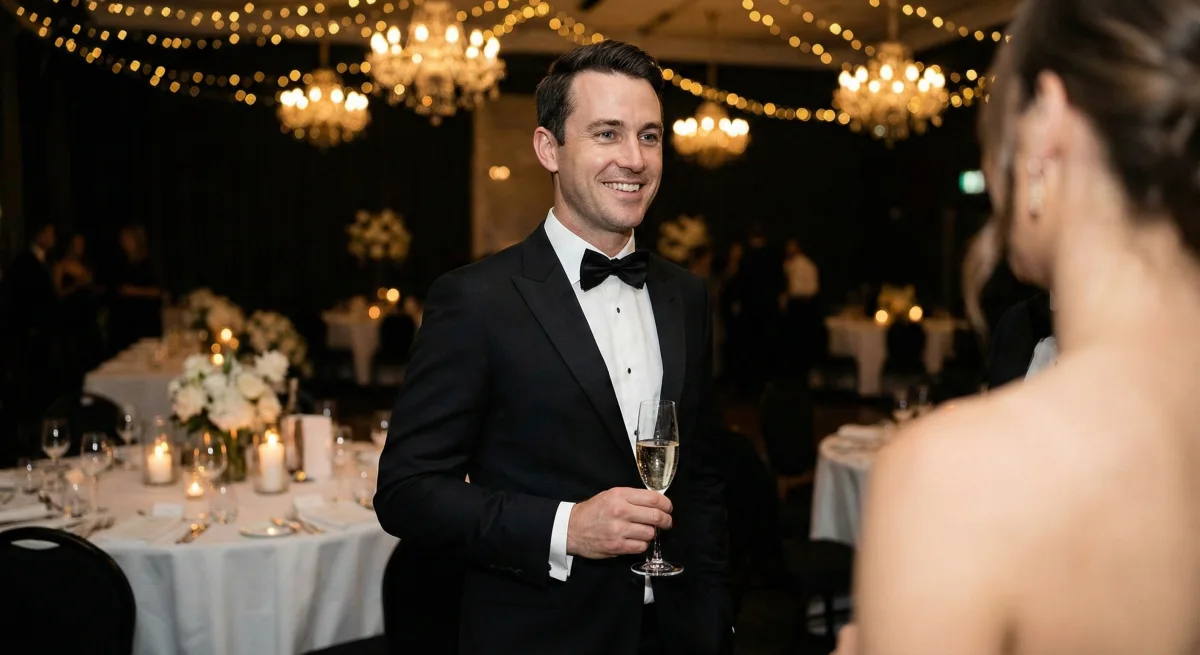
- Black-tie adjacent events: While a tuxedo is ideal for black-tie, a dark suit jacket with matching trousers is acceptable for "black-tie optional" or "formal" dress codes. Pair with a white dress shirt, black bow tie or necktie, and patent leather or highly polished oxfords.
- Job interviews: Unless you're interviewing in a highly creative industry, a suit jacket with matching trousers signals professionalism and respect for the opportunity. Navy and charcoal are safest choices.
- Formal weddings: When the invitation specifies "formal" or "black-tie optional," a suit jacket is required. For daytime weddings, navy or grey suits work well. For evening weddings, charcoal or black suits are appropriate.
- Business presentations: When presenting to clients, boards, or large audiences, a suit jacket projects authority and competence. This is not the time to experiment with blazer and trouser combinations.
- Court appearances: Legal settings demand the formality of a full suit, typically in conservative navy or charcoal.
- Funerals and memorial services: A dark suit jacket with matching trousers shows respect and solemnity. Black, charcoal, or navy are appropriate choices.
For these occasions, explore Dunnio Tailor's custom suit collection to ensure a perfect fit that conveys professionalism and polish.
5.2 Semi-formal occasions: Blazer versatility
Blazers excel when the occasion calls for sophistication without the rigidity of a full suit.
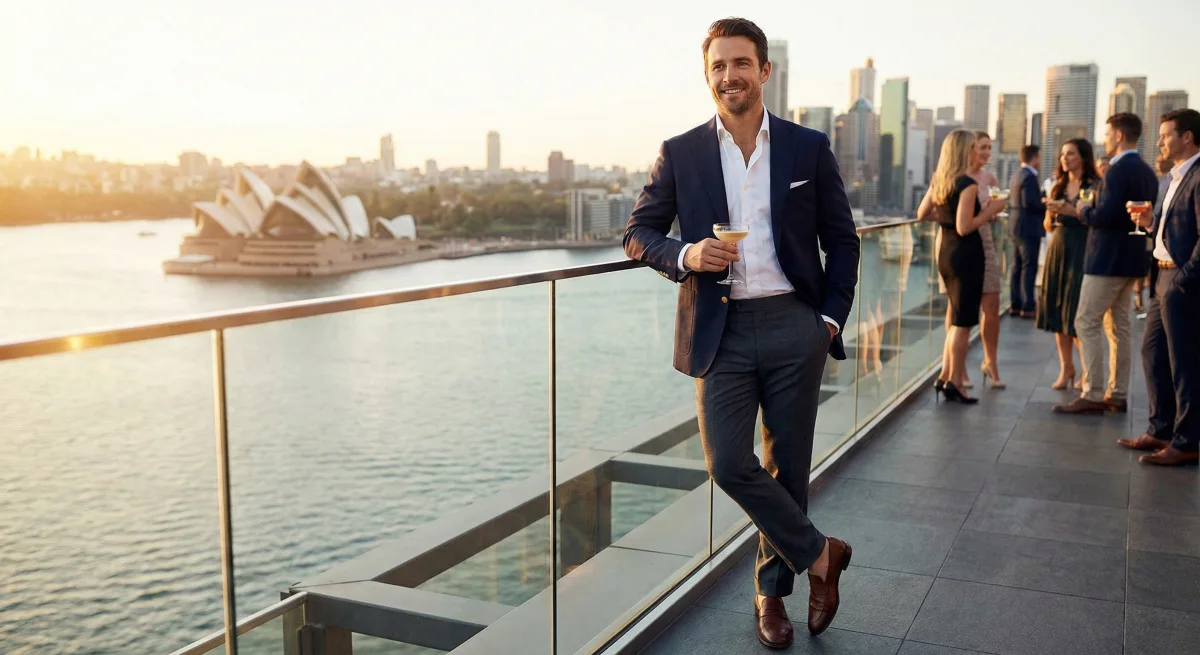
- Cocktail parties: A navy blazer paired with grey or charcoal dress trousers, white dress shirt, and leather dress shoes strikes the perfect balance between formal and approachable.
- Business-casual workplaces: Many modern Australian offices have adopted business-casual dress codes. A blazer with dress trousers or chinos, paired with a dress shirt (tie optional), meets this standard perfectly.
- Semi-formal weddings: When the invitation says "cocktail attire" or "semi-formal," a blazer with contrasting trousers is ideal. Navy blazer with grey trousers is a classic combination, while tobacco or forest green blazers offer more personality.
- Upscale dining: Fine dining restaurants appreciate the effort of a blazer, even if they don't enforce a strict dress code. Pair with a crisp shirt and quality trousers.
- Theatre and cultural events: Opera, ballet, and theatre performances are traditional blazer occasions, particularly evening performances.
- Smart-casual social events: Garden parties, milestone birthday celebrations, and anniversary dinners all suit blazer styling.
- Date nights: A well-fitted blazer elevates a date night outfit, showing you've made an effort without appearing overly formal.
For wedding guests, a navy blazer paired with custom trousers offers versatility across multiple wedding styles and seasons.
5.3 Casual sophistication: Sports coat styling
Sports coats bring personality and texture to casual occasions while maintaining a degree of polish.
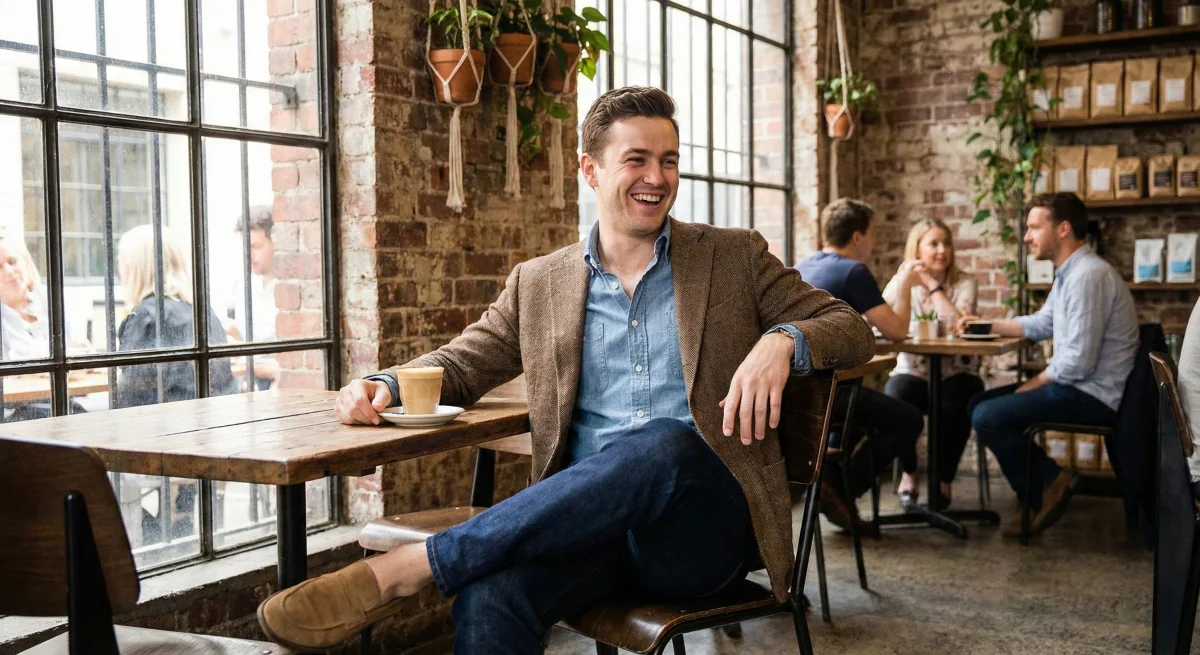
- Casual Fridays: A tweed or flannel sports coat over a casual shirt (Oxford cloth button-down or chambray) with chinos creates an approachable yet put-together look.
- Weekend social events: Brunches, casual dinners, and daytime gatherings are perfect sports coat territory. Pair with jeans or chinos and loafers or clean sneakers.
- Creative industry events: Art openings, book launches, and creative networking events welcome the personality of a patterned sports coat.
- Casual outdoor weddings: For rustic, vineyard, or beach weddings with relaxed dress codes, a linen or cotton sports coat over a casual shirt works beautifully.
- Travel: A sports coat in a wrinkle-resistant fabric like wool-mohair blend elevates airport and in-flight appearance while remaining comfortable.
- Academic settings: Professors and academics have long favoured sports coats, particularly in tweed and corduroy, for their combination of comfort and scholarly appearance.
- Autumn and winter casual wear: Layering a sports coat over knitwear or a turtleneck creates a sophisticated cold-weather look suitable for weekend activities.
5.4 Australian wedding trends 2025-2026
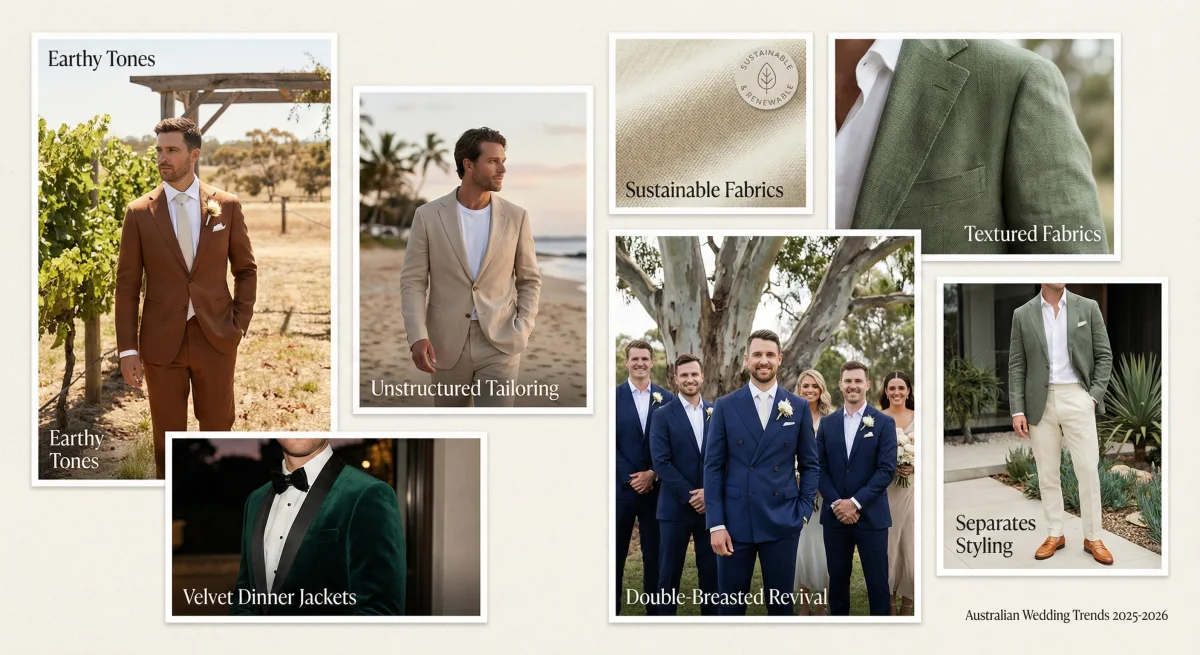
Australian wedding fashion continues to evolve, with several key trends influencing jacket and blazer choices for the upcoming seasons.
- Earthy, grounded tones: Navy and grey remain popular, but tobacco brown, moss green, terracotta, and sage are gaining traction for grooms and groomsmen. These colours photograph beautifully in natural light and complement Australia's outdoor wedding venues.
- Textured fabrics: Smooth worsted wools are giving way to textured alternatives like linen-wool blends, hopsack weaves, and subtle herringbone patterns that add depth to wedding photography.
- Unstructured tailoring: Soft, unpadded shoulders and unlined jackets reflect the "relaxed elegance" aesthetic popular in Australian weddings. This approach suits outdoor venues and warm-weather celebrations.
- Double-breasted revival: Grooms are increasingly choosing double-breasted suit jackets to distinguish themselves from groomsmen, who wear single-breasted versions in the same fabric.
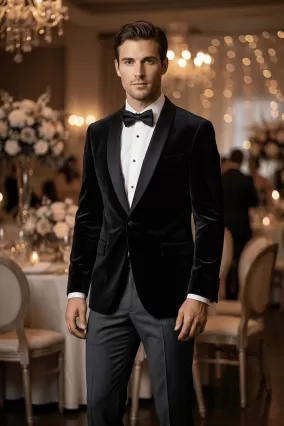
- Velvet dinner jackets: For evening receptions, velvet blazers in deep jewel tones (emerald, sapphire, burgundy) create a luxurious, cinematic effect.
- Separates over matching suits: Many Australian grooms now wear a blazer with contrasting trousers rather than a traditional suit, reflecting a more personalized, less formal approach.
- Sustainable fabrics: Eco-conscious couples are requesting Australian Merino wool and other sustainable fabrics for wedding attire.
For grooms planning their wedding attire, explore Dunnio Tailor's custom wedding suit collection and linen wedding suit options for on-trend, climate-appropriate choices.
6. The custom tailoring advantage
Understanding the difference between a jacket and a blazer is valuable, but truly maximizing your wardrobe requires proper fit. This is where custom tailoring transforms good garments into exceptional ones.
6.1 Why made-to-measure matters
Off-the-rack jackets and blazers are designed to fit a standardized body type that may not match your proportions. Made-to-measure tailoring addresses this limitation.
- Shoulder fit: The most critical element of jacket fit, shoulders cannot be easily altered after construction. Custom tailoring ensures the shoulder seam sits exactly where your shoulder ends, creating a natural, comfortable fit.
- Sleeve length: Custom jackets feature sleeves cut to your exact arm length, ensuring the proper quarter-inch of shirt cuff shows beyond the jacket sleeve.
- Jacket length: Made-to-measure allows precise jacket length adjustment, crucial for shorter and taller men who struggle with standard sizing.
- Waist suppression: Custom tailoring can create the exact degree of waist shaping that flatters your build, from minimal suppression for straighter body types to significant nipping for athletic builds.
- Posture accommodation: If you have rounded shoulders, a forward head posture, or an asymmetrical build, custom tailoring can adjust the pattern to accommodate these realities.
- Fabric choice: Made-to-measure gives you access to hundreds of fabric options beyond the limited selection available in ready-to-wear.
- Detail customization: Choose your preferred lapel style, button configuration, pocket type, vent style, and lining to create a truly personalized garment.
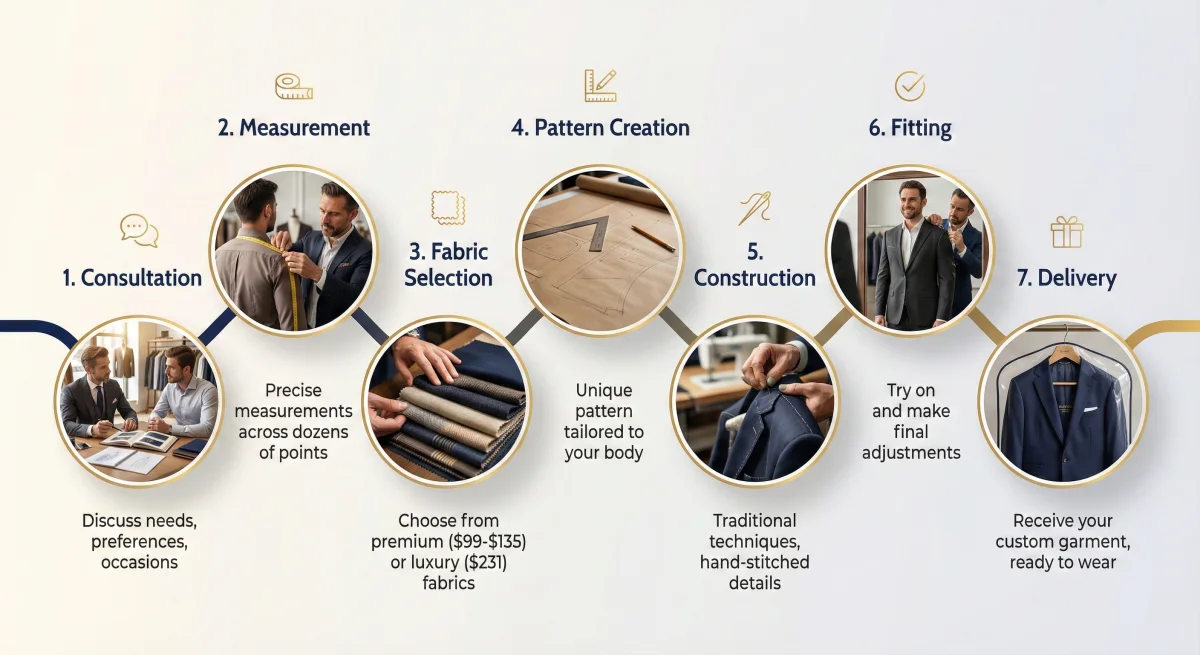
6.2 Dunnio Tailor's custom process
Dunnio Tailor's made-to-measure service ensures every jacket and blazer is crafted to your exact specifications.
- Step one: Consultation. Discuss your needs, preferences, and the occasions you'll wear the garment. Our experts guide you through fabric selection, style options, and detail choices.
- Step two: Measurement. Precise measurements are taken across dozens of points, including shoulder width, chest circumference, waist, sleeve length, and back length. Posture and body asymmetries are noted.
- Step three: Fabric and detail selection. Choose from Dunnio's premium fabric range ($99-$135) or luxury mill fabrics ($231), then select lapel style, buttons, pockets, and lining.
- Step four: Pattern creation. Your measurements are used to create a unique pattern tailored to your body.
- Step five: Construction. Skilled tailors construct your jacket using traditional techniques, including hand-stitched details where appropriate.
- Step six: Fitting and adjustment. Try on your garment and make any final adjustments to ensure perfect fit.
- Step seven: Delivery. Receive your custom jacket or blazer, ready to wear with confidence.
6.3 3D design tool: Visualize before you commit
Dunnio Tailor's innovative 3D customization platform allows you to visualize your jacket or blazer before it's made, reducing uncertainty and ensuring satisfaction.
- Real-time visualization: See how different fabrics, colours, and details look together in a realistic 3D rendering.
- Style experimentation: Try various lapel widths, button configurations, and pocket styles to find your ideal combination.
- Colour coordination: Test different jacket and trouser combinations to ensure your blazer pairs well with your existing wardrobe.
- Share and collaborate: Share your 3D design with your partner, wedding party, or style advisor for feedback before finalizing your order.
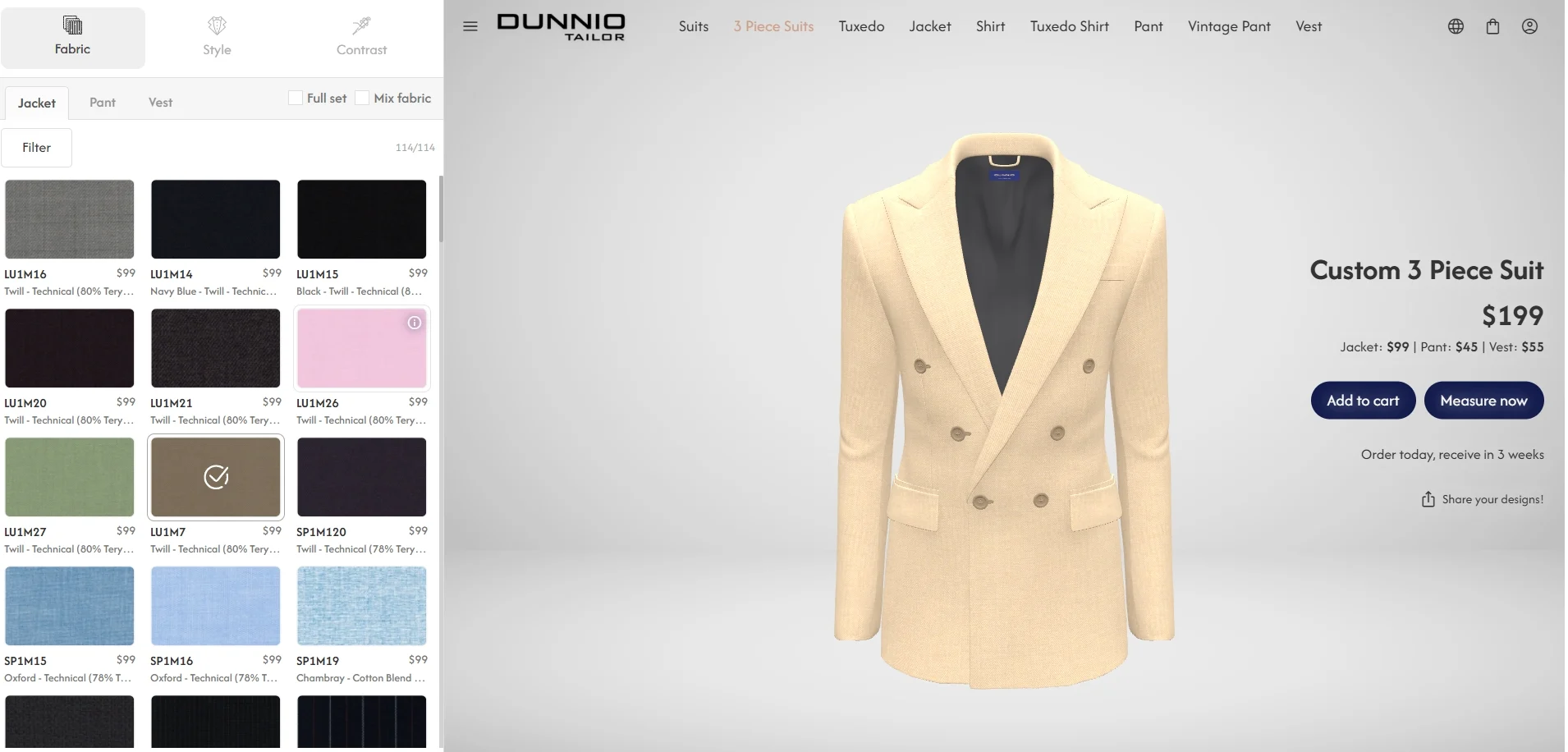
Explore the 3D customization tools for suits, jackets and complete wedding ensembles including vests and trousers.
6.4 Investment value: Custom vs off-the-rack
While custom tailoring requires a higher initial investment than off-the-rack options, the long-term value is substantial.
- Perfect fit from day one: No need for expensive alterations that may still not achieve ideal fit.
- Longevity: Well-fitted garments experience less stress at seams and pressure points, lasting significantly longer than ill-fitting alternatives.
- Versatility: A custom blazer that fits perfectly can be worn more frequently and in more contexts than a mediocre off-the-rack option.
- Confidence: The psychological benefit of knowing you look your best is immeasurable, particularly for important occasions like weddings and career milestones.
- Resale value: High-quality custom garments maintain value better than mass-produced alternatives.
For Australian gentlemen serious about their wardrobe, custom tailoring from Dunnio Tailor represents an investment in quality, fit, and personal style that pays dividends for years.
7. Frequently asked questions
7.1 Can I wear a suit jacket as a blazer?
While technically possible, it's generally discouraged. Suit jackets are designed to be worn with matching trousers, and the fabric is often too formal or refined to pair well with casual pants. Additionally, wearing the jacket separately will cause it to fade and wear at a different rate than the trousers, eventually making them unmatchable. If you want a versatile standalone jacket, invest in a proper blazer designed for that purpose.
7.2 What colour blazer is most versatile for Australian men?
Navy blue remains the most versatile blazer colour, working across seasons, occasions, and trouser pairings. A navy blazer pairs beautifully with grey, charcoal, khaki, white, and even dark denim trousers. For Australian conditions, choose a mid-weight navy blazer (250-280 grams) in 100% Merino wool for maximum year-round wearability.
7.3 Should I choose a suit jacket or blazer for a semi-formal wedding?
For semi-formal or cocktail attire weddings, a blazer with contrasting trousers is ideal. A navy blazer with grey dress trousers, paired with a crisp white shirt and leather dress shoes, strikes the perfect balance. This combination is less formal than a full suit but more polished than a sports coat, making it appropriate for most Australian wedding contexts.
7.4 How should a jacket or blazer fit in the shoulders?
The shoulder seam should sit exactly where your shoulder ends and your arm begins. If the seam extends beyond this point, the jacket is too large. If it sits inward on your shoulder, the jacket is too small. Shoulder fit cannot be easily altered, making it the most critical measurement in jacket selection. This is why made-to-measure tailoring offers such significant advantages over off-the-rack options.
7.5 What's the difference between half-canvas and full-canvas construction?
Canvas construction refers to a layer of horsehair canvas between the jacket's outer fabric and inner lining, which helps the jacket maintain shape and drape naturally. Full-canvas construction extends through the entire front of the jacket, offering superior drape and longevity but at higher cost. Half-canvas construction features canvas in the chest and lapels only, providing many of full-canvas benefits at a more accessible price point. Both are superior to fused construction, where fabric layers are glued together.
7.6 Can I wear a blazer to a job interview?
It depends on the industry and company culture. For conservative industries like finance, law, and corporate business, a full suit is safer. For creative industries, tech startups, and casual workplaces, a blazer with dress trousers can be appropriate. When in doubt, research the company's dress code or ask your recruiter. It's better to be slightly overdressed than underdressed for an interview.
7.7 What fabric weight is best for Brisbane's climate?
For Brisbane's subtropical climate, prioritize fabrics in the 180-250 gram range. Pure linen, linen-wool blends, tropical wool, and lightweight cotton are ideal for summer months (October-March). For winter months (June-August), 250-280 gram worsted wool provides adequate warmth without being excessive. Avoid heavy tweeds and flannels, which are uncomfortably warm for Brisbane's mild winters.
7.8 How many jackets and blazers should a well-dressed man own?
A foundational wardrobe should include at minimum: one navy suit (jacket with matching trousers), one charcoal or grey suit, one navy blazer, and one sports coat in a textured fabric. This provides coverage for formal occasions (suits), semi-formal events (blazer), and casual sophistication (sports coat). As your wardrobe develops, add seasonal variations, additional colours, and special-purpose garments like wedding suits or dinner jackets.
7.9 Should groomsmen wear suit jackets or blazers?
This depends on the wedding's formality and the groom's preference. For formal weddings, groomsmen should wear suit jackets matching their trousers, typically in a coordinated colour with the groom's suit. For semi-formal or casual weddings, groomsmen can wear blazers with contrasting trousers. The key is consistency across the wedding party and appropriate coordination with the groom's attire. Explore Dunnio Tailor's wedding suit options for coordinated groomsmen styling.
7.10 How do I care for my jacket or blazer to maximize longevity?
Proper care extends the life of quality jackets and blazers significantly. Always hang jackets on proper wooden or padded hangers to maintain shoulder shape. Brush the fabric after each wear to remove dust and debris. Spot clean minor stains rather than frequent dry cleaning, which can damage fibres over time. Dry clean only when necessary, typically 2-3 times per year for regularly worn garments. Allow jackets to rest between wears, ideally 48 hours, to let fibres recover. Store in breathable garment bags, never plastic, to prevent moisture buildup and fabric damage.
Conclusion
The distinction between a jacket and a blazer extends far beyond simple terminology. Understanding these differences empowers you to build a versatile, climate-appropriate wardrobe that serves you across Australia's diverse occasions and environments. A suit jacket provides the formal polish required for business and ceremonial events, while a blazer offers the flexibility to navigate semi-formal contexts with ease. Sports coats add personality and texture to casual occasions without sacrificing sophistication.
For Australian gentlemen, fabric selection is as crucial as garment type. Leveraging Australian Merino wool's natural performance benefits, choosing appropriate weights for your region's climate, and understanding when to deploy linen, cotton, or luxury blends ensures comfort and style year-round.
Body type considerations transform good tailoring into exceptional fit. Whether you're working with a short frame, tall build, athletic proportions, or broader silhouette, strategic jacket and blazer selection enhances your natural assets while minimizing concerns.
Ultimately, the custom tailoring advantage cannot be overstated. Made-to-measure garments from Dunnio Tailor ensure perfect fit, personalized details, and fabric choices that reflect your lifestyle and preferences. Whether you're preparing for a Hunter Valley wedding, building your professional wardrobe, or simply elevating your everyday style, investing in properly fitted jackets and blazers pays dividends in confidence, versatility, and longevity.
Explore Dunnio Tailor's full range of custom tailoring services, from bespoke suits to wedding ensembles, and experience the difference that perfect fit and quality craftsmanship make in your wardrobe and your life.