Table of Contents[Hide]
- 1. Understanding groomsmen suits in Australia
- 2. Choosing the right color for your groomsmen suits
- 3. Climate and seasonal guide for Australian weddings
- 4. Fabric and style fundamentals
- 5. Coordinating your groomsmen party
- 6. Practical planning essentials
- 7. Accessories that complete the look
- 8. Current trends and common mistakes
- 9. Conclusion: creating your perfect Australian groomsmen look
Choosing groomsmen wedding suits in Australia isn't like anywhere else. From Byron Bay's summer heat to Melbourne's unpredictable winters, our climate extremes demand more than off-the-rack solutions. Add the Australian "relaxed formality" paradox where overdressing seems pretentious but underdressing shows disrespect and you've got a genuine challenge. This comprehensive guide solves every dilemma: which colors work across seasons, how to coordinate different body types and budgets, and when to buy versus rent. Whether you're searching for navy blue wedding suits for groom and groomsmen or exploring grey and black options, discover how to create a look that's authentically Australian: polished but effortless, formal but comfortable.
1. Understanding groomsmen suits in Australia
1.1 What makes Australian groomsmen suits unique
In Australian wedding tradition, groomsmen suits serve as the visual anchor of the wedding party, creating the critical bridge between the groom's distinct attire and the broader guest dress code. But what sets Australia apart is our distinct ownership model.
Unlike North American traditions favoring identical rental tuxedos, Australians view purchasing the suit as an investment piece. The typical Australian groom now averages 32 years old, more financially established than previous generations, and expects the suit to serve beyond the wedding day for job interviews, other weddings, or business meetings.
Looking for a suit that works as hard as you do beyond the wedding day? Dunnio Tailor specializes in custom-fitted wedding suits and tuxedos designed for Australian conditions crafted to perform at your wedding and every important occasion after.
The typical groomsmen party consists of three to five individuals who often vary significantly in body type and personal style. This creates a unique challenge: attire must withstand Australia's climatic extremes while meeting the demands of modern, high-definition wedding photography.
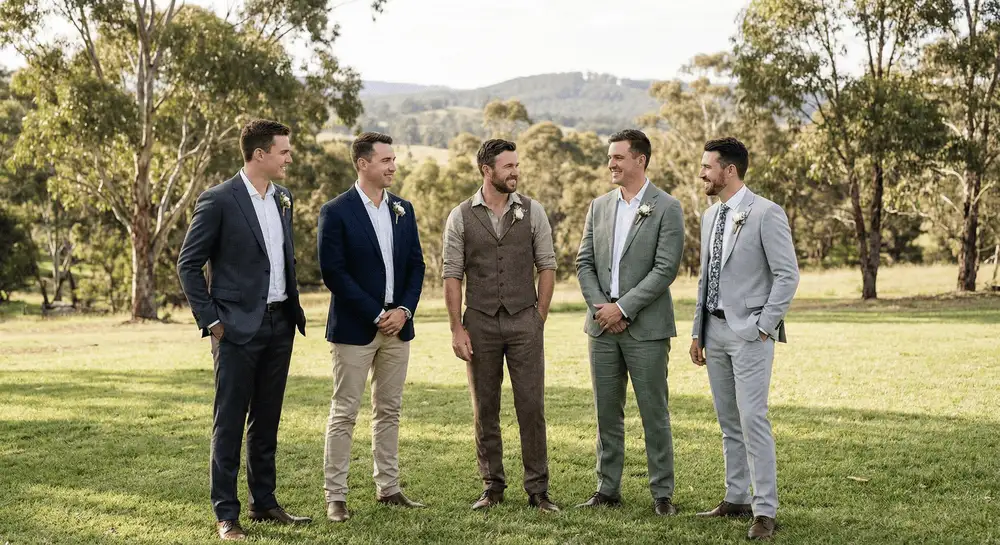
The definition of the suit itself has become fluid. Modern interpretations include tailored separates like textured blazers paired with chinos, or waistcoat and trouser combinations without jackets for casual settings. This reflects our cultural shift toward egalitarianism and pragmatism, where comfort is valued alongside style.
1.2 The ownership culture and relaxed formality paradox
Perhaps the most distinctly Australian aspect is what industry insiders call the relaxed formality paradox. Australian culture resists pretension. Overdressing can be viewed as trying too hard, yet underdressing is seen as disrespectful.
Groomsmen attire must navigate this narrow channel, looking sharp but effortless. This drives specifically Australian trends like wearing suits with loafers and no socks at beach weddings, or leaving collars open at outdoor ceremonies.
This cultural nuance influences purchasing behavior too. The egalitarian nature of Australian friendship means grooms often hesitate to impose high costs on their mates. This has driven the popularity of groomsmen packages from major retailers, like buy three suits and get the fourth free, turning the party into a bulk-buying collective.
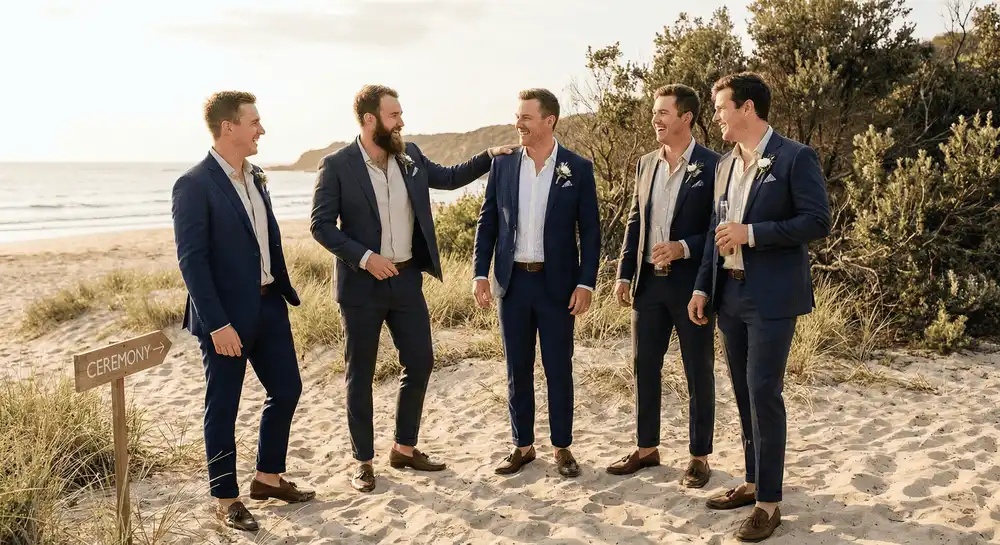
2. Choosing the right color for your groomsmen suits
2.1 Navy blue suits: the versatile champion
Navy blue wedding suits for groom and groomsmen represent the largest volume category in the Australian market, and for excellent reasons.
Why navy dominates
Navy is culturally coded as versatile, trustworthy, and professional. It's the safest investment for groomsmen who intend to reuse the suit for business or social events. It flatters almost all skin tones and photographs exceptionally well in diverse lighting conditions. Perhaps most importantly for Australian conditions, navy doesn't show sweat marks as readily as lighter colors.
Styling versatility
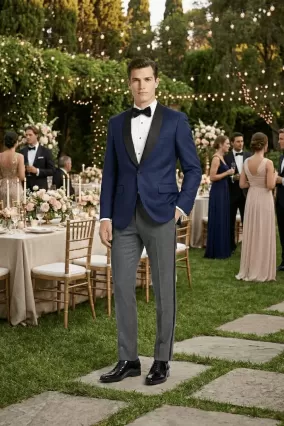
Navy serves as a neutral canvas that adapts to your setting. For rustic or winery weddings in the Hunter Valley or Barossa, navy pairs beautifully with brown leather boots and knit ties, creating warm, earthy aesthetics. For city or church weddings, it combines with crisp white shirts, silk ties, and black oxfords for sharp, authoritative looks.
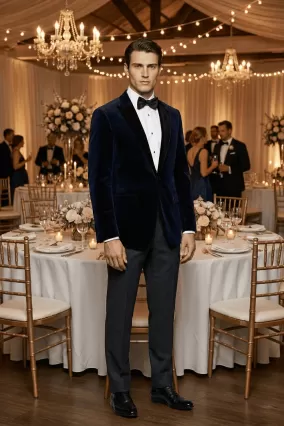
The midnight navy blue peak dinner suits - M3HL54
Products in the outfit
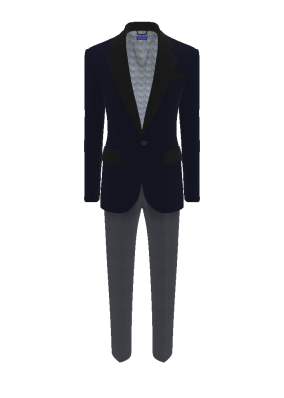
Jacket: 1 Buttons, Single Breasted | RegularNotch LapelNo Buttonhole | Curved | 2 Straight Pockets | 4 Working Buttons | No Vent - Pant: Narrow/Slim | Single Pleat | Slanted Pocket | Back Pocket - Single Opening | Single | Regular Cuff -
Shade variations
Midnight navy is often indistinguishable from black in low light, making it perfect for formal evening weddings where a tuxedo isn't mandated. Current trends favor textured weaves like birdseye or herringbone in navy, adding visual interest without changing the color, distinguishing wedding suits from standard corporate attire.

2.2 Black suits: timeless formal elegance
Black wedding suits for groom and groomsmen have seen a resurgence, driven by a return to Hollywood glamour and formal aesthetics.
Understanding black suits vs tuxedos
A black suit is distinct from a tuxedo. Tuxedos feature satin facings on lapels and satin stripes down trouser legs. Black suits lack these embellishments but still offer high formality, increasingly popular for cocktail dress codes where black tie isn't strictly enforced.
Elevating black beyond corporate
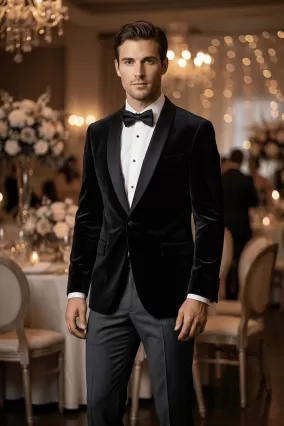
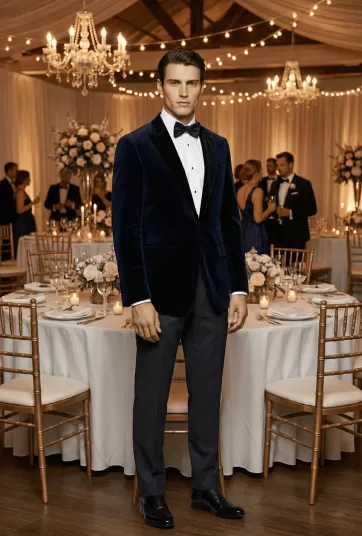
The challenge with black suits is differentiation from everyday corporate wear. Modern black wedding suits rely on texture and fit to elevate the look. Black velvet jackets for the groom have become a significant trend, offering luxurious contrast to groomsmen's wool. Sharkskin weaves with subtle sheen create visual interest in evening settings.

Black Velvet Dinner Jacket Ensemble
Products in the outfit
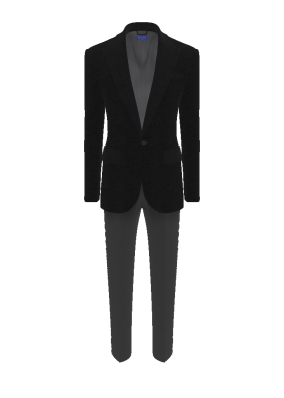
Jacket: 1 Buttons, Single Breasted | RegularPeak LapelNo Buttonhole | Curved | 2 Straight Pockets | 4 Working Buttons | No Vent - Pant: Narrow/Slim | Single Pleat | Slanted Pocket | Back Pocket - Single Opening | Single | Regular Cuff -
Best occasions for black
Black suits best suit urban, evening, or winter weddings. They can appear harsh in beach or midday garden settings and absorb heat in summer conditions. However, for formal ballroom receptions in Melbourne or sophisticated harbor-side evening weddings in Sydney, black projects elegance and timeless style.

2.3 Grey suits: the flexible option
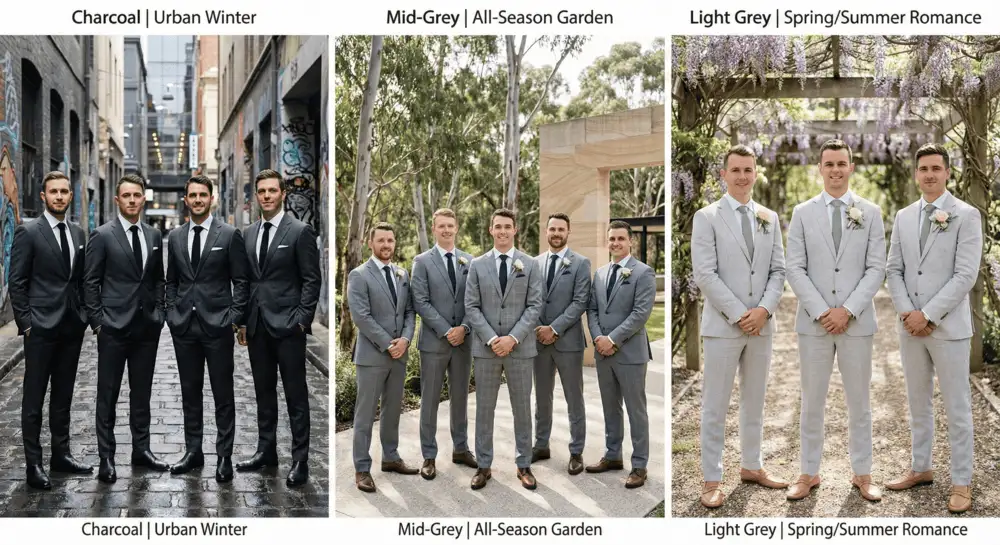
Grey wedding suits for groom and groomsmen offer the widest spectrum of formality, heavily utilized to bridge the bridal party and venue palette.
The shade spectrum
Charcoal grey presents a serious, formal alternative to navy, often chosen for urban winter weddings. It pairs well with black accessories and projects sleek, modern images.
Mid-grey offers all-season versatility and contemporary appeal, formal enough for traditional venues but relaxed enough for garden settings.
Light or dove grey has become a staple for spring and summer garden weddings. It reflects heat well and pairs beautifully with pastel bridesmaid dresses, creating soft, romantic aesthetics.
Practical considerations
Light grey comes with one caution: sweat visibility. In Australian summer conditions, perspiration marks can show on light grey fabrics, particularly cheaper cotton blends. Invest in high-quality moisture-wicking wools or technical fabric blends that hide perspiration marks.
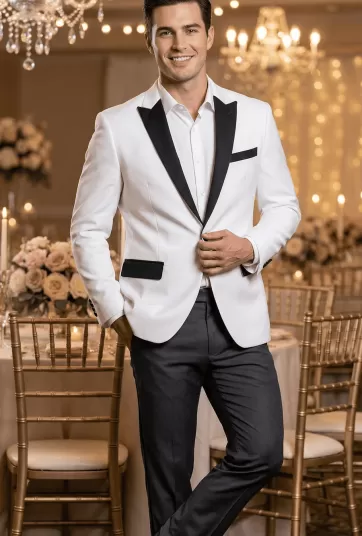
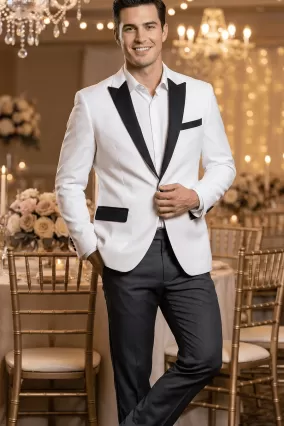
White Technical Twill Tuxedo with Black Satin Contrast
Products in the outfit
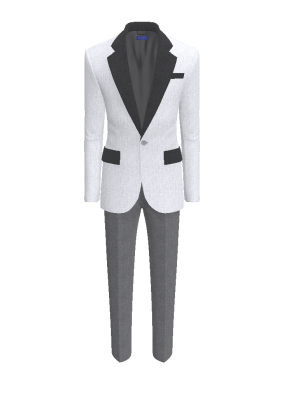
Jacket: 1 Buttons, Single Breasted | RegularNotch LapelNo Buttonhole | Curved | 2 Straight Pockets | 4 Working Buttons | No Vent - Pant: Narrow/Slim | Single Pleat | Slanted Pocket | Back Pocket - Single Opening | Single | Regular Cuff -
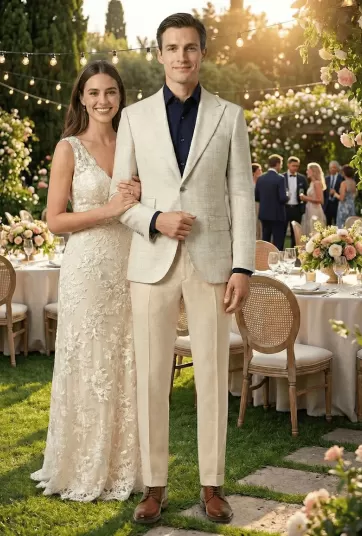
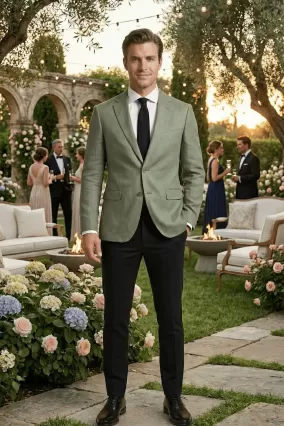
Gray blazer with beige trouser wedding suits - LU1M16
Products in the outfit

Jacket: 2 Buttons, Single Breasted | LargerPeak LapelNo Buttonhole | Curved | 2 Straight Pockets | 4 Standard Buttons | Side vent - Pant: Narrow/Slim | Single Pleat | Slanted Pocket | Back Pocket - Single Opening | Single | Regular Cuff -

Light grey wedding suit idea
Products in the outfit
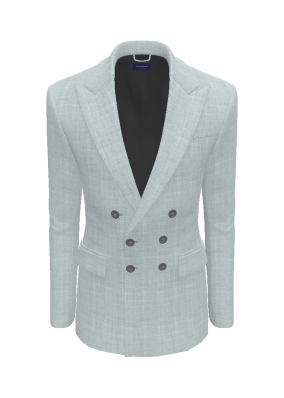
Jacket - NHDM5
$1356 Buttons, Double Breasted (2 to Close) | RegularPeak LapelNo Buttonhole | Straight | 2 Straight Pockets | 4 Standard buttons | Side vent
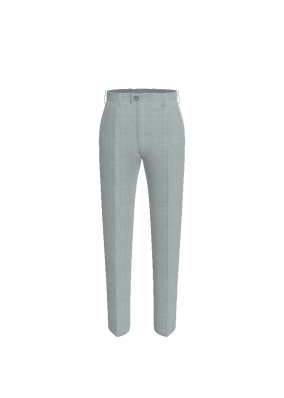
Pant - NHDM5
$61Narrow/Slim | Single Pleat | Slanted Pocket | Back Pocket - Single Opening | Single | Regular Cuff
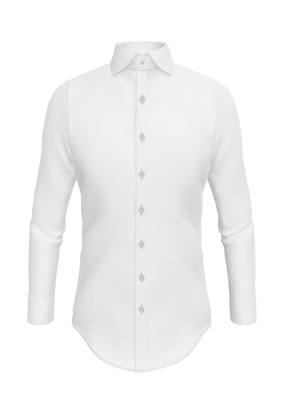
Shirt - SLU1M65
$38Long Sleeve | Single Placket | Tri-Tab | Round Collar | Round Cuff | 1 No Pocket Pocket
Grey is also the primary vehicle for patterns. A Prince of Wales check or subtle windowpane pattern in grey allows the groom to stand out while groomsmen wear solid grey, creating coordinated but hierarchically distinct looks.
2.4 Emerging earth tones
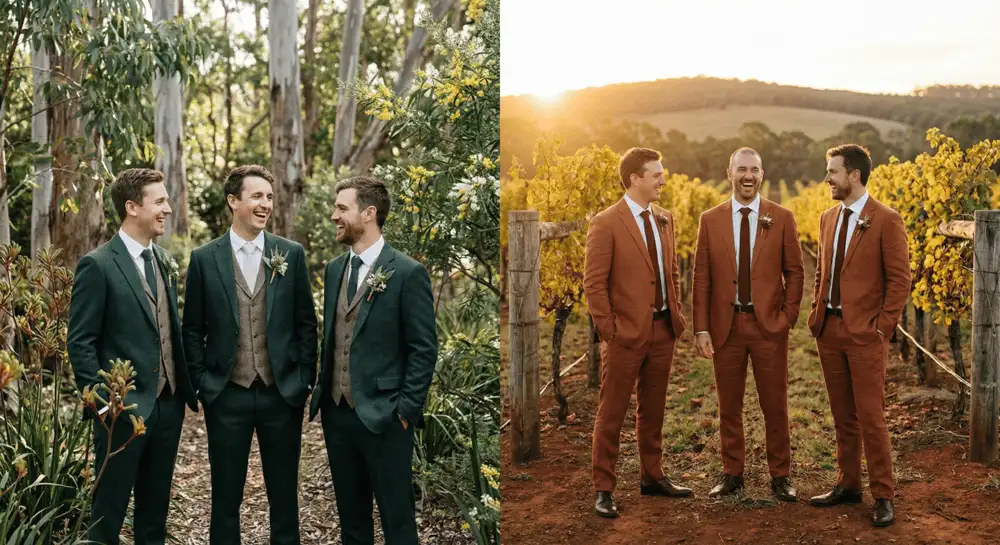
The Australian landscape, defined by eucalyptus greens, red earth, and golden sandstone, is heavily influencing current color trends.
Forest and olive green
Forest or olive green has transitioned from fringe trend to staple color. Green suits complement native flora arrangements popular in Australian weddings, from gum leaves to wattle and kangaroo paw. The color suits a wide range of complexions and creates sophisticated, nature-connected aesthetics.
Green works particularly well for outdoor weddings in botanical gardens, national parks, or rural properties, harmonizing with natural surroundings rather than competing with them.
Burgundy and rust tones
Burgundy or merlot offers warmth and richness for autumn and winter weddings. This deep red tone photographs beautifully and creates luxurious, romantic atmospheres. Burgundy is often used as a groom-only jacket color paired with black trousers.
Tan, beige, and rust have become synonymous with boho and rustic themes prevalent in Byron Bay and Margaret River. These colors require careful fabric selection in matte linen or high-quality cotton to avoid looking dated.
3. Climate and seasonal guide for Australian weddings
3.1 Summer wedding essentials
For weddings from December to February, or year-round in northern states, thermal regulation becomes the primary concern.
3.1.1 Fabric choices for hot weather
Linen and linen blends
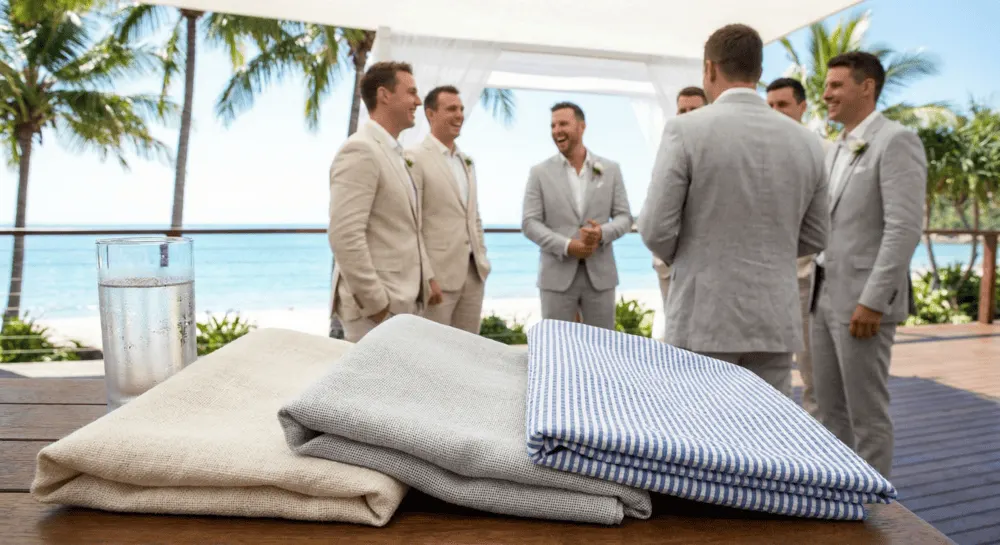
Linen has emerged as the aesthetic leader for coastal weddings, valued for its natural heat conductivity and distinctive texture. Linen fibers are hollow, allowing air to flow through and heat to dissipate quickly.
However, pure linen wrinkles aggressively. The premium solution is the linen-wool-silk blend, engineered to offer the best of all worlds. A typical blend might be 50 percent linen, 40 percent wool, and 10 percent silk. Linen provides breathability, wool adds elasticity and crease resistance, and silk contributes tensile strength and subtle luster.
Tropical weight wools
For tropical northern regions like Cairns or the Whitsundays, high humidity creates additional challenges. Tropical weight wool, typically under 240 grams per square meter, uses an open fresco weave that allows breeze to pass directly through the fabric. Seersucker cotton with its puckered weave that sits off the skin is another excellent option.

Navy casual outfit idea
Products in the outfit
Pant - CHLN18
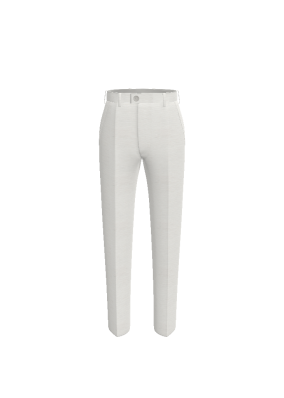
Sold outNarrow/Slim | Single Pleat | Slanted Pocket | Back Pocket - Single Opening | Single | Regular Cuff
Shirt - SLU1M65
$38Long Sleeve | Single Placket | Tri-Tab | Round Collar | Round Cuff | 1 No Pocket Pocket
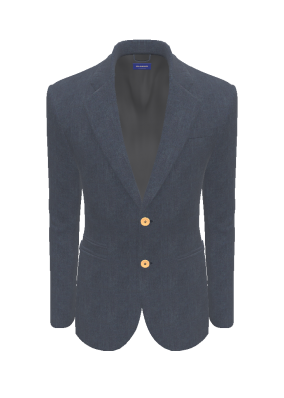
2 Buttons, Single Breasted | RegularNotch LapelNo Buttonhole | Curved | 2 Straight(No flaps) & 1 ticket pockets | 4 Standard buttons | Side vent
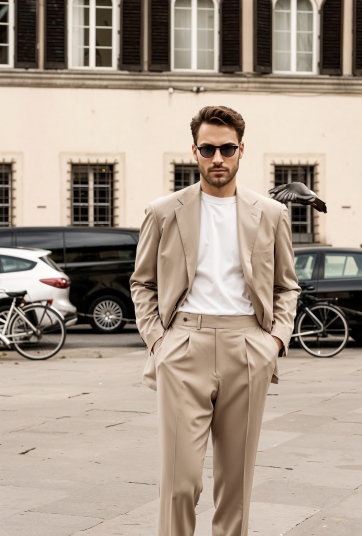
Casual Outfit Idea 06/2025
Products in the outfit
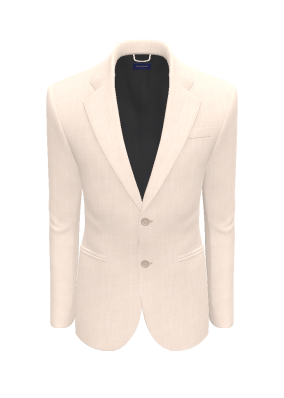
Jacket - NHDM11
$1352 Buttons, Single Breasted | RegularNotch LapelNo Buttonhole | Curved | 2 Straight pockets (No flap) | 4 Working buttons | Center vent
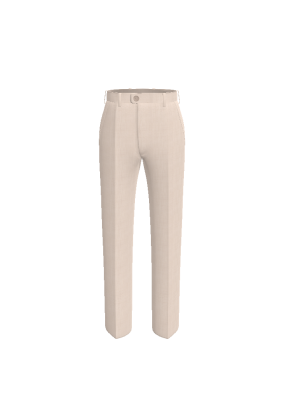
Pant - NHDM11
$61Normal/Straight | Single Pleat | Slanted Pocket | Back Pocket - Single Opening | Single | Regular Cuff
3.1.2 Construction and color considerations
Unstructured jackets
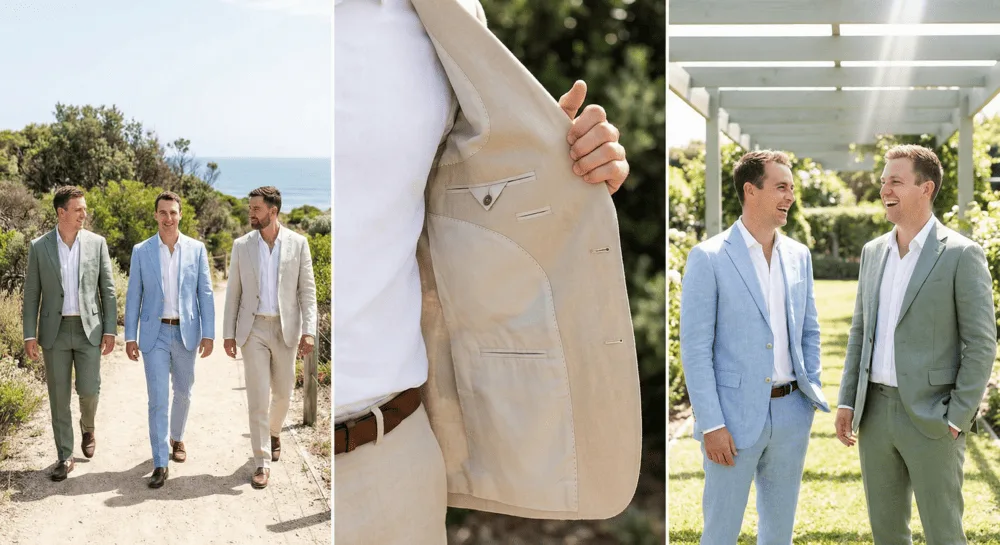
The unstructured or deconstructed jacket removes heavy internal horsehair canvas, shoulder padding, and synthetic rayon lining, creating a shell that allows air to circulate freely. Half-lined or butterfly-lined jackets, where lining is restricted to the sleeves and upper back, have become the standard for premium Australian summer tailoring.
Heat-reflective colors
Color selection serves a functional purpose. Light colors like oatmeal, sand, light blue, and sage green reflect solar radiation, keeping surface temperatures lower. Dark wools absorb heat, potentially raising the wearer's body temperature by several degrees.
3.2 Winter wedding options
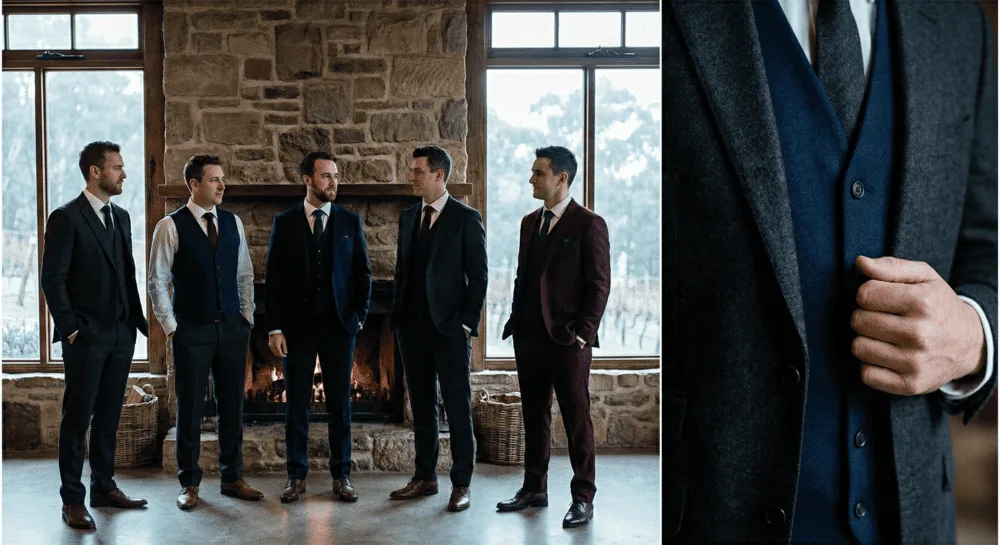
Winter weddings from June to August, particularly in southern states, require warmth without bulk. Heavier wools in flannel or twill weaves over 280 grams per square meter provide necessary insulation.
The three-piece advantage
The three-piece suit becomes particularly valuable in winter as a functional layering system. The waistcoat provides core warmth during outdoor ceremonies or photos, while the jacket can be removed during dancing without losing the formal silhouette.
Winter textures and colors
Flannel wools have a soft, brushed surface that traps air for insulation. Color palettes for winter can embrace darker, richer tones like charcoal, midnight navy, burgundy, and forest green, all working beautifully in winter light.
3.3 Regional variations across Australia
Tropical north
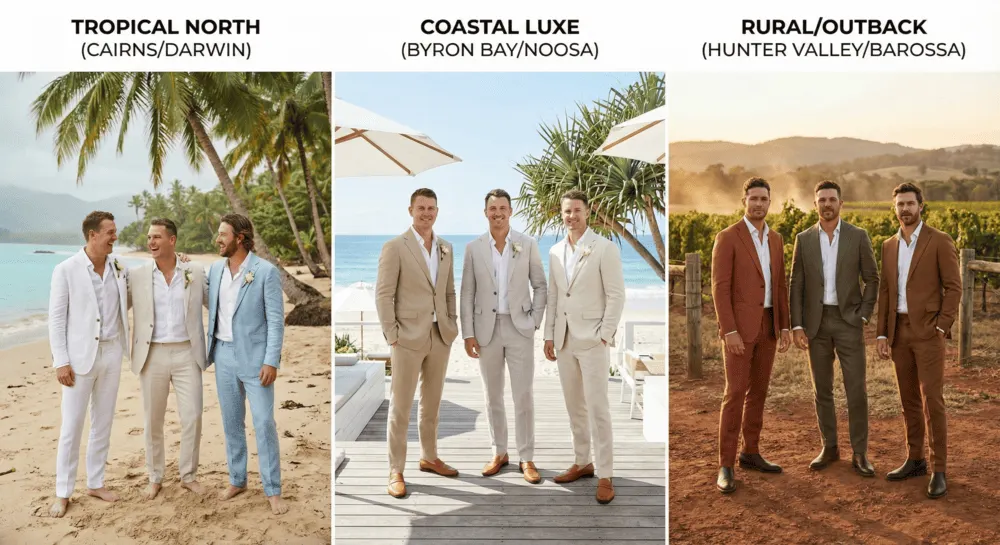
In Cairns, Darwin, and northern Queensland, year-round heat and humidity demand lightweight, breathable fabrics regardless of season. Linen, cotton, and lightweight tropical wools are essential. Colors should be light to reflect heat. Unstructured jackets are non-negotiable for comfort.
Temperate south
In Melbourne, Adelaide, Tasmania, and southern Victoria, weather variability is the primary challenge. A day reaching 35 degrees can drop to 18 degrees by evening. Layering becomes essential, with three-piece suits or suits with removable waistcoats providing flexibility. Mid-weight wools in the 250 to 270 gram range offer versatility.
Coastal versus urban versus outback
Coastal weddings in Byron Bay, Gold Coast, or Noosa embrace coastal luxe aesthetics. Linen is the non-negotiable fabric standard, with colors trending toward sand, stone, white, and pale blue. Footwear often shifts to loafers worn with invisible socks.
Urban weddings in Sydney and Melbourne maintain more traditional formality. Sydney leans toward cocktail and glossy aesthetics with navy tuxedos and velvet jackets. Melbourne favors moody, European, and traditional aesthetics with higher appreciation for heavy wools and tweeds.
Outback and rural weddings in the Southern Highlands, Hunter Valley, or Barossa demand adaptations blending ruggedness with elegance. R.M. Williams boots have become the cultural standard for groomsmen in rural settings. Color palettes favor tones that hide dust: rust, tobacco, olive, and khaki.
4. Fabric and style fundamentals
4.1 Understanding wool and linen
Wool: the versatile foundation
Wool remains the king of suiting fabrics for its unique combination of properties. It's naturally breathable, allowing moisture vapor to escape while providing temperature regulation. It's naturally elastic, resisting wrinkles and maintaining shape. It's durable, with quality wool suits lasting decades with proper care.
The super number system indicates wool fineness. Super 100s to 120s offers the best balance of comfort, durability, and appearance for Australian weddings. Wool weight, measured in grams per square meter, determines seasonal appropriateness. Under 250 grams is lightweight for summer. 250 to 280 grams is mid-weight for year-round versatility. Over 280 grams is heavyweight for winter.
Linen: summer essential
Pure linen offers unmatched breathability for hot weather but wrinkles easily. Linen blends solve this by combining linen with wool, silk, or synthetic fibers that add structure and wrinkle resistance. A 50 percent linen, 50 percent wool blend offers excellent breathability while maintaining a crisp appearance throughout the day.
Performance fabrics
Modern suiting increasingly incorporates performance technologies. Stretch wools include 2 to 5 percent elastane, providing comfort and ease of movement. Moisture-wicking treatments help fabrics pull perspiration away from the skin. These technologies combine traditional aesthetics with modern performance.

4.2 Two-piece versus three-piece suits
Two-piece configuration
The two-piece suit, consisting of jacket and trousers, is the standard configuration. It's lighter, more comfortable in heat, and less formal than a three-piece. Two-piece suits work well for summer weddings, casual venues, and situations where groomsmen will be moving around extensively.
Three-piece advantage
The three-piece suit adds a waistcoat or vest, creating additional formality and visual interest. The three-piece is trending as a key differentiator for the groom while groomsmen wear two-piece suits, creating clear visual hierarchy.
The waistcoat serves functional purposes beyond aesthetics. It acts as a visual corset, improving the silhouette and creating a more defined waistline. It ensures the groom looks finished even when he removes his jacket during the reception. In cooler weather, it provides an additional layer of warmth.

4.3 Fit and lapel styles
Fit options
Tailored slim fits remain the mass-market preference, offering a contemporary silhouette without extremes. These feature moderate suppression through the waist and sleeves that follow the arm without excess fabric. This fit works well for younger, athletic builds and photographs with clean, modern lines.
Classic fits offer more room through the chest, waist, and seat, with a straighter leg on trousers. This traditional silhouette suits a wider range of body types and is more comfortable for extended wear. Classic fits are experiencing a resurgence as the pendulum swings away from restrictive slim fits.
Lapel styles
Notch lapels are the standard business suit lapel, featuring a triangular notch where the lapel meets the collar. This is the most versatile, appropriate for all but the most formal occasions and highly re-wearable.
Peak lapels feature points that angle upward toward the shoulders, creating a more formal, dramatic appearance. Peak lapels visually broaden the shoulders and are increasingly popular for wedding suits as they clearly differentiate the garment from everyday business attire.
Shawl lapels are almost exclusively reserved for tuxedos and dinner jackets, creating an elegant, formal appearance with their continuous, rounded lapel.

5. Coordinating your groomsmen party
5.1 Making the groom stand out
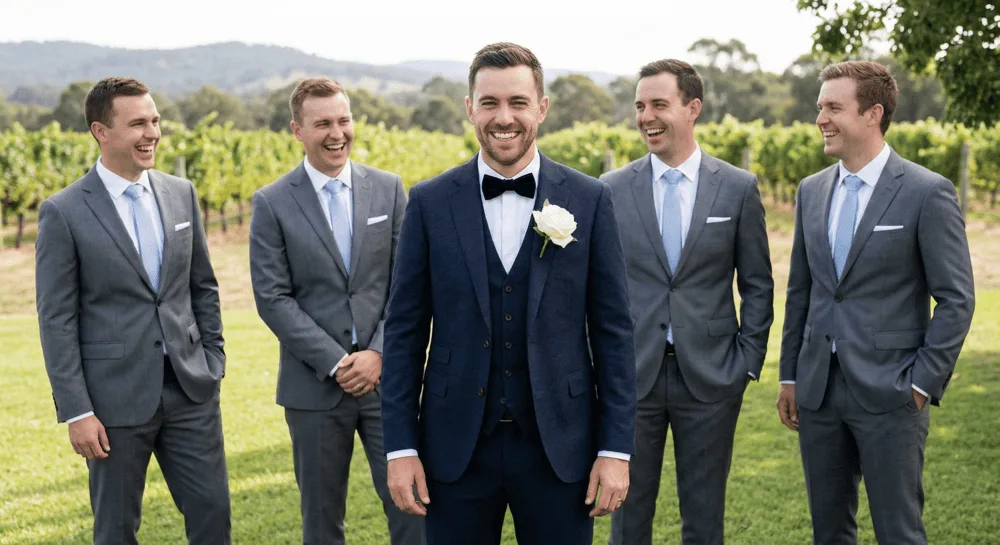
The groom should be immediately identifiable in photos without looking like he's from a different wedding. Stylists recommend the two-plus-one rule: the groom should have at least two distinct elements different from the groomsmen.
Configuration differences
The groom wears a three-piece while groomsmen wear two-piece suits. This creates clear visual hierarchy through added formality.
Color and texture variation
The groom wears a darker or lighter shade of the same color family. For example, the groom in navy while groomsmen wear light blue, or the groom in charcoal while groomsmen wear mid-grey.
Texture differentiation is increasingly popular, with the groom in velvet, textured weave, or patterned fabric while groomsmen wear smooth wool. This creates visual distinction without requiring different colors.
Accessory differentiation
The groom wears a bow tie while groomsmen wear neckties. The groom has a statement buttonhole flower while groomsmen have simple pocket squares. The groom wears a unique waistcoat while groomsmen go without.
5.2 Mix and match strategies
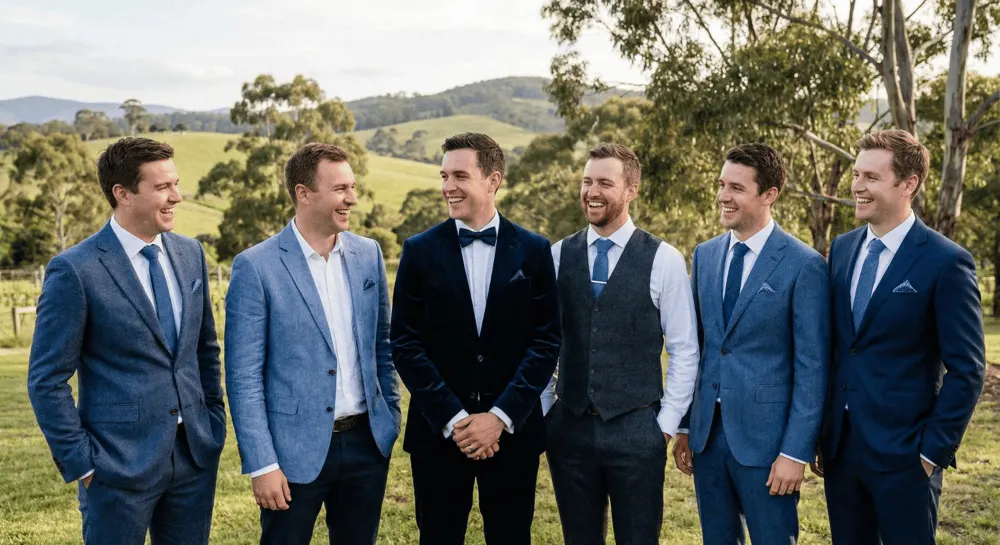
The rigid uniform approach is giving way to cohesive variance, where groomsmen wear coordinated but not identical attire.
Tonal variation
Use different shades within the same color family. The groom wears forest green while groomsmen wear sage green. Or the groom in midnight navy with groomsmen in lighter navy or blue.
Texture variation
Keep the same color but vary the fabric. The entire party wears black, but the groom in velvet while groomsmen wear wool. Or everyone in grey, with the groom in a textured weave and groomsmen in smooth fabric.
Benefits of mixing
This approach relieves pressure to find a single suit that fits every body type perfectly. It acknowledges individual budgets, as groomsmen can choose options within their price range while staying within the color palette. And it creates more interesting, dynamic wedding photos than identical uniforms.
5.3 Managing different budgets and body types
Professional alterations
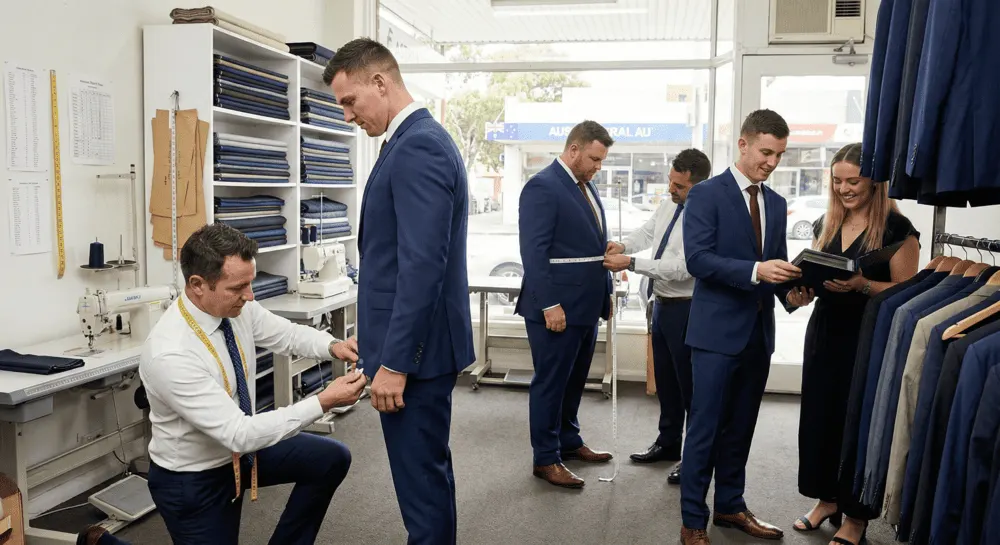
Professional alterations are non-negotiable. Even the best off-the-rack suit needs adjustments to fit properly. Budget for hemming trousers, adjusting sleeve length, taking in or letting out the waist, and potentially adjusting shoulder width.
Made-to-measure solutions
Made-to-measure services allow each groomsman to order a suit in the same fabric and style but cut to their specific measurements. While more expensive than off-the-rack, made-to-measure ensures everyone looks their best.
Budget transparency
Establish a clear budget range early in planning. Communicate the expected cost upfront so groomsmen can plan accordingly. Offer tiered options within the same aesthetic. Perhaps the groom and best man invest in premium suits while other groomsmen choose mid-range options in the same color.
Many retailers offer groomsmen packages where purchasing multiple suits reduces the per-unit cost. Some offer the groom's suit free when a certain number of groomsmen purchase.
6. Practical planning essentials
6.1 Timeline and lead times
The biggest mistake grooms make is underestimating how long the process takes.
Off-the-rack timeline
Off-the-rack suits require four to six weeks minimum. While you can walk into a store and buy a suit immediately, alterations are essential for proper fit. Australian tailors are currently experiencing bottlenecks due to a shortage of skilled professionals. Factor in time for initial fitting, alterations, a second fitting to check the work, and potential additional adjustments.
Made-to-measure timeline
Made-to-measure suits require 12 to 16 weeks. Many Australian brands manufacture offshore in China or Europe. International shipping, customs clearance, and at least one round of adjustments must be factored into the timeline.
Rental timeline
Rental bookings should be made three to four months in advance, particularly for peak wedding dates in March, April, October, and November. Popular sizes book out quickly, and you want to ensure the entire party can be fitted from the same inventory to guarantee color matching.

6.2 Rental versus purchase decision
When to purchase
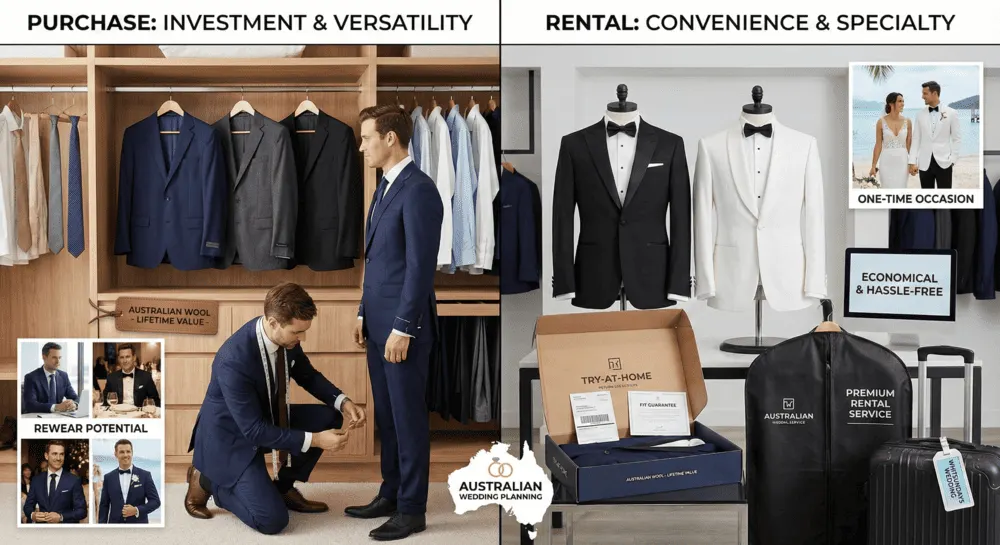
Purchase makes sense when the suit is versatile enough for rewear. Navy, grey, and black suits in classic styles will serve groomsmen well for years. Purchase is also preferable when groomsmen have unusual body types that make rental fitting difficult. And purchase allows for perfect fit through extensive alterations, which rental services typically don't accommodate.
The investment mindset is strong in Australian culture. Many men prefer to own a quality suit rather than rent, viewing it as a wardrobe essential that justifies the cost through multiple uses.
When to rent
Rental makes sense for highly formal or fashion-forward pieces that won't be reworn. A tuxedo or white dinner jacket is unlikely to see use after the wedding, making rental economical. Rental is also ideal for destination weddings where transporting suits is inconvenient, or when groomsmen are budget-conscious and won't rewear the suit.
Modern rental services have eliminated many traditional rental drawbacks. Companies offer try-on-at-home services, fit guarantees, and quality garments from respected brands.
6.3 Price points and where to buy
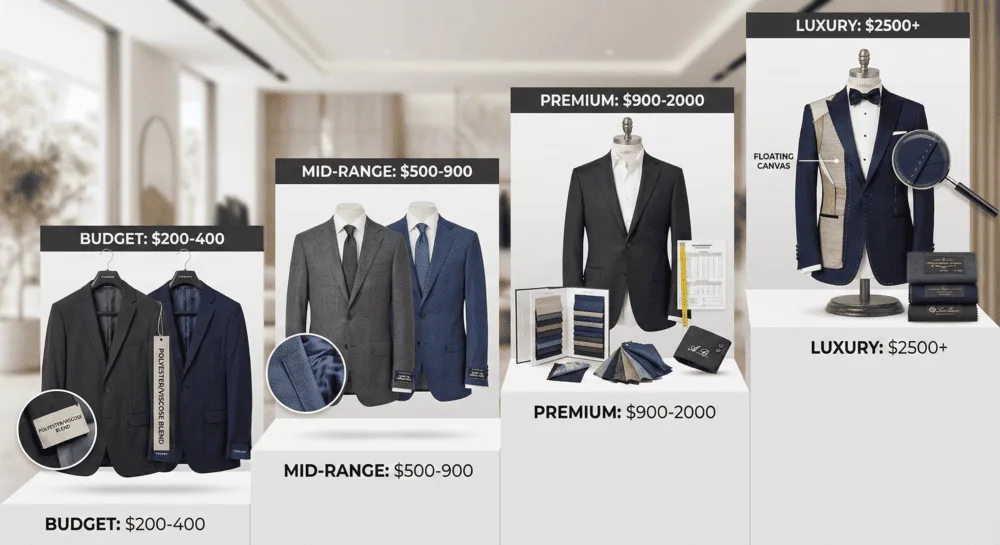
Budget options: 200 to 400 dollars
Fast fashion formalwear brands like Connor, Tarocash, and YD offer accessible entry points. These suits are typically polyester or viscose blends, focusing on affordability and basic durability. They're less breathable than wool but provide an accessible option when groomsmen won't rewear the suits.
Mid-range options: 500 to 900 dollars
Established Australian brands like Peter Jackson, Politix, and M.J. Bale's Blue Label offer 100 percent merino wool in Super 100s or 110s grades. Construction quality improves significantly, with better stitching, lining, and finishing. This segment offers the best balance of quality and affordability for most grooms.
Premium options: 900 to 2,000 dollars
Brands like InStitchu, Oscar Hunt, and M.J. Bale's Kingston line offer customization including fabric selection, lining choices, and monogramming. Fit is precise through detailed measurement and adjustment. This is the fastest-growing segment as grooms seek uniqueness and perfect fit.
Luxury options: 2,500 dollars and above
Houses like P. Johnson and artisan tailors offer full floating canvas construction, hand-stitching, and Italian milled fabrics from prestigious mills. While a niche market, it serves grooms who value sartorial artistry and want heirloom-quality garments.
7. Accessories that complete the look
7.1 Neckwear and pocket squares
Tie selection
Current trends favor textured knit ties or wider silk ties that create more substantial visual presence. For formal evening weddings, silk ties in solid colors or subtle patterns provide classic elegance. The tie should complement but not exactly match the pocket square.
For rustic or casual weddings, knit ties in wool or cotton provide texture and relaxed sophistication. These work particularly well with tweed or textured suits.
For very casual beach or garden weddings, open collars without ties are increasingly acceptable, working best with unstructured linen suits in light colors.
Pocket square rules
The cardinal rule: the pocket square should never exactly match the tie. Instead, it should complement a secondary color in the tie or echo the bridesmaid dresses.
A white linen square in a simple fold is the safest, most classic option, working across all formality levels and color schemes. The television fold, where the square is folded into a neat rectangle showing just above the pocket, is the most conservative and appropriate for formal weddings.
Colored or patterned pocket squares add personality and visual interest, working well for groomsmen to allow individual expression within the coordinated palette.

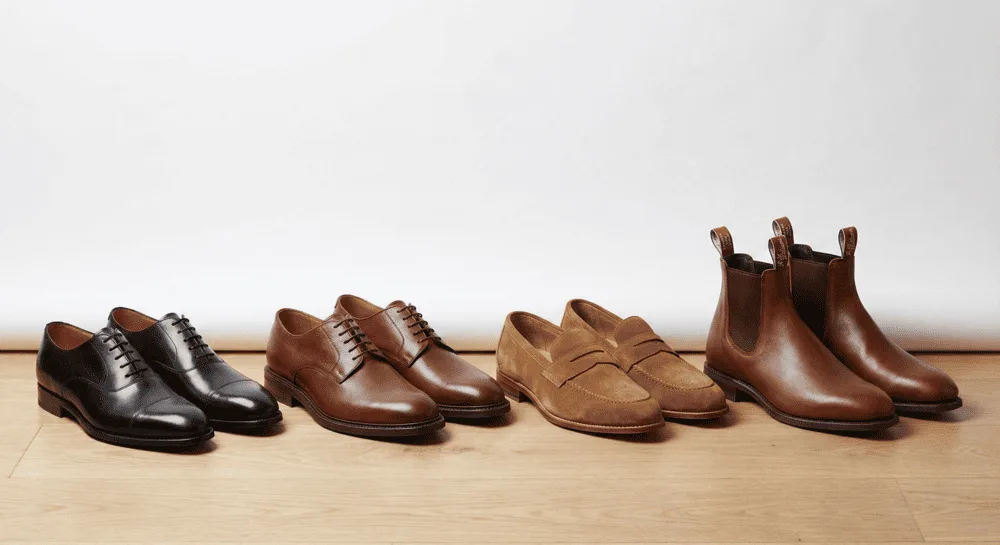
7.2 Footwear choices
Formal urban weddings
For formal urban weddings, black oxford shoes are the classic choice with black or charcoal suits. The closed lacing and sleek profile create maximum formality. Patent leather oxfords suit black tie and very formal occasions.
Brown leather shoes have become the preferred choice for navy and grey suits, particularly in rustic or outdoor settings. The warmth of brown leather complements earth tones and creates a softer, more approachable aesthetic. Oxford or derby styles in tan, chestnut, or dark brown work beautifully.
Coastal weddings
For coastal weddings, loafers offer relaxed elegance. Worn with invisible no-show socks or bare ankles, loafers signal sophisticated ease. Suede loafers in tan or grey suit summer suits perfectly, though they're less practical in wet conditions.
Rural weddings
R.M. Williams boots represent a uniquely Australian solution for rural and outback weddings. The Craftsman boot in chestnut or black is accepted as formalwear in country settings where traditional dress shoes would look out of place. These boots bridge the gap between rugged practicality and formal elegance.
7.3 Australian native flora buttonholes
The buttonhole or boutonniere provides a final touch that connects the groomsmen to the overall wedding aesthetic. Australian weddings are increasingly embracing native flora, creating distinctive looks that celebrate the local landscape.
Popular native choices
Traditional roses and carnations are giving way to Australian natives like gum nuts, waxflower, kangaroo paw, and wattle. These are more rugged and resilient to heat than delicate European flowers, maintaining their appearance throughout long, hot wedding days.
Gum nuts and eucalyptus leaves create a masculine, understated aesthetic that works beautifully with earth-toned suits. The silvery-green foliage complements grey and navy suits particularly well.
Wattle, Australia's national flower, adds a pop of golden yellow that works beautifully for spring weddings. Kangaroo paw offers bold, sculptural forms in red, orange, yellow, or green, making statement buttonholes that photograph beautifully.
Differentiating the groom
The groom's buttonhole should be more substantial or distinctive than the groomsmen's, creating another point of differentiation. This might mean a larger arrangement, a different flower, or additional elements like feathers or berries.

8. Current trends and common mistakes
8.1 Sustainability and personalization trends
Ethical sourcing
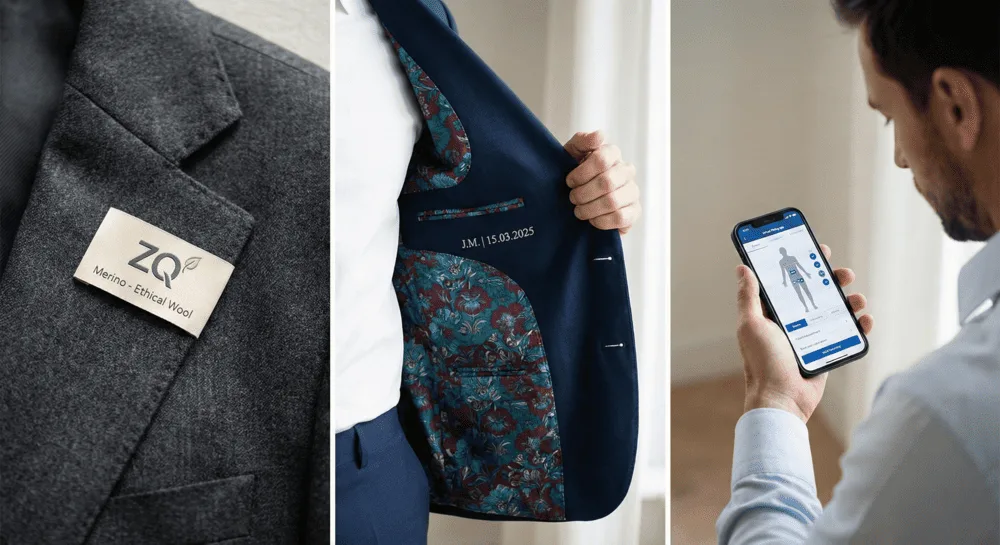
Sustainability has shifted from a marketing buzzword to a genuine purchasing driver, particularly among millennial and Gen Z grooms. Brands like M.J. Bale market single-source wool from specific Australian farms, emphasizing carbon-neutral production and animal welfare. Non-mulesed wool, certified through programs like ZQ Merino, appeals to eco-conscious consumers.
Rental as sustainability is gaining traction. The circular economy model, where high-quality garments are used multiple times by different people, appeals to environmentally conscious grooms. Renting a tuxedo that would otherwise hang unused makes both environmental and economic sense.
Customization options
Modern grooms want their wedding party to look coordinated but not cookie-cutter. Monogramming with dates and initials embroidered inside the jacket or on shirt cuffs has become a standard inclusion in made-to-measure packages.
Custom linings allow personality expression without breaking the dress code. Fun patterns like florals, skulls, or football team colors line the inside of the jacket, invisible when worn but revealed when the jacket is removed.
Virtual fitting tools driven by artificial intelligence are democratizing customization. Groomsmen in different cities can measure themselves using smartphone apps and order matching suits without visiting a central store.
8.2 Common mistakes to avoid
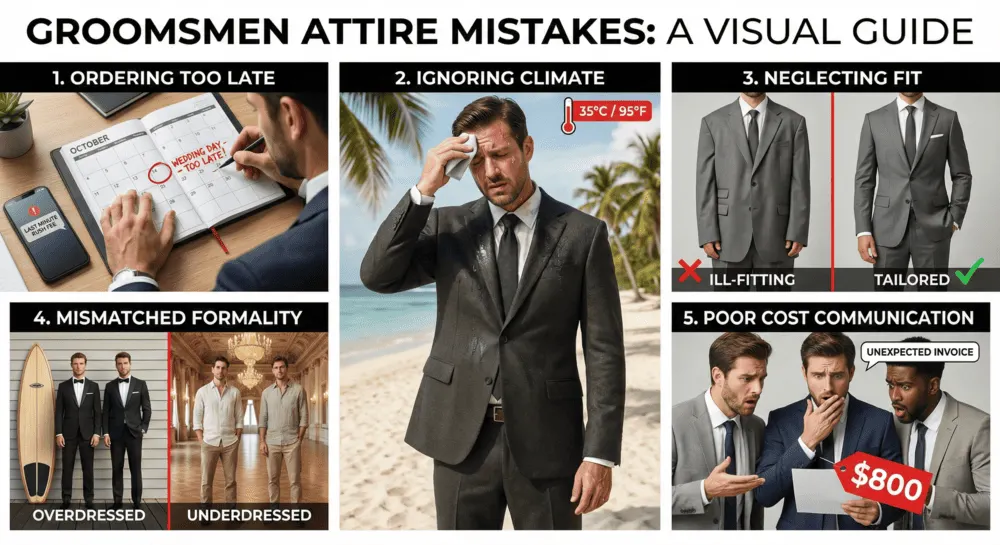
Ordering too late
The single most common mistake is underestimating how long the process takes. Start the process at least four to six months before the wedding. This provides buffer time for unexpected delays, allows for proper alterations, and reduces stress. For made-to-measure or bespoke suits, start even earlier, eight to twelve months ahead.
Ignoring climate
Choosing heavy wool suits for a summer beach wedding or lightweight linen for a winter highland wedding creates miserable groomsmen and poor photos. Prioritize climate-appropriate fabrics and construction. Research the typical weather for your venue and date. Choose fabrics and weights suited to the conditions.
Neglecting fit
A beautiful suit that doesn't fit properly looks terrible. Conversely, a simple suit that fits perfectly looks expensive and elegant. Budget for professional alterations and allow time for multiple fittings. Every groomsman should have trousers hemmed to the correct length, sleeves adjusted to show the proper amount of shirt cuff, and the jacket taken in or let out for a clean silhouette.
Mismatched formality
When the groomsmen suits don't match the venue's formality level, everyone looks out of place. Honestly assess your venue's formality and choose attire that matches. Tuxedos at a casual beach wedding look ridiculous. Linen suits at a grand ballroom look underdressed.
Poor cost communication
Surprising groomsmen with unexpected costs creates resentment and financial stress. Clearly state the expected cost of the suit and any other expenses from the beginning. Acknowledge that this is a significant ask and show appreciation. Offer flexibility where possible, like tiered options at different price points.
9. Conclusion: creating your perfect Australian groomsmen look
Choosing groomsmen wedding suits for Australian conditions means balancing multiple factors: climate, formality, budget, and personal style. Get it right, and you'll create a cohesive, comfortable look that photographs beautifully and serves your groomsmen well beyond the wedding day.
Your Essential Action Plan
Start with the fundamentals:
Assess your conditions honestly – A summer wedding in Cairns requires completely different solutions than a winter wedding in Melbourne
Let your venue set the formality baseline – These practical considerations guide your decisions about fabric weight, color, and construction
Plan your timeline realistically – Start at least 4-6 months before the wedding to avoid rushed decisions and alterations backlogs
Choose strategically:
Navy blue wedding suits for groom and groomsmen – The most versatile choice for rewear potential
Grey wedding suits for groom and groomsmen – Flexibility and contemporary appeal across seasons
Black wedding suits for groom and groomsmen – Perfect for formal evening weddings
Earth tones – Create distinctly Australian aesthetics for outdoor celebrations
Prioritize climate-appropriate solutions:
Summer wedding suits for groom and groomsmen must emphasize breathability through lightweight fabrics, open weaves, and minimal lining
Invest in quality fabrics – The comfort and appearance dividends pay off throughout the day
Perfect the coordination:
Make the groom stand out through at least two distinct elements (configuration, color/texture, or accessories)
Consider mix-and-match strategies that allow individual expression within a coordinated aesthetic
Budget for professional alterations – This step is non-negotiable for a polished final look
The Australian Difference
The modern Australian approach blends British tailoring heritage, Italian ease, and uniquely Australian pragmatism. It values "relaxed formality"—looking sharp but effortless, formal but comfortable—avoiding both rigid stuffiness and excessive casualness.
This means prioritizing:
✓ Quality fabrics that perform in our diverse climate
✓ Versatile colors that work beyond the wedding day
✓ Construction that looks elegant but feels comfortable
What Matters Most
While the wedding day is important, the relationships are more important. Choosing attire that makes your groomsmen look great, feel comfortable, and get genuine value from their investment shows respect and appreciation for the people standing beside you on your most important day.
When choosing groom's suits at Dunnio Tailor, you will receive:
- Tailoring is based on personal measurements.
- Customize according to preferences.
- Instructions from a professional technical team.
- Tailored by skilled craftsmen.
- Fitting and adjusting as required.
- Fabric pattern options with a collection of more than 500 different fabric patterns.
- Free 720-day warranty.
- Free hangers and specialized storage bags.
- Support and shipping policies for international customers.
Hotline - WhatsApp: +84 968996668
Email: support@dunniotailor.com