Table of Contents[Hide]
- 1. What is big and tall size for men?
- 2. Why standard sizing fails big and tall men
- 3. Know your measurements: The 6 essentials
- 4. Big and tall size chart: How to read it
- 5. Big and tall sizing by body type
- 5.1. Big and tall for heavy-set or big-bellied men
- Key fit challenges:
- Styling solutions:
- 5.2. Big and tall for muscular and athletic men
- Key fit challenges:
- Styling solutions:
- 5.3. Big and tall for tall and slim or lean men
- Key fit challenges:
- Styling solutions:
- 5.4. Big and tall for men who are both broad and tall
- Key fit challenges:
- Styling solutions:
- 6. Styling guide for big and tall men
- 7. Essential wardrobe pieces for big and tall men
- 8. Dressing for the occasion: Big and tall style by event
- 9. Custom tailoring vs off-the-rack: Why big and tall men deserve better
- 10. Frequently asked questions about big and tall size for men
- Conclusion
Finding clothes that actually fit should not feel like a full-time job. Yet for men who fall outside the standard size range whether they carry a broader frame, stand well above average height, or both the experience of shopping for clothes often ends in frustration. Shirts that pull across the chest, jacket sleeves that stop at mid-forearm, trousers that fit the waist but strangle the thighs: these are not minor inconveniences. They are daily reminders that mainstream fashion was not designed with every body in mind. This guide is here to change that. Whether you are new to big and tall size for men or simply looking for a smarter way to dress your frame, you will find everything you need: clear definitions, a practical size chart, body-type-specific styling advice, and a look at how custom tailoring from Dunnio Tailor can finally give you the fit you deserve. Let us get into it.
1. What is big and tall size for men?
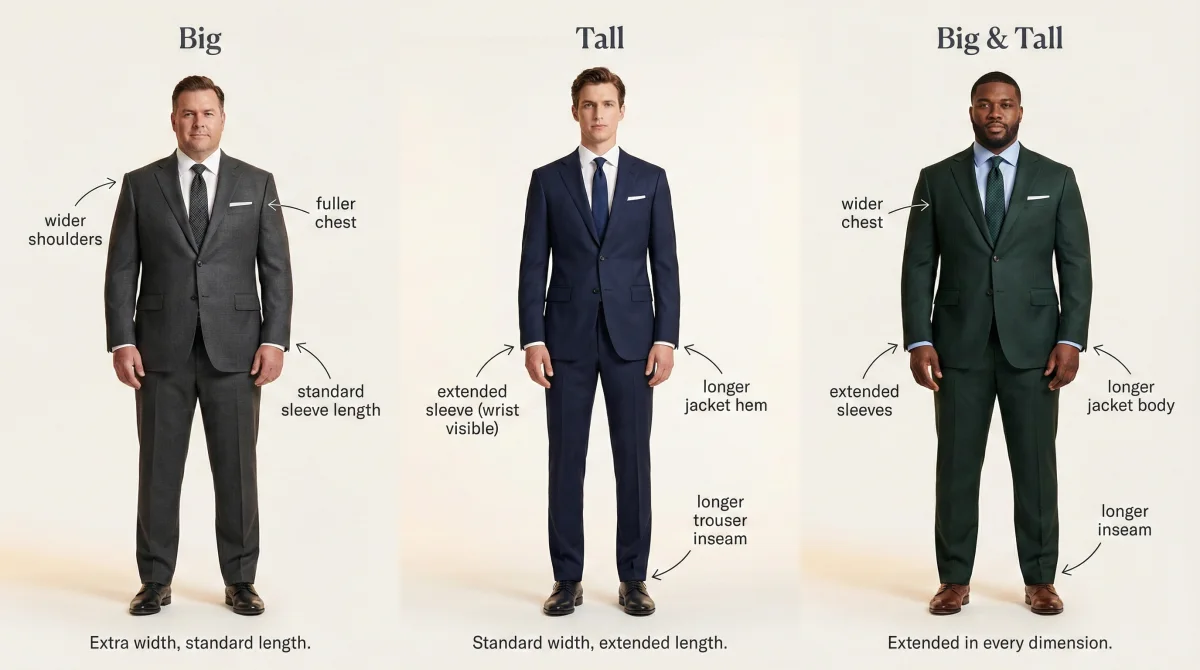
Big and tall sizing refers to clothing designed specifically for men whose body measurements fall outside the standard size range in width, height, or both. However, the term is not one-size-fits-all. Understanding the distinction between each category is the first step to finding clothes that genuinely work for your body.
What is "big"?
The "big" category is designed for men with a broader horizontal build wider shoulders, a fuller chest, a larger waist, or some combination of these. Big sizing typically begins at XL and extends upward. Importantly, big-sized garments are engineered to provide extra room in the torso, chest, and arms without adding unnecessary length. A big-size jacket, for example, will offer more chest and shoulder space while keeping the sleeve and body length at a standard measurement.
What is "tall"?
Tall sizing addresses vertical proportion. It is generally intended for men who are 6 feet 2 inches (188 cm) or taller. Tall-sized clothing is not simply longer it is proportionally adjusted throughout. That means extended sleeve lengths, longer shirt tails that stay tucked in, a deeper trouser rise, and a longer inseam. Tall sizing is particularly valuable for men who constantly find their wrists exposed in long-sleeve shirts or whose shirt comes untucked the moment they sit down.
What is "big and tall"?
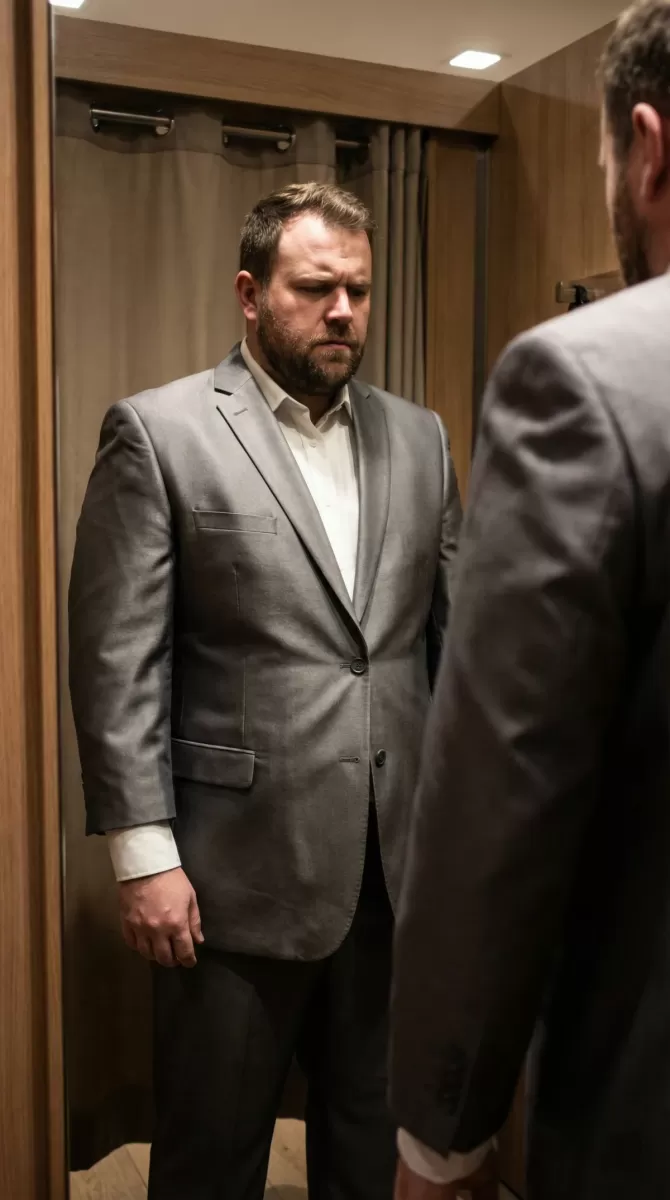
Big and tall combines both needs. A man who is both broad and tall say, 6 feet 4 inches with a 52-inch chest and long arms requires garments that are simultaneously roomier and longer. This is the most complex category to fit, because the adjustments must work in harmony: extra width in the torso, extended sleeve length, a deeper rise, and a longer inseam, all without creating a garment that looks shapeless or oversized.
What about plus size?
Plus size is a related but distinct category. While big and tall sizing focuses on men with larger frames and greater height, plus size tends to address fuller figures with a greater emphasis on the waist, hips, and seat. The two categories can overlap, but they are not interchangeable.
Sizing category comparison
- Big: Broader horizontal build (shoulders, chest, waist). Extra width without extra length. Starts at XL and above.
- Tall: Taller vertical frame (6'2"/188 cm and above). Extended lengths without extra width.
- Big and tall: Both broader and taller. Adjustments in width and length simultaneously.
- Plus size: Fuller figure with emphasis on waist, hips, and seat. Focus on ease of movement and drape.
2. Why standard sizing fails big and tall men
Standard clothing is built on a narrow model of what a man's body "should" look like one based on statistical averages that leave a significant portion of men underserved. The problem is not just that standard sizes run small. The problem is structural.
When a manufacturer grades up from a medium to an XL, they apply linear increments to the pattern. The chest gets wider, the waist gets wider but the sleeve length, torso length, and rise often stay the same. The result is a garment that might button across the chest but leaves the wrists exposed, or fits the waist but pulls tightly across the thighs.
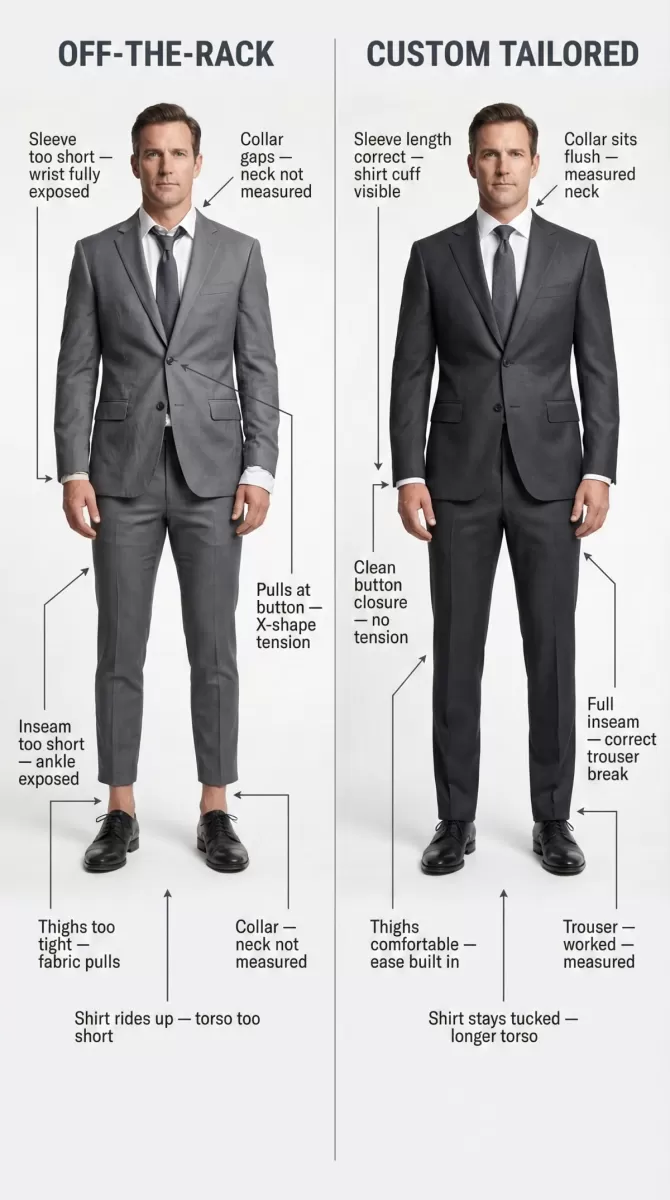
For big and tall men, the most common fit failures include:
- Shirts that ride up or pull across the chest when sitting or reaching.
- Jacket sleeves that are too short even when the chest fits correctly.
- Trousers with an inseam that falls inches too short for taller men.
- Waistbands that fit but leave the thighs and seat uncomfortably tight.
- Jackets that fit the shoulders but pull at the button when closed.
- Shirt collars that gap or choke because the neck measurement was not accounted for.
Simply sizing up does not fix these problems. A regular XXL shirt may be wider, but it will not have a longer sleeve or a longer torso both of which are essential for tall men. And for big men, the added width from sizing up often creates an unflattering, boxy silhouette that does nothing for their frame.
This is precisely why big and tall sizing exists as its own category and why, for men with more specific proportions, custom tailoring is the most reliable solution.
Design your custom suit in 3D configuration
3. Know your measurements: The 6 essentials
Whether you are shopping off-the-rack or going custom, knowing your body measurements is the single most important thing you can do to improve how your clothes fit. These six measurements form the foundation of any well-fitted garment.
- Chest: Measure around the fullest part of your chest, just under your armpits. Keep the tape flat against your back and chest do not pull it tight or let it sag.
- Shoulders: Measure from the edge of one shoulder to the other across your upper back. This is the most critical measurement for jackets, blazers, and shirts. If the shoulder seam does not sit at the edge of your shoulder, nothing else about the garment will look right.
- Neck: Wrap the tape around the base of your neck, where a shirt collar would rest. Add about half an inch for comfort. A correct neck measurement prevents collars from gaping or choking.
- Waist: Measure at your natural waistline the point where your body bends when you lean to the side. For many big and tall men, this is higher than where they typically wear their trousers. Formalwear should sit at the natural waist for the best drape and proportion.
- Hips and seat: Measure around the widest part of your hips and seat. This measurement determines the comfort of the trouser rise and prevents fabric from pulling across the thighs or sagging at the crotch.
- Inseam: Measure from the top of your inner thigh to the bottom of your ankle. This is what determines the length of your trousers and the "break" the amount of fabric that rests on the top of your shoe.
- A note on ease: In tailoring, the final garment is always slightly larger than your body measurements. This extra space is called "ease," and it is what allows you to move, breathe, and sit comfortably. For big and tall men, ease must be distributed thoughtfully more in the upper sleeve and thighs, for example, to ensure the garment moves with the body rather than fighting it.
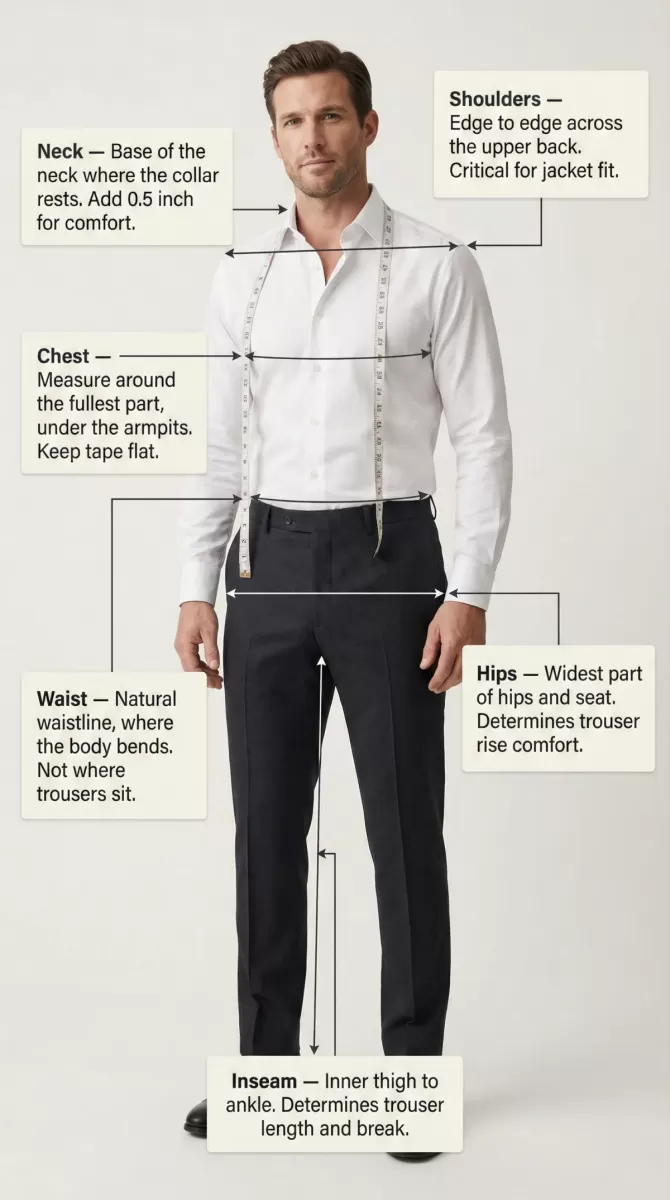
Once you have these six measurements, you are equipped to decode any size chart and make smarter choices whether you are shopping online or working with a tailor.
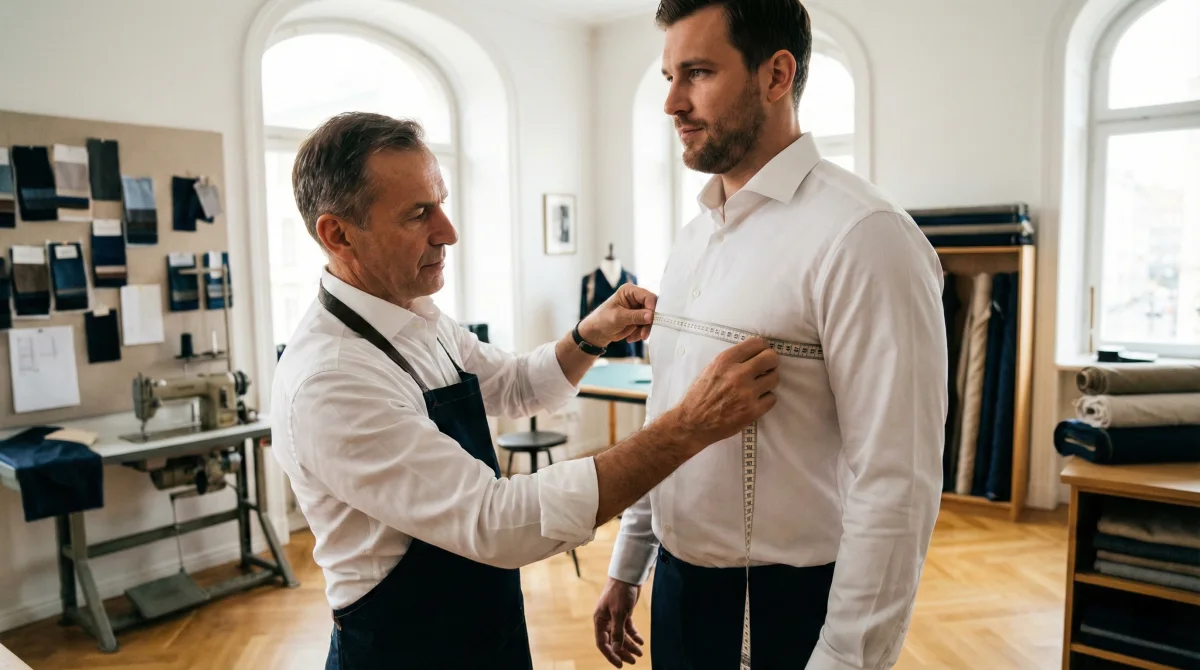
If you are ready to put your measurements to work, explore Dunnio Tailor's range of custom suits.
4. Big and tall size chart: How to read it
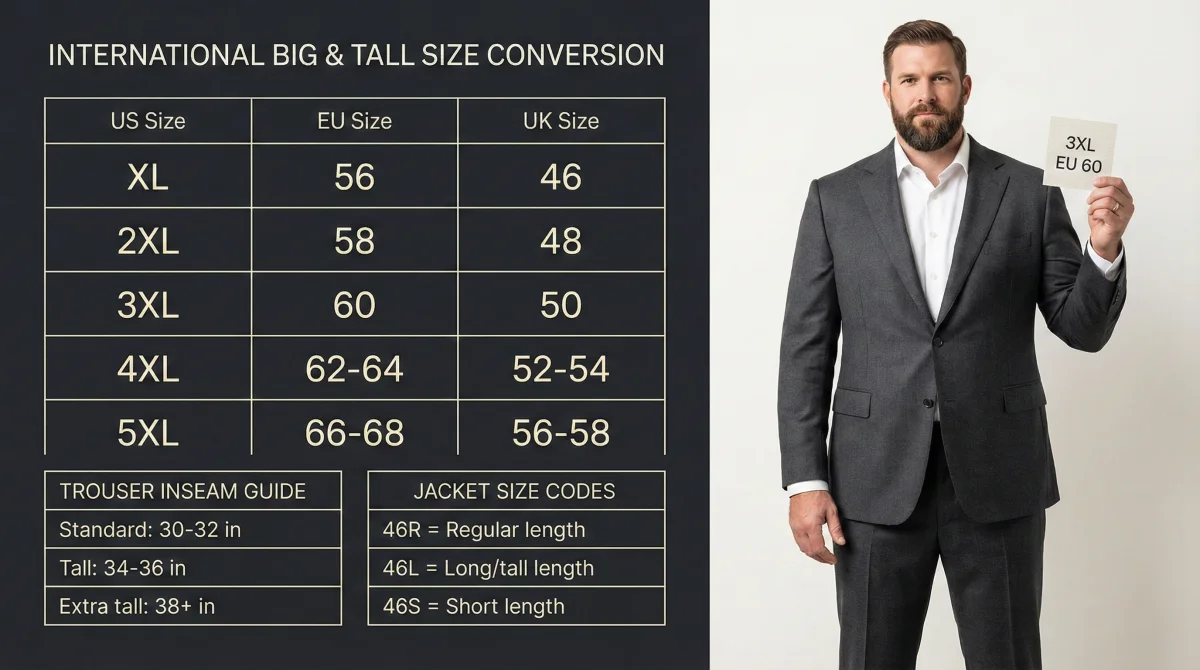
One of the most confusing aspects of shopping for big and tall clothing is that sizes are not consistent across countries or brands. A 2XL in the United States does not necessarily correspond to the same fit in the United Kingdom or Europe. Here is a practical guide to help you navigate the most common size conversions.
General big and tall size conversions (US / EU / UK).
|
US Size |
EU Size |
UK Size |
|
:--- |
:--- |
:--- |
|
XL |
56 |
46 |
|
2XL |
58 |
48 |
|
3XL |
60 |
50 |
|
4XL |
62-64 |
52-54 |
|
5XL |
66-68 |
56-58 |
Trouser inseam guide for tall men
- Standard inseam (regular): 30-32 inches.
- Tall inseam: 34-36 inches.
- Extra tall inseam: 38 inches and above.
Most ready-to-wear brands cap their inseam at 34 inches. If you need 36 inches or more, you will find the selection extremely limited in mainstream retail which is one of the strongest arguments for going custom.
Jacket size guide for big men
Jacket sizes for big men are typically expressed as a chest measurement followed by a build indicator. For example:
- 46R = 46-inch chest, regular length.
- 46L = 46-inch chest, long (tall) length.
- 46S = 46-inch chest, short length.
Big and tall jackets are often labeled with both a chest size and a length designation. Always check both when shopping.
Design a custom jacket for big men
Beyond the chart: How Dunnio Tailor approaches sizing
Standard size charts are a starting point, not a destination. At Dunnio Tailor, every garment is built from your individual measurements not from a graded block. That means your jacket will be cut to your actual chest, shoulder, sleeve, and torso measurements, not to a generic size 2XL that may or may not match your proportions.
5. Big and tall sizing by body type
This is where most guides fall short. Big and tall is not a single body type it is a broad category that includes men with very different proportions and very different fit challenges. Understanding which body type you have is the key to knowing exactly what to look for in a garment.
5.1. Big and tall for heavy-set or big-bellied men
Men with a fuller midsection whether from a larger belly, wider hips, or both face a specific set of challenges that go beyond simply needing a larger size. The primary issue is that standard garments are graded proportionally, so a larger waist often comes with a larger chest and shoulders that may not reflect the actual body shape.
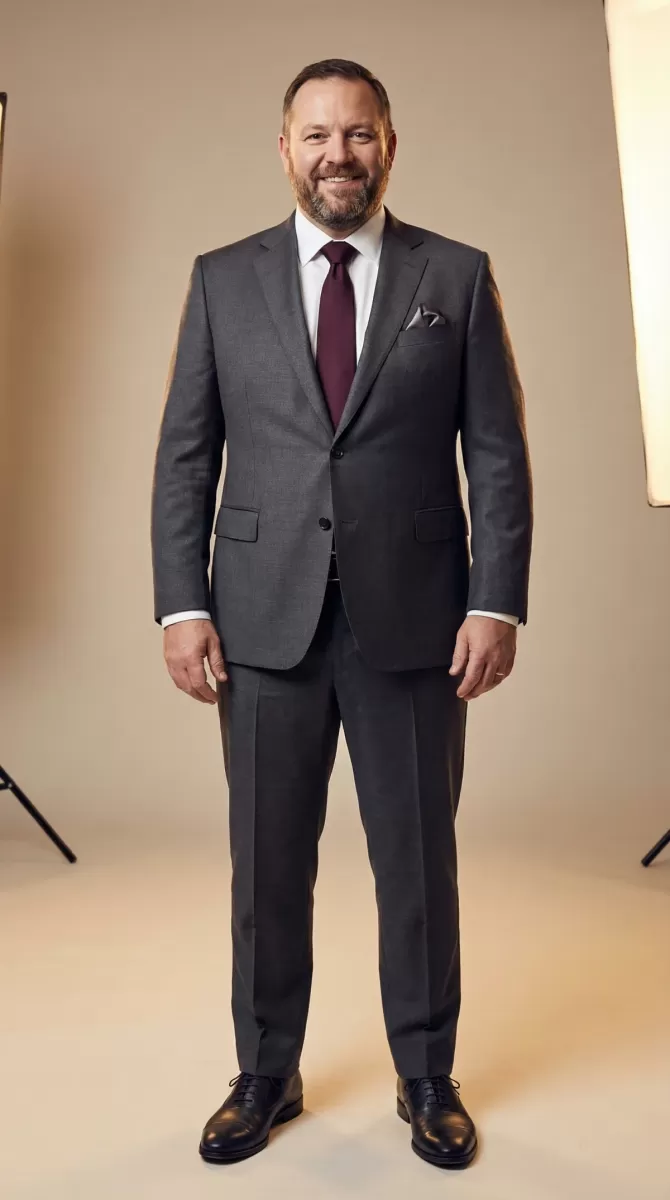
Key fit challenges:
- Shirts that button at the waist but gap or pull across the belly.
- Jacket fronts that do not close cleanly, creating an "X" shape at the button.
- Trousers that fit the waist but are too tight in the seat and thighs.
- Shirts that ride up constantly because the torso length is insufficient.
Styling solutions:
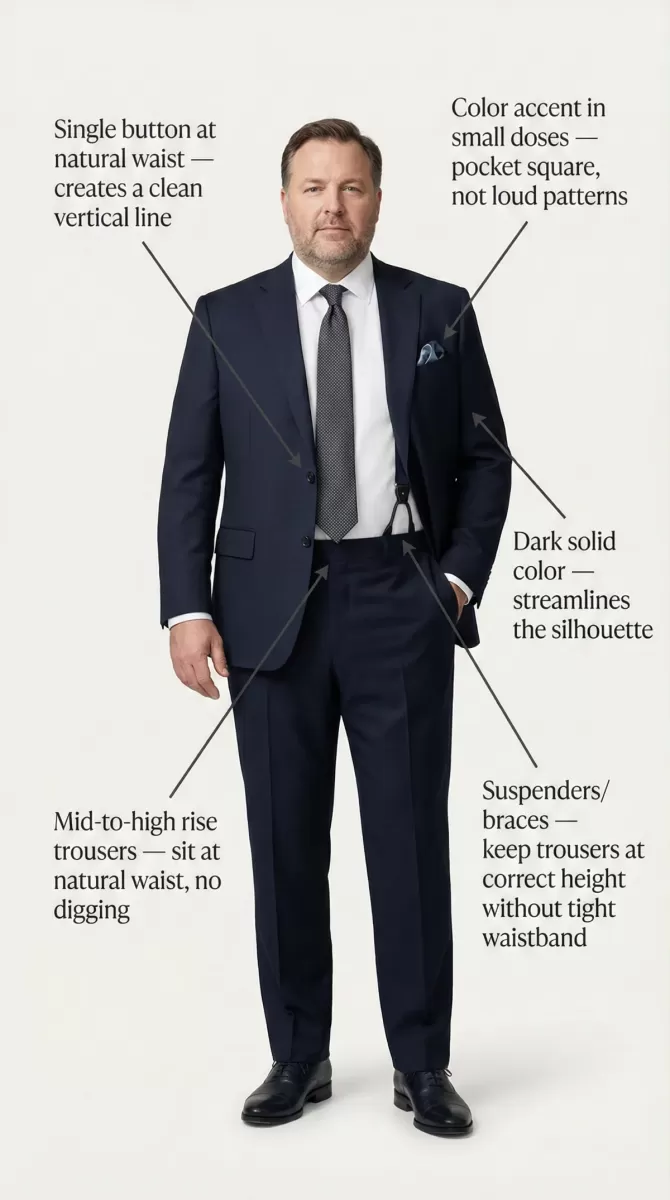
- Choose shirts with a longer torso and a slightly relaxed fit through the midsection not baggy, but with enough ease to move freely.
- Look for trousers with a mid-to-high rise and a fuller cut through the thighs and seat.
- Opt for jackets with a single button closure positioned at the natural waist this creates a clean vertical line.
- Suspenders (braces) are an excellent choice for men with a larger midsection, as they keep trousers at the correct height without relying on a tight waistband.
- Avoid double-breasted jackets unless they are custom-fitted off-the-rack double-breasted styles rarely work well for this body type.
- Darker, solid colors in the torso area create a streamlined silhouette; use color and pattern in smaller doses (a pocket square, a tie, a subtle check).
5.2. Big and tall for muscular and athletic men
Men with a muscular build broad shoulders, a wide chest, thick arms, and powerful thighs often find that standard clothing fits in one area but not another. A shirt that fits the chest may be too tight in the arms; a jacket that accommodates the shoulders may be too wide in the waist.
Key fit challenges:
- Jacket shoulders that fit but pull across the chest when the arms are raised.
- Shirt sleeves that are too narrow for the biceps even when the chest size is correct.
- Trousers that fit the waist but are too tight in the thighs.
- Collar buttons that cannot be fastened because the neck is too large.
Styling solutions:
- Prioritize structured, natural shoulders in jackets avoid heavily padded shoulders, which exaggerate an already broad frame.
- Look for shirts with a "athletic fit" or "muscular fit" designation, which offers extra room in the chest and arms while tapering at the waist.
- Choose trousers with a straight or slightly tapered cut through the thighs not skinny, but not excessively wide either.
- Double vents in the back of a jacket allow for better movement and prevent fabric from bunching when you raise your arms.
- A well-fitted three-piece suit with a waistcoat adds structure and definition, creating a powerful silhouette that works with a muscular frame rather than against it.
- Explore Dunnio Tailor's custom 3-piece suits for a fit engineered to your exact proportions.
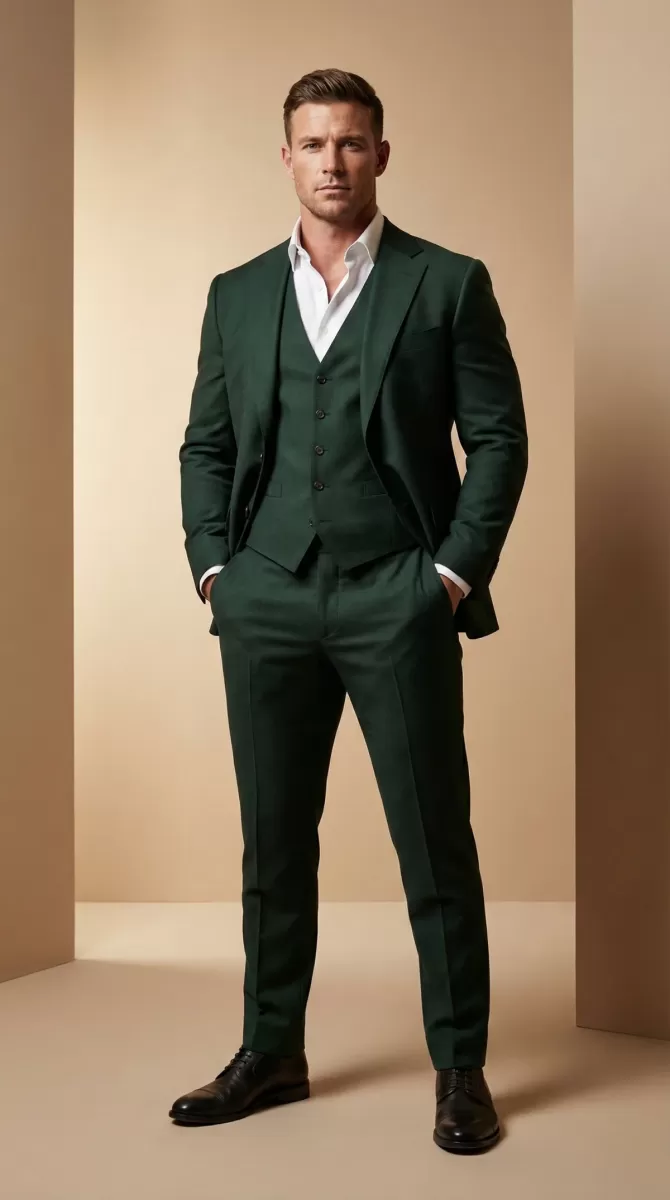
Design a three-piece suit for muscular guys
5.3. Big and tall for tall and slim or lean men
Being tall and slim presents its own unique challenges. Standard tall sizing may address the length issue, but it often adds too much width leaving a lean man swimming in fabric. The goal for this body type is to add visual presence and structure without creating bulk.
Key fit challenges:
- Jackets that are long enough but too wide in the chest and waist.
- Shirts under vest (or tux shirt in a set of tux) with too much fabric through the torso, creating a shapeless look.
- Trousers that are long enough but too wide in the leg.
- Difficulty finding clothes that create a defined, structured silhouette.
Styling solutions:
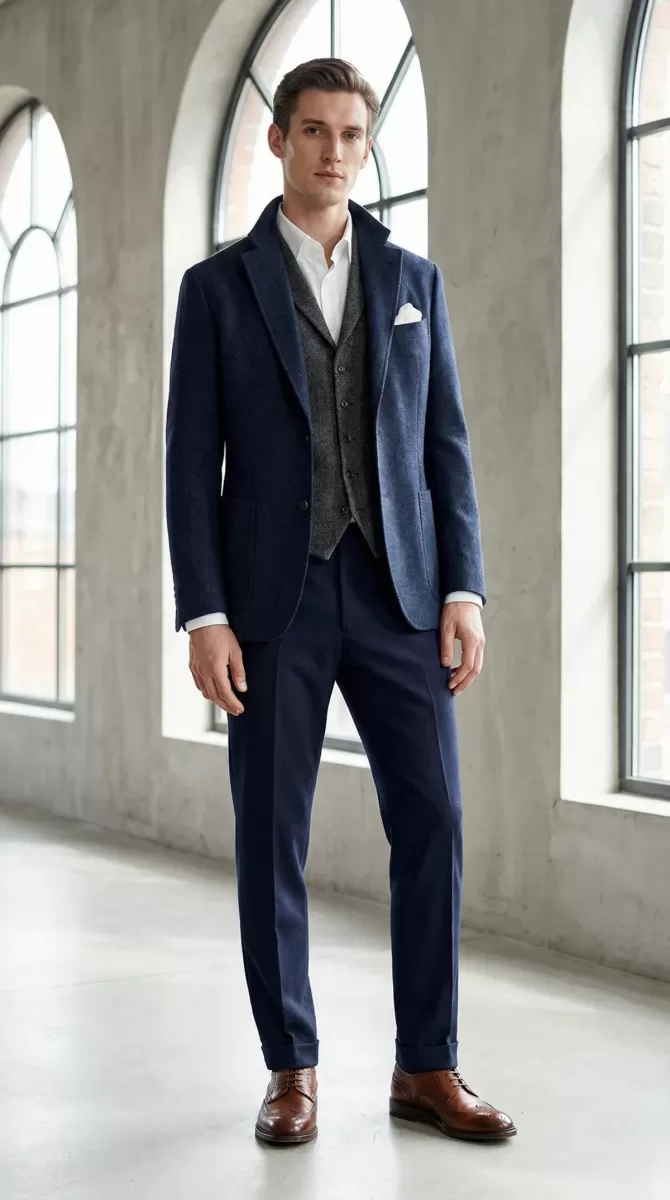
- Choose slim or tailored-fit garments that follow the natural line of the body not skinny, but close enough to show shape.
- Structured shoulders in jackets add width and presence to a narrow frame.
- Horizontal elements subtle checks, wide lapels, patch pockets can add visual width where needed.
- Layering is particularly effective for lean men: a waistcoat under a jacket, or a structured overshirt, adds dimension and visual weight.
- Avoid overly long, flowing garments that emphasize height without adding structure.
- Mid-rise trousers with a slight taper through the leg create a clean, modern silhouette.
5.4. Big and tall for men who are both broad and tall
This is the most complex body type to fit, and the one for which off-the-rack clothing is most likely to fail completely. Men who are both broad and tall need simultaneous adjustments in every dimension width and length, chest and inseam, shoulder and sleeve and these adjustments must work together proportionally.
Key fit challenges:
- Virtually no off-the-rack garment addresses all dimensions correctly at once.
- Jackets that fit the chest are too short in the body and sleeve.
- Trousers that fit the waist are too short in the inseam.
- Shirts that fit the chest and shoulders are too short in the torso and sleeve.
Styling solutions:
- Custom tailoring is not a luxury for this body type it is a practical necessity.
- Every measurement must be taken and applied independently, not derived from a standard block.
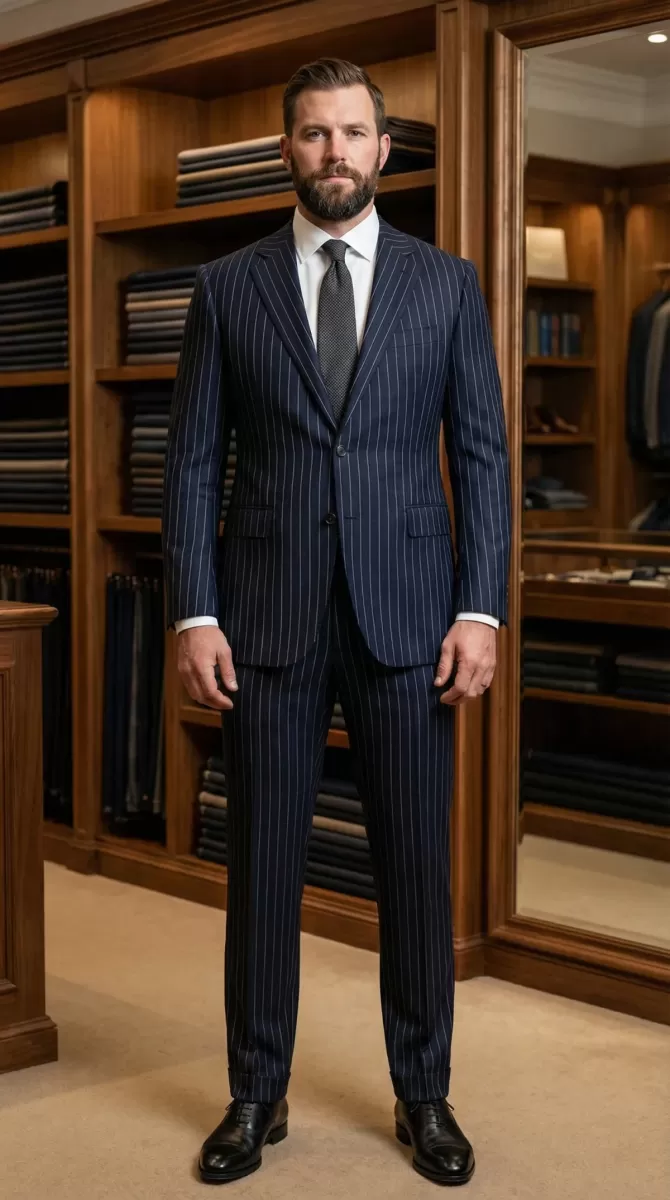
- Structured, well-fitted garments with clean lines are the most flattering avoid anything boxy or oversized.
- A two-piece or three-piece suit with a long jacket body, extended sleeves, and a full-length trouser inseam creates a commanding, proportional silhouette.
- At Dunnio Tailor, every garment for big and tall men is built from scratch to your individual measurements, ensuring that width and length work together seamlessly.
Design a custom vest for broad and tall guys
6. Styling guide for big and tall men
Once you understand your body type, the next step is learning how to use clothing as a tool to enhance your proportions and express your personal style. Here is a practical guide to the key elements.
6.1. Fabrics and cuts that work
The fabric you choose has a significant impact on how a garment looks and feels on a big and tall frame. Heavy, stiff fabrics can make a larger frame look boxy, while overly thin materials may cling or highlight areas you would rather not emphasize.
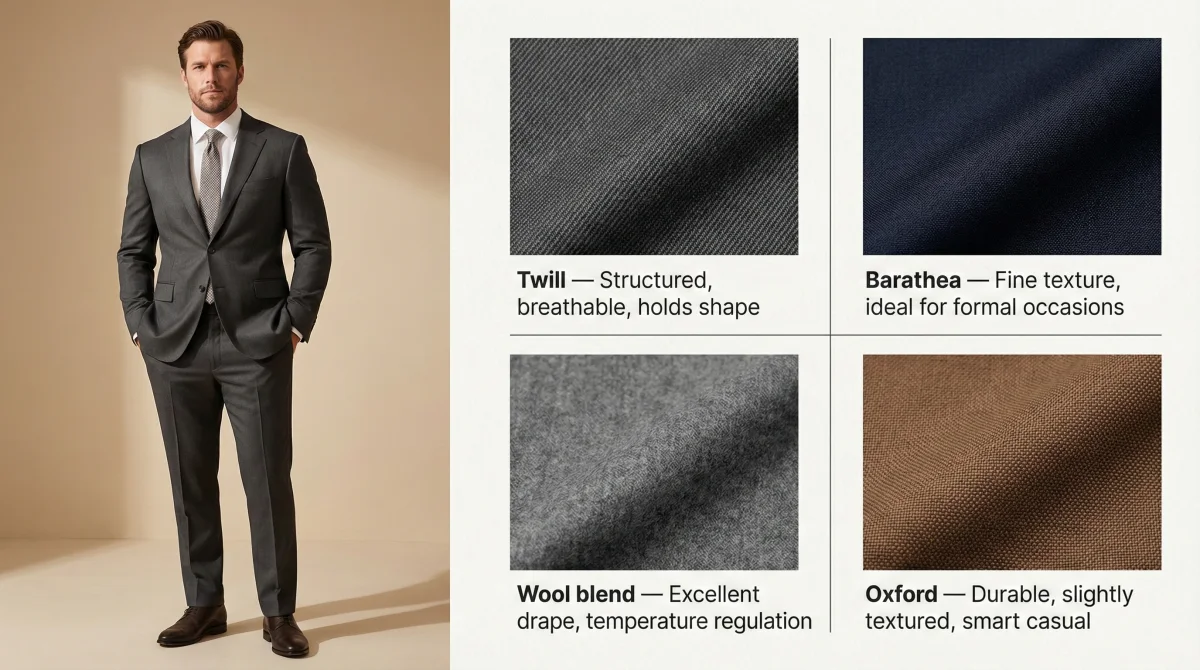
For suits and jackets, consider:
- Twill weaves: structured, breathable, and hold their shape well.
- Wool blends: excellent drape, temperature regulation, and a polished appearance.
- Barathea: a fine, tightly woven fabric with a subtle texture, ideal for formal occasions.
- Oxford weaves: durable and slightly textured, great for business and smart casual.
At Dunnio Tailor, premium fabrics including Twill (technical), Oxford, Chambray, Barathea, Satin (technical), Hopsack (cotton blend), Plain (cotton blend), and Plain (pure linen) are available from $99 to $135. For those seeking the finest quality, luxury mill fabrics including Twill (wool blends) and Wool 150s are available from $231. Custom orders for specialty fabrics are also available on request.
For shirts and casual wear:
- Cotton poplin or Oxford: breathable, structured, and easy to care for.
- Stretch cotton or twill: allows better mobility and maintains a clean look throughout the day.
In terms of cut, look for garments that follow the natural line of your body without squeezing or drowning it. For big and tall men, this generally means:
- Straight-cut or slightly tapered trousers with a mid-to-high rise.
- Jackets with darts or panels that provide structure and allow movement.
- Avoiding ultra-skinny or excessively oversized pieces neither extreme works in your favor.
6.2. Colors, prints, and textures
Color is one of the most powerful tools in a big and tall man's wardrobe and it is also one of the most misunderstood. The old advice to "stick to black" is outdated and unnecessarily limiting.
Colors that work well:
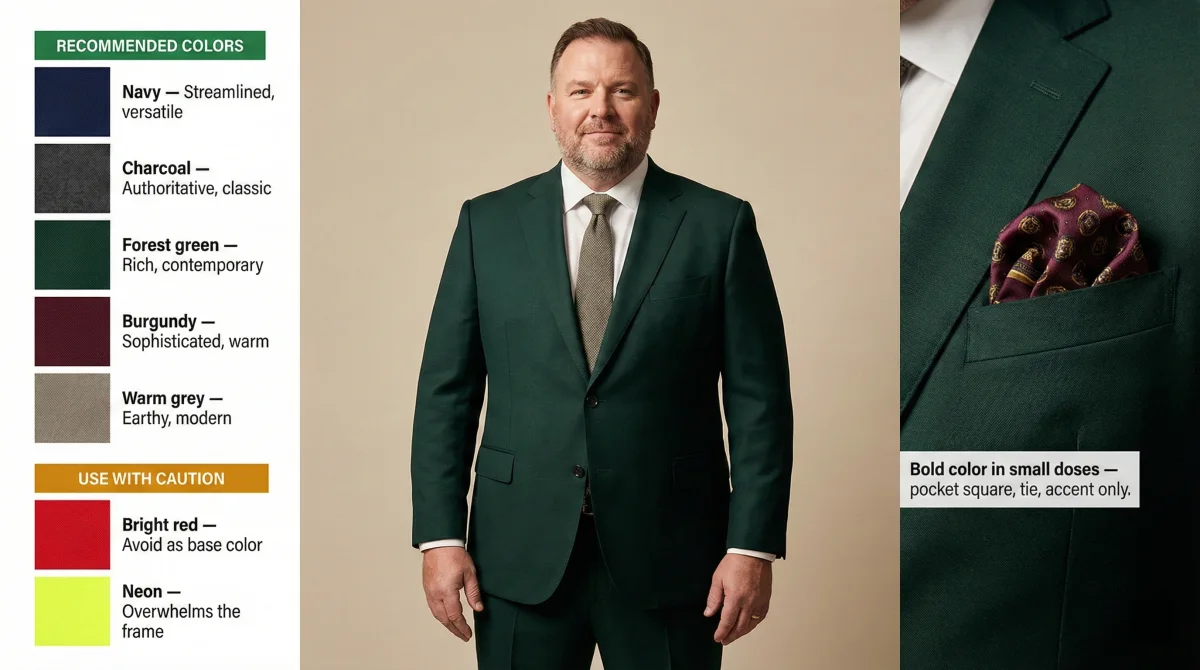
- Darker tones (navy, charcoal, forest green, burgundy, deep brown) create a streamlined base and add visual depth.
- Rich, jewel-toned colors are flattering and sophisticated they add personality without overwhelming the frame.
- Earthy tones (sage, clay, sand, warm grey) are versatile and contemporary.
Colors to approach with caution:
- Overly bright, saturated colors (neon, bright red, highlighter hues) can dominate a larger frame and feel unbalanced.
- If you want to use bold color, use it in smaller doses a pocket square, a tie, or a subtle accent and pair it with neutral shades.
Prints and patterns:
- Vertical stripes, subtle microprints (small florals, dots, geometric shapes), and fine checks elongate the frame and guide the eye up and down.
- Herringbone, twill, and birdseye weaves add visual interest to solid colors without going overboard.
- Avoid oversized prints, horizontal stripes, or loud graphics across the chest or shoulders these exaggerate width.
6.3. The role of proportion
Proportion is the underlying principle behind every styling decision. The goal is not to look smaller it is to look balanced and intentional.
Key proportion principles for big and tall men:
- If you are tall, break up your height with color blocking or layering wearing the same color from head to toe can make you look even taller unless that is the intended effect.
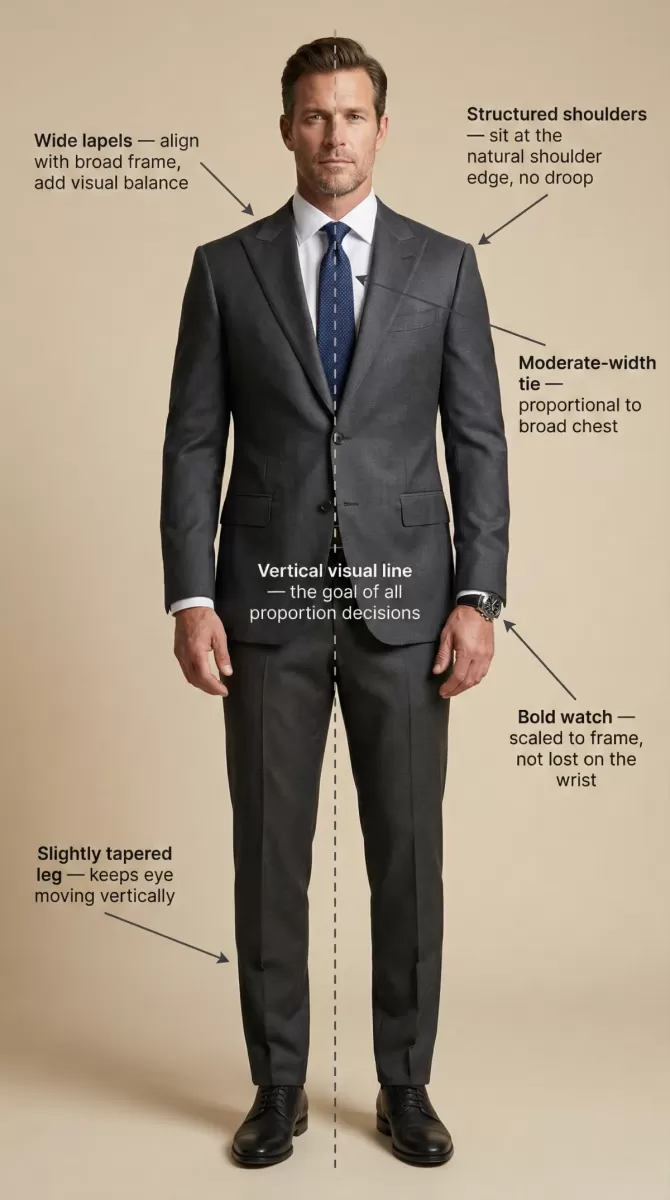
- If you are broad, opt for wide lapels and structured shoulders these align with your frame and prevent the jacket from looking too narrow.
- Pair slightly tapered trousers with longer tops to keep the eye moving vertically.
- Scale your accessories to your frame a slim tie on a broad chest looks lost; opt for moderate-width ties, bolder watches, and sturdy frames if you wear glasses.
6.4. Layering techniques
Layering is not just a cold-weather strategy it is a smart way to add depth, shape, and visual interest to your outfit.
Effective layering for big and tall men:
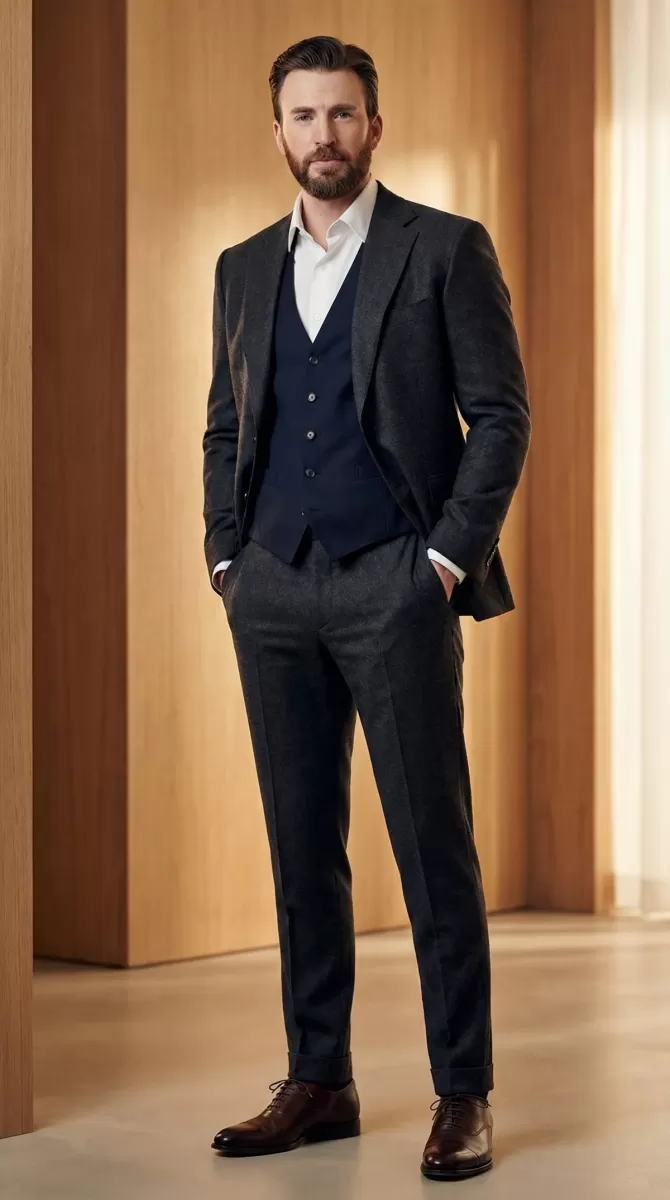
- A structured waistcoat under a jacket adds definition and creates a strong vertical line particularly effective for men with a fuller midsection.
- An unbuttoned cardigan or open blazer allows movement and helps the eye travel vertically.
- A V-neck sweater over a shirt naturally shapes the chest and shoulders.
- The layering rule: keep your base layer fitted, your mid-layer flexible, and your outer layer slightly structured.
This layering approach sharpens your look without adding visual weight.
7. Essential wardrobe pieces for big and tall men
Every wardrobe needs staples, but for big and tall men, those staples must fit well, flatter the frame, and provide both comfort and versatility.
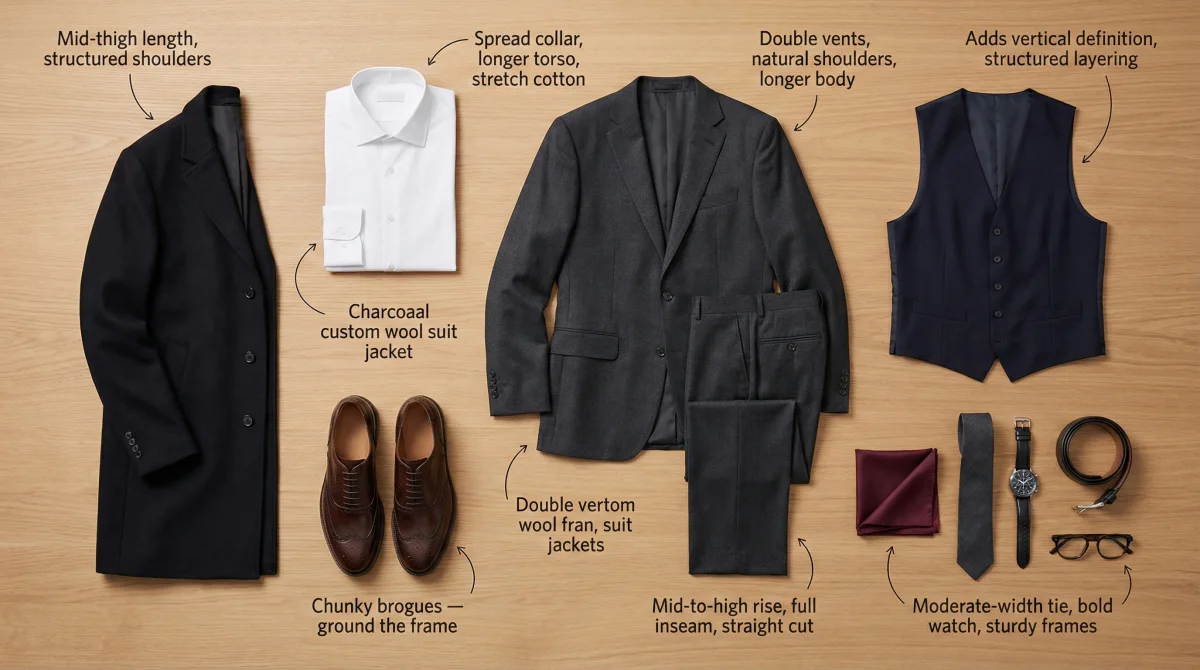
7.1. Well-fitting shirts
A shirt should never feel like armor. For big and tall men, the ideal shirt offers freedom of movement without being baggy. Look for:
- Extra room at the chest and shoulders without pulling.
- A longer torso length so the shirt stays tucked in.
- Stretch cotton or twill fabric for better mobility.
- A slightly spread collar to balance a wider neck and frame.
- Adjustable cuffs and collars, which are standard in tailored shirts.
7.2. Jackets and blazers
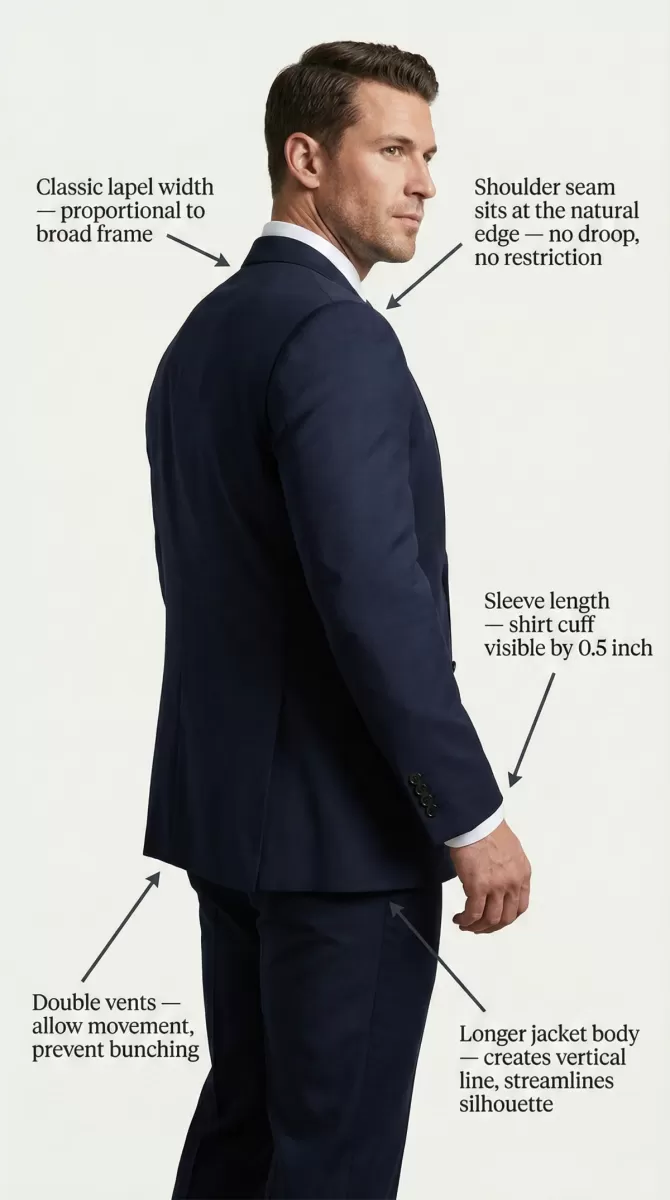
A well-fitted jacket is one of the most transformative garments in any man's wardrobe. For big and tall men, the key details are:
- Double vents in the back for better movement and a cleaner drape.
- Natural or lightly structured shoulders that align with your frame avoid overly padded shoulders.
- A longer jacket body that creates vertical lines and visually streamlines the silhouette.
- Classic lapel width not too wide or too narrow proportional to your frame.
Explore Dunnio Tailor's custom jackets, or try the 3D design tool to visualize your ideal jacket before ordering.
7.3. Trousers
Finding trousers that fit both the waist and the legs is one of the most persistent challenges for big and tall men. The key principles:
- Mid-to-high rise trousers sit comfortably at the natural waist and do not dig in or slide down.
- The inseam length should be tailored to avoid pooling fabric or awkwardly short hems.
- For big thighs or hips, opt for straight or slightly tapered cuts that follow the natural line of the leg.
- Avoid skinny fits and ultra-low rises they are not designed for larger proportions and rarely look intentional.
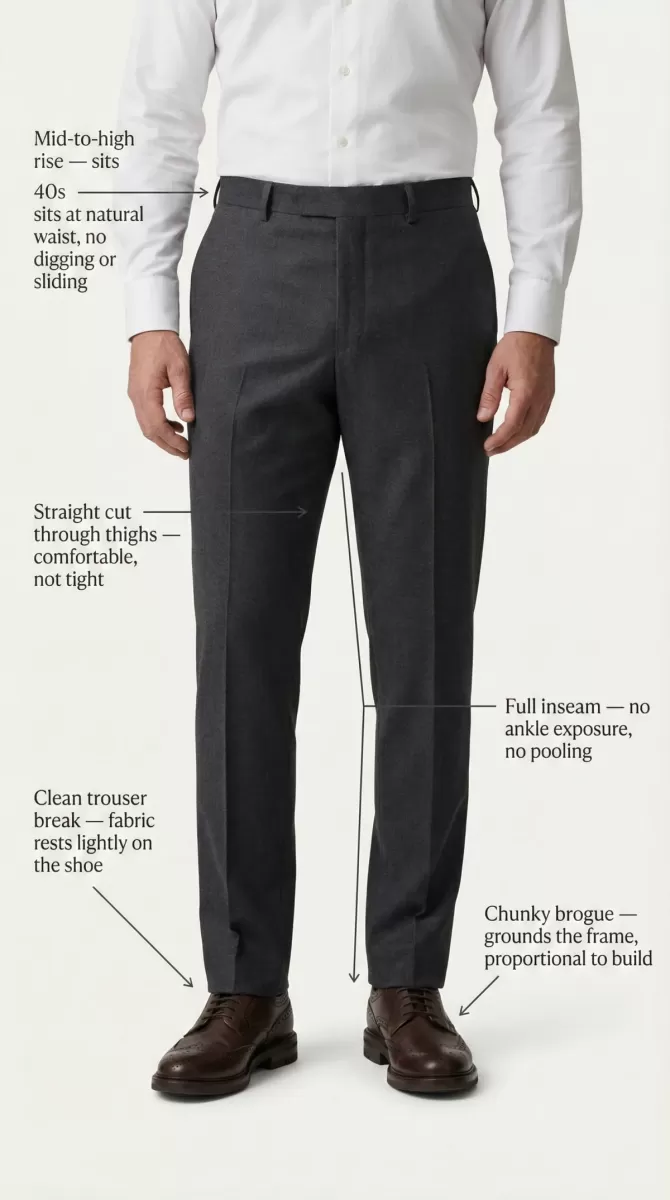
For custom trousers built to your exact measurements, visit Dunnio Tailor's custom pants or try the 3D pant designer.
7.4. Coats and outerwear
For big and tall men, a coat should enhance the frame, not drown it. Look for:
- Longer lengths (mid-thigh to knee-length) that elongate the silhouette short jackets can make the torso look boxy.
- Structured shoulders and a defined waist for shape without clinging.
- Double-breasted styles or vertical details (button rows, lapels, seam lines) that guide the eye up and down.
- Wool, cashmere blends, or technical fabrics that drape well and hold their shape.
7.5. Footwear and accessories
Shoes and accessories anchor your outfit and add balance to your frame.
- Footwear: Chunky or structured shoes brogues, boots, loafers visually ground a larger build better than ultra-slim shoes. If you are tall, be cautious with long or pointed toes, which can exaggerate your height.
- Belts: Match your belt to your outfit in tone and choose a width proportional to your frame typically 1.5 inches or more.
- Ties and pocket squares: Opt for moderate-width ties (not slim) on a broad chest. A pocket square adds a finishing touch without overwhelming the look.
- Watches and glasses: Choose bolder watches and sturdy frames small accessories look out of place on a larger frame.
8. Dressing for the occasion: Big and tall style by event
Knowing how to dress your frame is one thing. Knowing how to dress it for a specific occasion is another. Here is a guide to the most common events and how to approach them as a big and tall man.
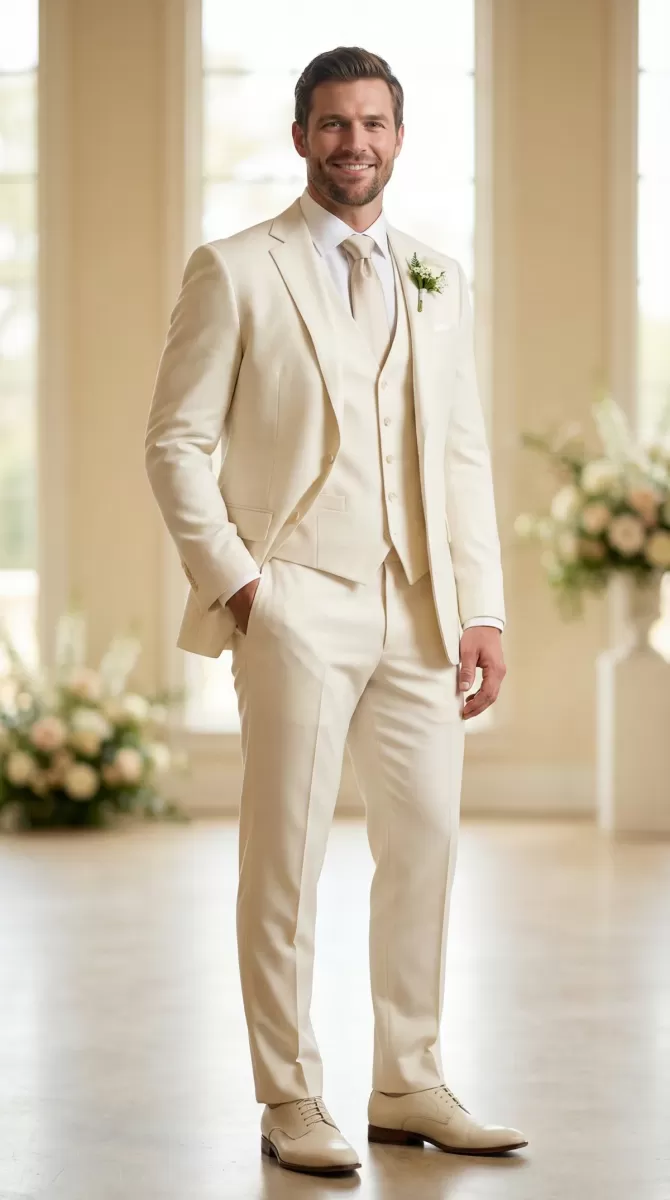
8.1. Wedding: Groom, groomsman, and guest
Weddings are the ultimate test of formal dressing, and for big and tall men, they are also the occasion where a perfectly fitted suit makes the greatest impact.
- As the groom: Your suit should be the pinnacle of personal expression. A custom three-piece suit jacket, waistcoat, and trousers creates a powerful, structured silhouette that works beautifully on both broad and tall frames. The waistcoat adds definition at the midsection and creates a strong vertical line. For evening ceremonies, a custom tuxedo with satin lapels is the height of elegance. Consider fabric carefully: for summer weddings, a lightweight linen or wool-silk blend keeps you comfortable without sacrificing polish. For cooler months, a fine wool or wool blend in navy, charcoal, or a rich jewel tone is a timeless choice. Explore Dunnio Tailor's custom wedding suits, linen wedding suits, and custom tuxedos. You can also design your wedding suit in 3D before placing your order.
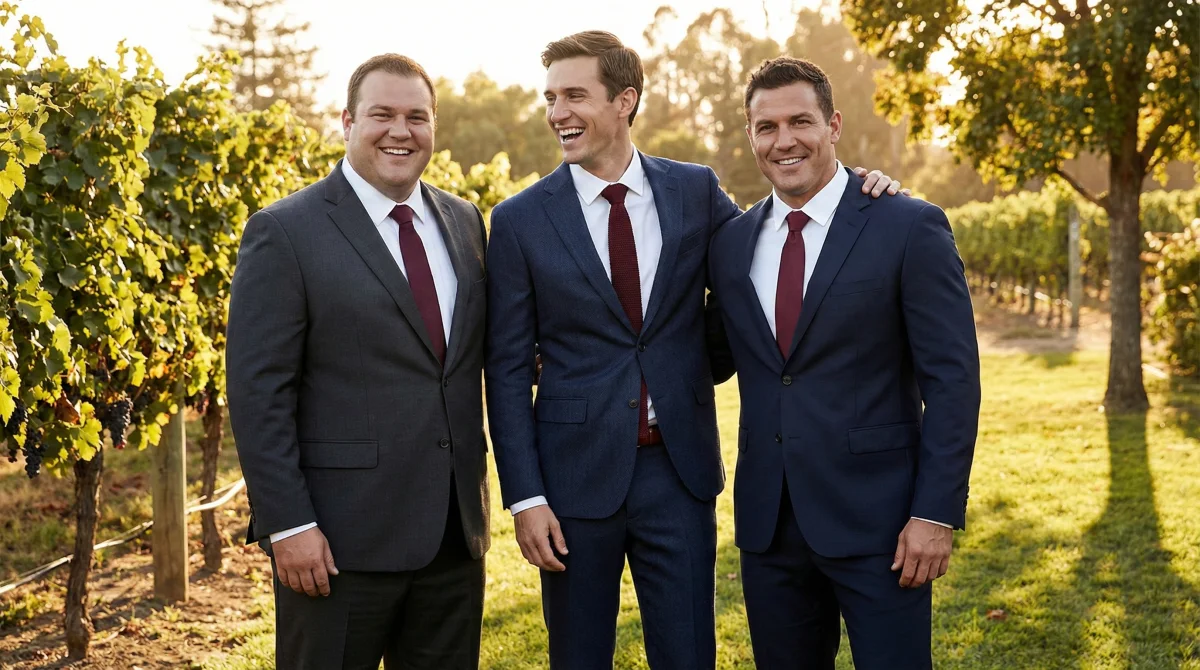
- As a groomsman: The goal is coordinated elegance. Rather than identical suits, modern wedding parties often wear suits in the same color family shades of navy or charcoal, for example with different textures or details. This approach allows each man's individual proportions to be accommodated comfortably. A custom wedding vest can tie the look together without requiring a full matching suit.
- As a guest: Respect the dress code while allowing your personal style to come through. A well-fitted two-piece suit in a rich, deep tone navy, forest green, burgundy with a quality pocket square and a well-chosen tie is always appropriate. Avoid anything that looks rented or ill-fitted; at a wedding, the fit of your suit speaks for itself.
8.2. Business and formal events
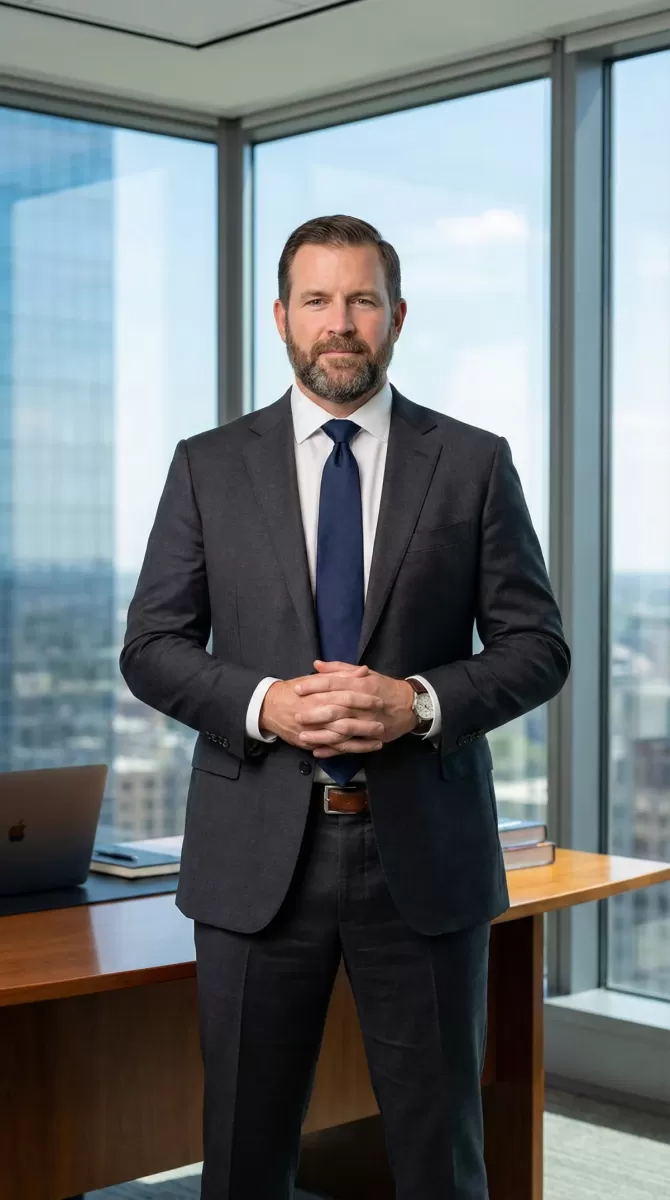
For the workplace and formal events, the priority is a clean, authoritative silhouette. A well-fitted two-piece suit in charcoal, navy, or mid-grey is the foundation of a professional wardrobe for big and tall men. Key considerations:
- Choose a jacket with a structured shoulder and a clean button closure.
- Pair with mid-rise trousers in a matching or complementary fabric.
- A dress shirt with a spread collar balances a broader neck and frame.
- Keep accessories understated a quality leather belt, a classic watch, and a simple tie.
8.3. Smart casual and everyday
Smart casual is where big and tall men have the most freedom and the most room to express personal style. The key is to maintain proportion and intentionality even in relaxed settings.
Good smart casual combinations for big and tall men:
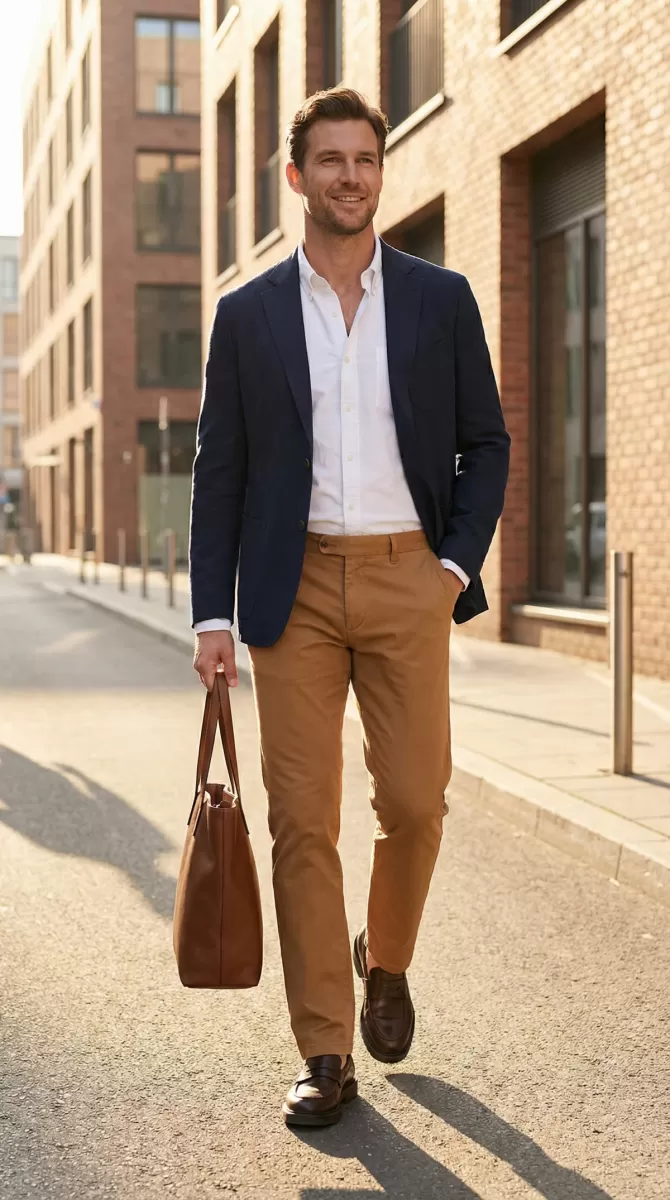
- A structured overshirt or unstructured blazer over a fitted crew-neck or V-neck.
- Straight-cut chinos in a neutral or earthy tone with a clean Oxford shirt.
- A well-fitted polo shirt (look for tall-specific options with a longer body) with tailored trousers.
- Dark denim in a straight or slightly tapered cut, paired with a structured jacket.
9. Custom tailoring vs off-the-rack: Why big and tall men deserve better
Off-the-rack clothing is made for averages. If you are not average in both width and height and most big and tall men are not you have likely spent years compromising: sleeves that are too short, jackets that pull at the chest, shirts that billow around the waist. Custom tailoring changes the equation entirely.
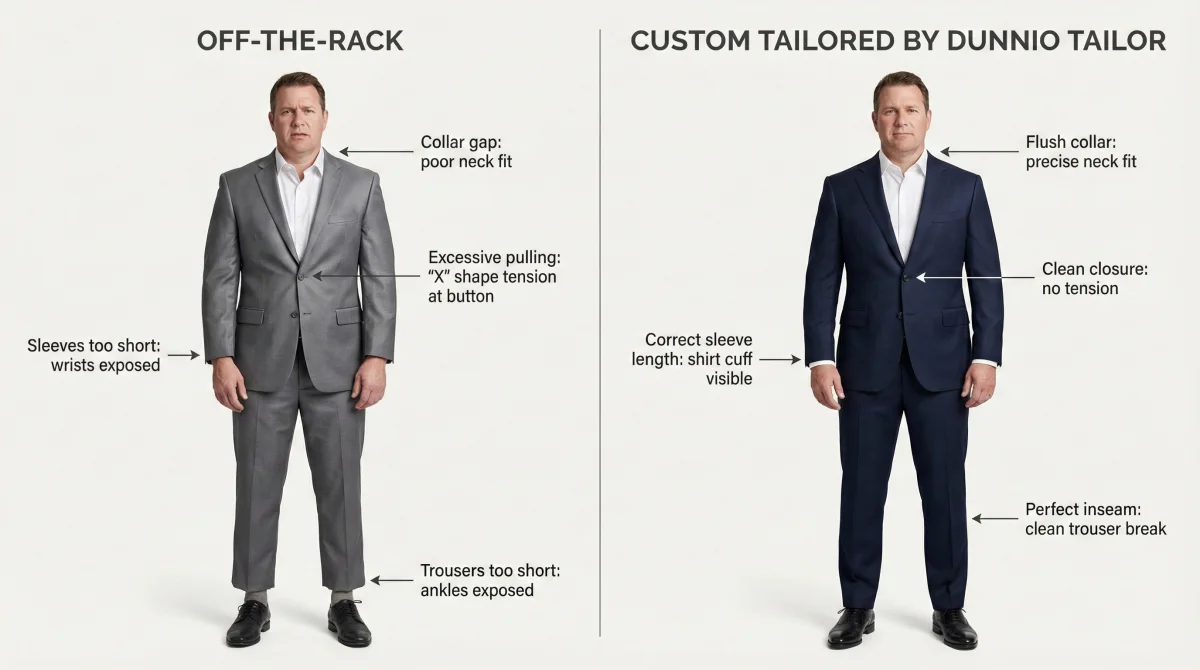
What custom tailoring offers big and tall men:
- Every measurement is taken individually and applied to the garment not derived from a standard block.
- Longer sleeves, extended torso lengths, wider shoulders, and adjusted rises are all built in from the start.
- Fabric choice is entirely yours from the weight and weave to the color and texture.
- The result is a cleaner silhouette, better posture, and a level of comfort that off-the-rack clothing simply cannot match.
The Dunnio Tailor approach
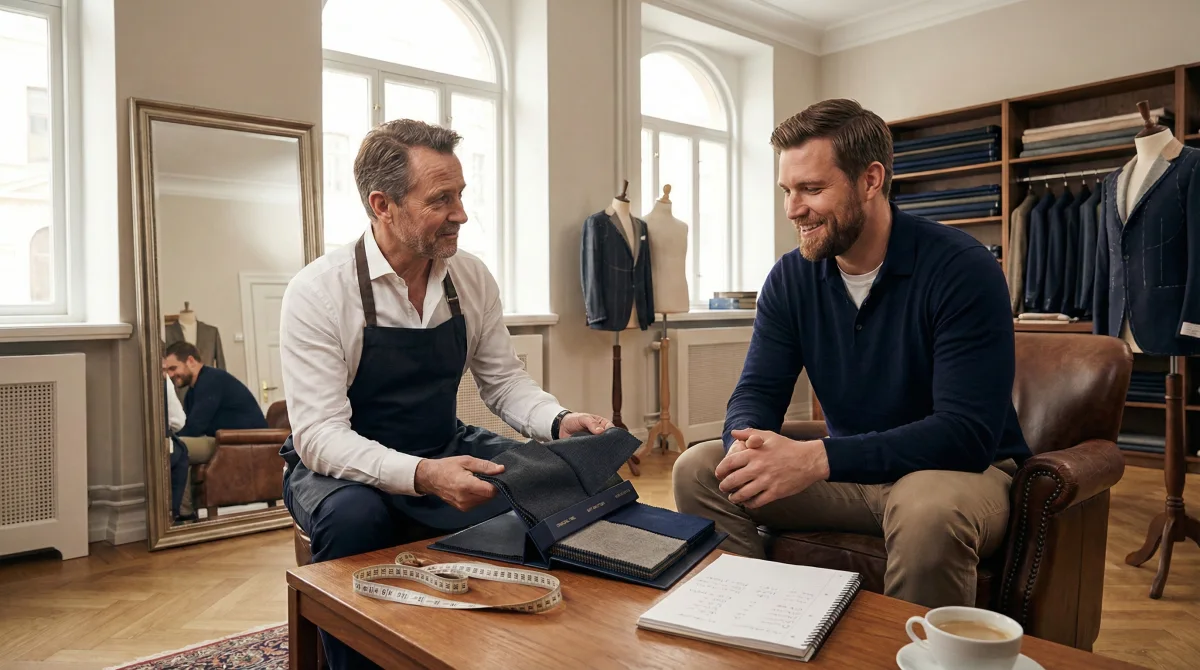
At Dunnio Tailor, the process begins with your measurements and ends with a garment built precisely for your body. Our premium fabrics including Twill (technical), Oxford, Chambray, Barathea, Satin (technical), Hopsack (cotton blend), Plain (cotton blend), and Plain (pure linen) are available from $99 to $135, offering extensive customization options. For those seeking the finest quality, our luxury mill fabrics including Twill (wool blends) and Wool 150s are available from $231. We also welcome custom orders for specialty or premium fabrics not listed simply contact us to discuss your requirements.
For big and tall men, custom tailoring is not an indulgence it is the most practical and cost-effective solution to a problem that off-the-rack clothing has never been able to solve.
10. Frequently asked questions about big and tall size for men
What do big and tall sizes mean?
Big and tall sizes refer to clothing designed for men whose body measurements exceed the standard size range in width, height, or both. "Big" sizing starts around XL and provides extra room in the chest, shoulders, and torso without adding length. "Tall" sizing is for men 6'2" (188 cm) and above, featuring extended sleeve lengths, longer shirt tails, and a longer inseam. "Big and tall" combines both, offering full-body proportion adjustments.
Is 6'1" considered big and tall?
At 6'1", you are close to but not quite at the standard tall threshold, which most brands set at 6'2" (188 cm). However, if you have longer limbs relative to your torso, or if you carry a broader build, tall or big and tall sizing may still fit you better than standard. The best approach is to measure your inseam and sleeve length and compare them to the brand's tall size specifications.
What waist size is considered big and tall?
There is no single number, but waist sizes of 40 inches (101 cm) and above often fall into the "big" category, especially when combined with larger thighs, hips, or a fuller seat. In big and tall sizing, the waist is just one part of the picture garments are proportioned to offer comfort throughout the hips, seat, and rise, not just at the waistband.
How do I know if I need big, tall, or big and tall clothing?
If your clothes feel tight around the chest, shoulders, or waist but are not too short, you likely need big sizes. If your sleeves or trouser legs are always too short even when the rest fits well, you probably need tall sizes. If you struggle with both width and length, you are a candidate for big and tall. Knowing your six key measurements chest, shoulders, inseam, waist, neck, and hips is the most reliable way to determine which category fits you best.
Can I just size up instead of buying big and tall clothing?
No sizing up does not fix proportion issues. A regular XXL shirt may be wider, but it will not have longer sleeves or a longer torso, which are essential for tall men. And the added width from sizing up often creates an unflattering, boxy silhouette for big men. Big and tall clothing adjusts both width and length properly, offering comfort and style without compromise.
What is the difference between xl and xl tall?
An XL garment is sized for a man with a larger build at standard height. An XL tall garment has the same chest and shoulder width as a regular XL, but with extended sleeve length, a longer shirt body, and in the case of trousers a longer inseam. The "tall" designation addresses vertical proportion, not horizontal size.
What does lt mean in shirt size?
LT stands for "large tall." It indicates a shirt sized for a man with a large build (chest and shoulders) and a taller frame, featuring extended sleeve lengths and a longer shirt body compared to a standard large.
What does xlt mean in clothing?
XLT stands for "extra large tall." Like LT, it combines a larger horizontal size (extra large) with the extended proportions of tall sizing longer sleeves, a longer torso, and in trousers, a longer inseam.
What height is considered tall for a man?
Most clothing brands define "tall" as 6 feet 2 inches (188 cm) and above. However, men who are 6'1" with longer limbs or a longer torso may also benefit from tall sizing, particularly for shirts and trousers where sleeve and inseam length matter most.
Do big and tall sizes cost more?
Ready-to-wear big and tall clothing can sometimes carry a small premium over standard sizes due to the additional fabric and specialized pattern-making involved. Custom tailoring, while a higher initial investment, often proves more cost-effective in the long run because a garment made to your exact measurements fits correctly from the start, without the need for alterations or replacements.
Conclusion
Finding clothes that fit should not be a compromise. For men who fall into the big and tall size for men category whether broad, tall, or both the path to dressing with genuine confidence runs through understanding your body, knowing your measurements, and choosing garments that are built for your proportions. Off-the-rack clothing will always be designed for the average. Custom tailoring is designed for you.
At Dunnio Tailor, we believe every man deserves a suit that fits the way it should not almost right, but exactly right. Whether you are dressing for a wedding, a boardroom, or simply want to feel your best every day, our team is ready to build something made for your frame.
When choosing groom's suits at Dunnio Tailor, you will receive:
- Tailoring is based on personal measurements.
- Customize according to preferences.
- Instructions from a professional technical team.
- Tailored by skilled craftsmen.
- Fitting and adjusting as required.
- Fabric pattern options with a collection of more than 500 different fabric patterns.
- Free 720-day warranty.
- Free hangers and specialized storage bags.
- Support and shipping policies for international customers.
Hotline - WhatsApp: +84 968996668
Email: support@dunniotailor.com