Table of Contents[Hide]
- 1. What is the black tie dress code?
- 2. Essential components of black tie attire for men
- 3. The art of perfect fit: black tie tailoring for every body type
- 4. Black tie events: when and where to wear it
- 5. Black tie weddings: a complete guide
- 6. Creative black tie and modern variations
- 7. Building your black tie wardrobe: investment guide
- 8. Black tie etiquette and common mistakes
- 9. Women's black tie attire
- 10. Frequently asked questions
- Your black tie journey begins here
You have just received an invitation marked black tie. The questions start racing through your mind. What exactly does this mean? Will my suit work, or do I need a tuxedo? How do I make sure I look my absolute best? These are the questions every gentleman faces when confronted with formal dress codes. The good news is that mastering the black tie dress code is far simpler than it appears. Once you understand the essential components and how they should fit your unique body, you will walk into any formal event with complete confidence. At Dunnio Tailor, we have dressed countless gentlemen for their most important occasions, from Melbourne Cup celebrations to Sydney harbour galas and prestigious corporate events across Australia. This guide distils that expertise into everything you need to know about dressing for black tie, with particular attention to how proper tailoring transforms the way formal attire works for your individual physique. Let us explore the art of black tie together.
1. What is the black tie dress code?
The black tie dress code represents the gold standard of formal evening attire for most gentlemen today. While technically classified as semi-formal in the historical hierarchy of dress codes, black tie is the most formal requirement the vast majority of men will ever encounter.
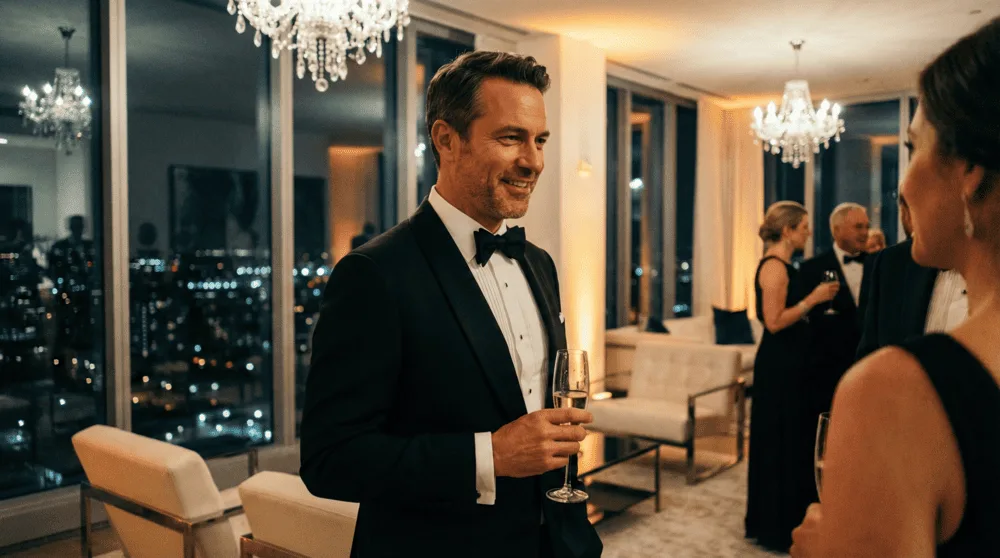
At its core, black tie consists of:
- A dinner jacket (called a tuxedo in North America) with silk or grosgrain lapel facings
- Matching high-waisted trousers with a silk stripe down the outer seam
- A formal white shirt with French cuffs
- A black silk bow tie
- Patent leather or highly polished black shoes
- Optional waist covering: cummerbund or low-cut waistcoat
Black tie at a glance
Purpose: Formal evening events occurring after 6pm or after sundown
Formality level: Semi-formal (most formal dress code for typical occasions)
Key distinction: Silk-faced lapels and silk trouser stripe set it apart from business suits
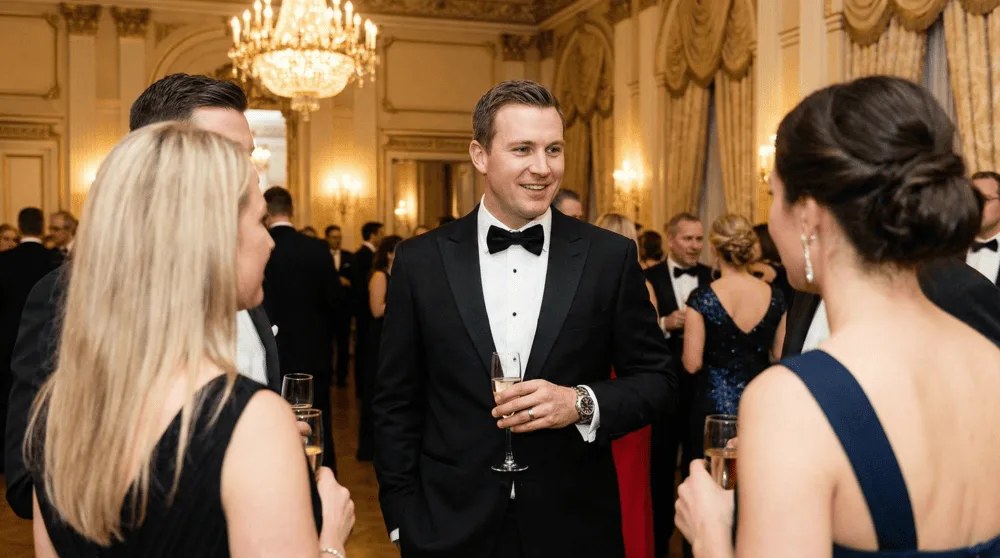
Common occasions: Galas, awards ceremonies, formal weddings, charity balls, milestone celebrations
1.1. The origins of black tie
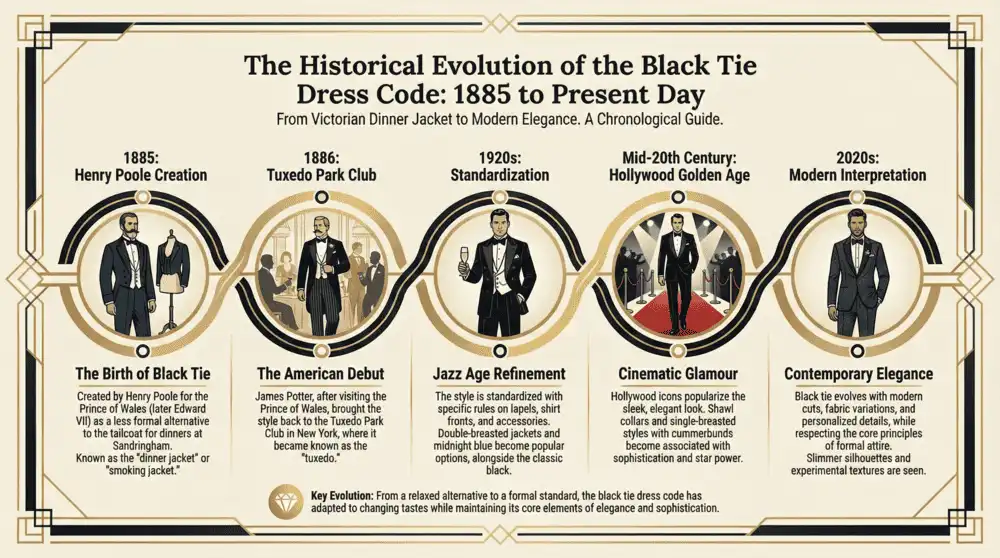
The black tie dress code emerged in 1885 when the future King Edward VII requested a more comfortable alternative to the restrictive white tie tailcoat for private dinners. Henry Poole and Co of Savile Row created a blue silk smoking jacket with matching trousers, establishing what would become the dinner jacket.
By the early twentieth century, black tie had evolved into the standardised ensemble we recognise today. The term tuxedo became popular in America after the garment appeared at the Tuxedo Park Club in New York in 1886. In Britain and Australia, dinner jacket or dinner suit remains the preferred terminology, though both terms are widely understood.
1.2. Why understanding black tie matters
Black tie events represent milestone moments: weddings, significant birthdays, prestigious professional gatherings, and cultural celebrations. These are occasions where memories are made and photographs last a lifetime. Understanding the dress code ensures you honour your hosts, respect the occasion, and present yourself with the confidence that comes from knowing you are dressed appropriately.
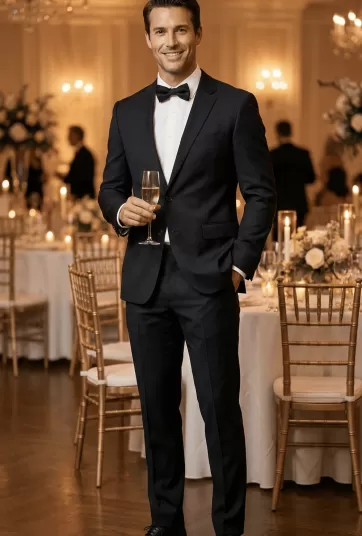
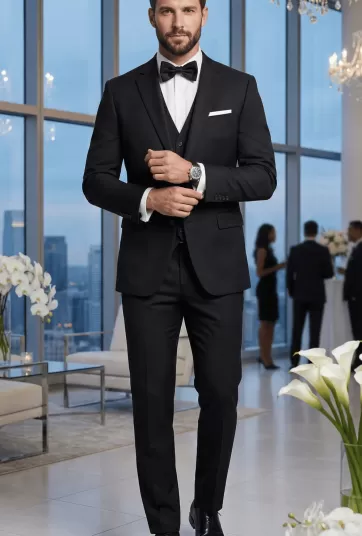
Black Hopsack Cotton Blend Single-Breasted Suit - NHDM13
Products in the outfit
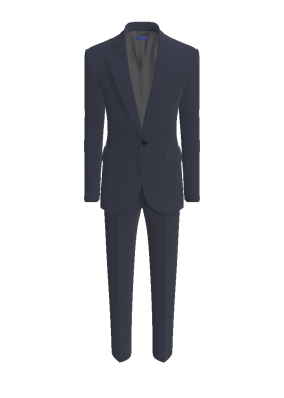
Jacket: 1 Buttons, Single Breasted | RegularNotch LapelNo Buttonhole | Curved | 2 Straight Pockets | 4 Standard Buttons | Side vent - Pant: Narrow/Slim | Single Pleat | Slanted Pocket
1.3. Black tie versus black tie optional: understanding the difference
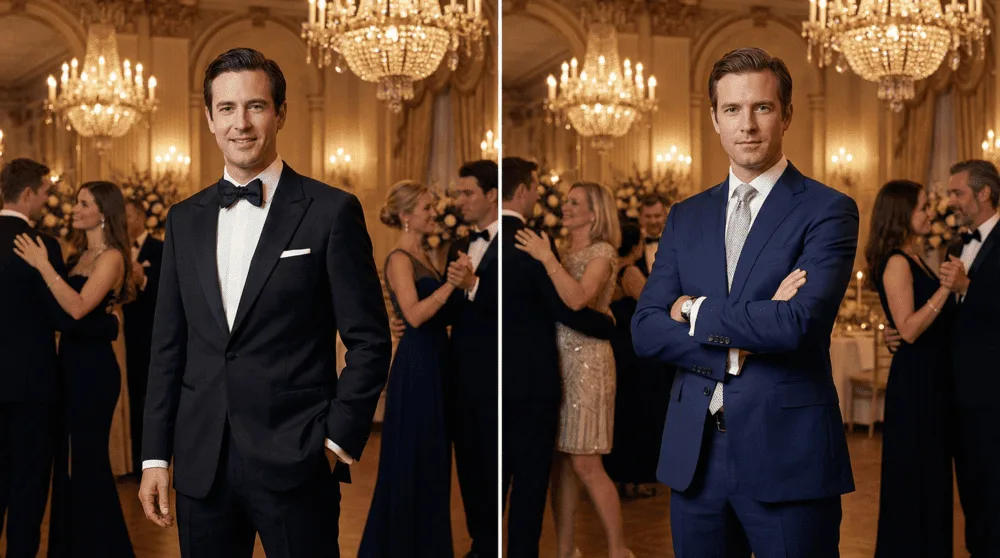
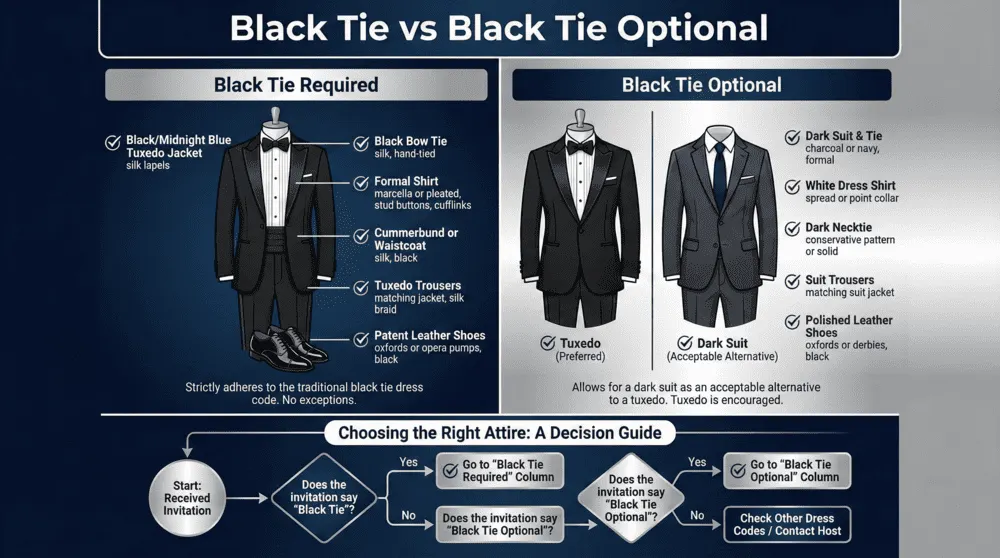
One of the most common sources of confusion is the distinction between black tie and black tie optional. Understanding these variations helps you make the right wardrobe choice every time.
1.4. Comparison of formal dress codes
Dress code: Black tie
Expectation: Tuxedo or dinner suit required
Acceptable alternatives: None for men
Formality level: High
Dress code: Black tie optional
Expectation: Tuxedo preferred but dark suit acceptable
Acceptable alternatives: Dark navy, charcoal, or black suit with tie
Formality level: Moderate to high
Dress code: Black tie preferred
Expectation: Strong suggestion for tuxedo
Acceptable alternatives: Dark formal suit
Formality level: Moderate to high
Dress code: Formal or lounge suit
Expectation: Business formal attire
Acceptable alternatives: Well-tailored dark suit
Formality level: Moderate
When you see black tie optional
Black tie optional indicates that your host would love to see guests in tuxedos but understands not everyone owns one. If you do own a well-fitted dinner suit, wear it. You will never be overdressed at a black tie optional event by choosing the tuxedo.
If you opt for a suit instead, ensure it is:
- Dark in colour (navy, charcoal, or black)
- Well-tailored and recently pressed
- Paired with a crisp white or light blue dress shirt
- Complemented by a conservative silk tie
- Worn with polished black dress shoes
1.5. The decision framework
Ask yourself: Will I feel underdressed if others are wearing tuxedos?
If the answer is yes, choose the tuxedo. Black tie optional exists to provide flexibility, not to discourage formal attire. When in doubt, dressing up shows respect for the occasion and will never be counted against you.


Black Pinstripe Double-Breasted Blazer
Products in the outfit

6 Buttons, Double Breasted (2 to Close) | RegularPeak LapelNo Buttonhole | Straight | 2 Straight & 1 ticket pockets | 4 Standard buttons | Side vent
2. Essential components of black tie attire for men
The power of black tie lies in its precision. Each component has a specific purpose and standard, working together to create an ensemble that is greater than the sum of its parts. Understanding these elements allows you to build a formal wardrobe that serves you for decades.
2.1. The dinner jacket
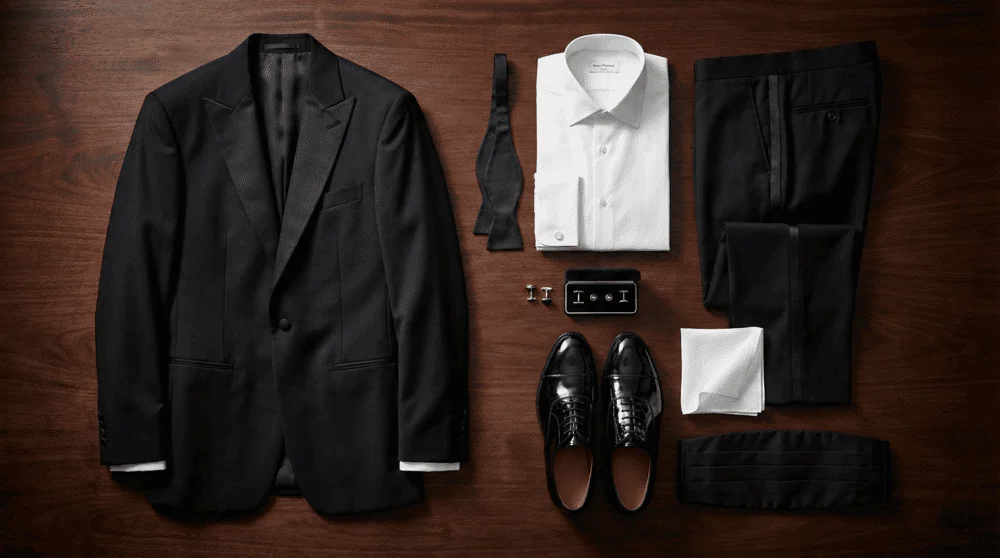
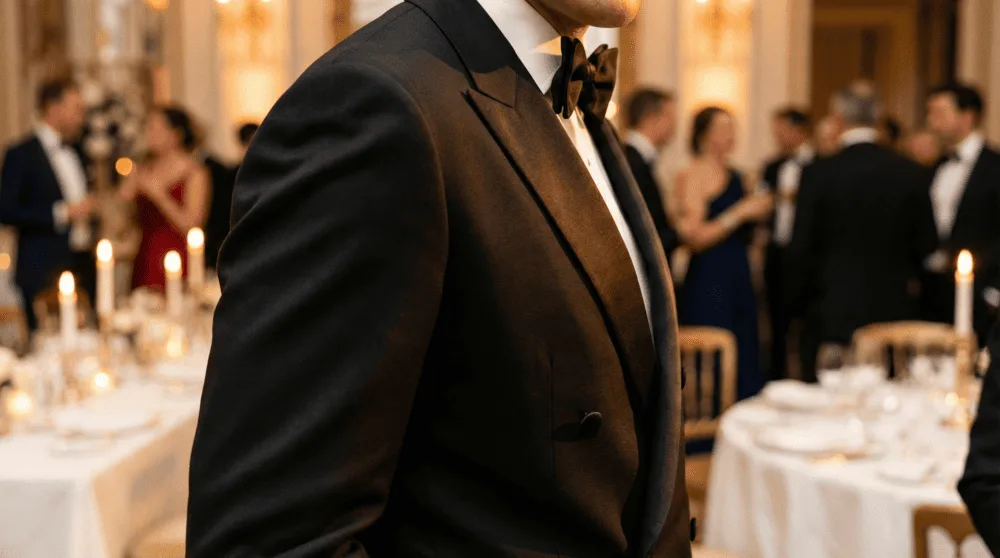
The dinner jacket is the centrepiece of your black tie ensemble. What distinguishes it from a standard suit jacket is the silk or grosgrain facing on the lapels and the absence of many business suit details.
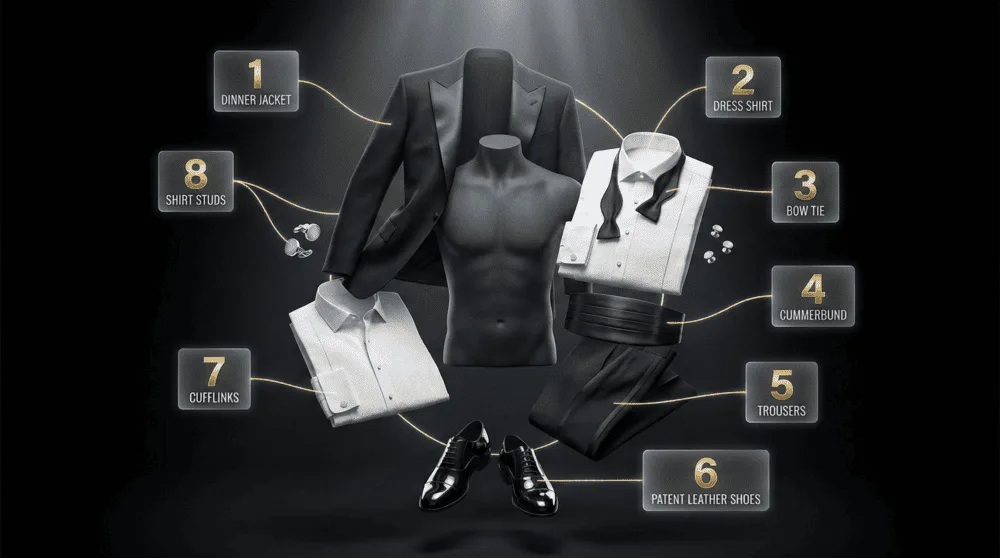
Key characteristics of a proper dinner jacket:
- Silk satin or grosgrain facing on the lapels
- Silk-covered buttons (or fabric-covered)
- Single button closure for single-breasted styles
- No external breast pocket stitching visible
- Traditionally vent-free back, though double vents are now acceptable
- Black or midnight blue fabric
2.1.1. Lapel styles and what they communicate
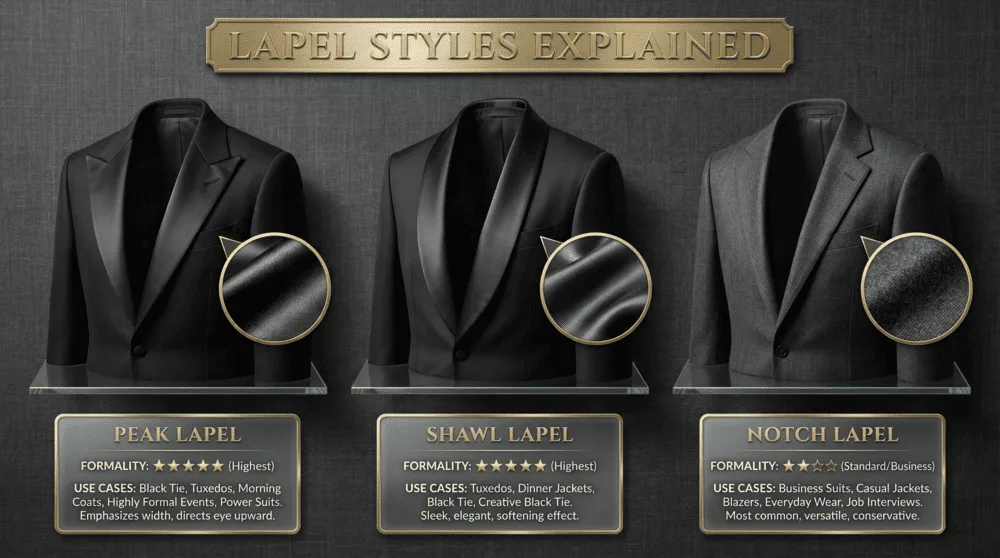
Peak lapels
- Points face upward toward the shoulders
- Most formal and contemporary option
- Creates a strong V-shape that broadens the chest
- Recommended for: Most body types, especially those wanting to emphasise the upper body
Shawl lapels
- Continuous curved collar without points
- Classic Old Hollywood elegance
- Softer, more rounded aesthetic
- Recommended for: Gentlemen seeking a vintage or understated look
Notch lapels
- Standard business suit style with a triangular notch where collar meets lapel
- Least formal of the three options
- May appear too similar to a standard suit
- Generally not recommended for traditional black tie
2.1.2. Colour considerations
Black remains the most traditional and versatile choice, appropriate for any black tie occasion. Midnight blue, however, has a distinguished history dating back to the Duke of Windsor, who favoured it because it appears darker than black under artificial lighting. Both colours are fully acceptable for black tie events.
White dinner jackets are reserved for warm weather events, tropical climates, or summer celebrations. When wearing a white jacket, maintain black trousers and a black bow tie.

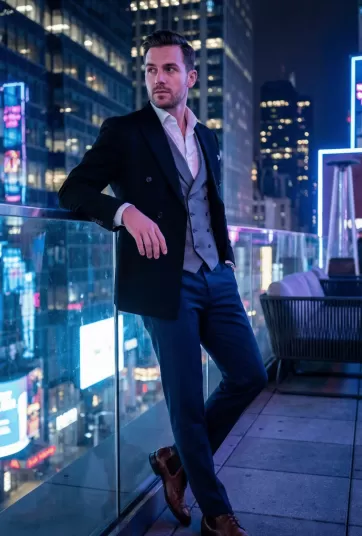

Black Double Breast, Grey Vest, & Navy Pleated Trousers - M3HL44 | M3HL45 | NHDM2 |
Products in the outfit
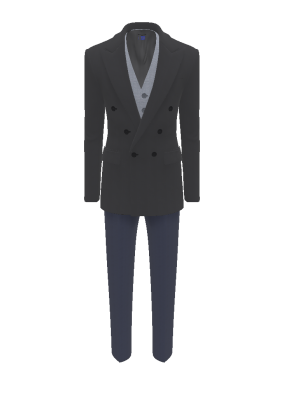
Jacket: 6 Buttons, Double Breasted (1 to Close) | LargerPeak LapelNo Buttonhole | Straight | 2 Straight Pockets | 4 Standard buttons | Side vent - Pant: Narrow/Slim | Single Pleat | Slanted Pocket | Back Pocket - Single Opening | Single | Regular Cuff - Vest: V Neck | 6 Buttons | Single Opening Pocket | Angle Cut | Back Plain -
2.1.3. Single-breasted versus double-breasted
Single-breasted dinner jackets with a single button closure represent the modern standard. They are versatile, flattering on most body types, and work with either a cummerbund or waistcoat.
Double-breasted dinner jackets offer a more commanding silhouette with their overlapping front and multiple buttons. They should remain buttoned at all times and do not require a waistcoat or cummerbund since the jacket itself covers the waistband. Double-breasted styles work particularly well for taller gentlemen or those wishing to add visual substance to their frame.
2.2. Trousers with silk braid
Black tie trousers are engineered differently from standard suit trousers, with specific features that maintain the formal aesthetic.
Essential trouser characteristics:
- High-waisted design to prevent the shirt from billowing below the jacket
- Single silk or satin braid running down the outer seam of each leg
- No belt loops (waist adjusted by side tabs or braces)
- Same fabric as the dinner jacket for a cohesive look
- Clean front without pleats for contemporary styling, or single forward pleats for traditional styling
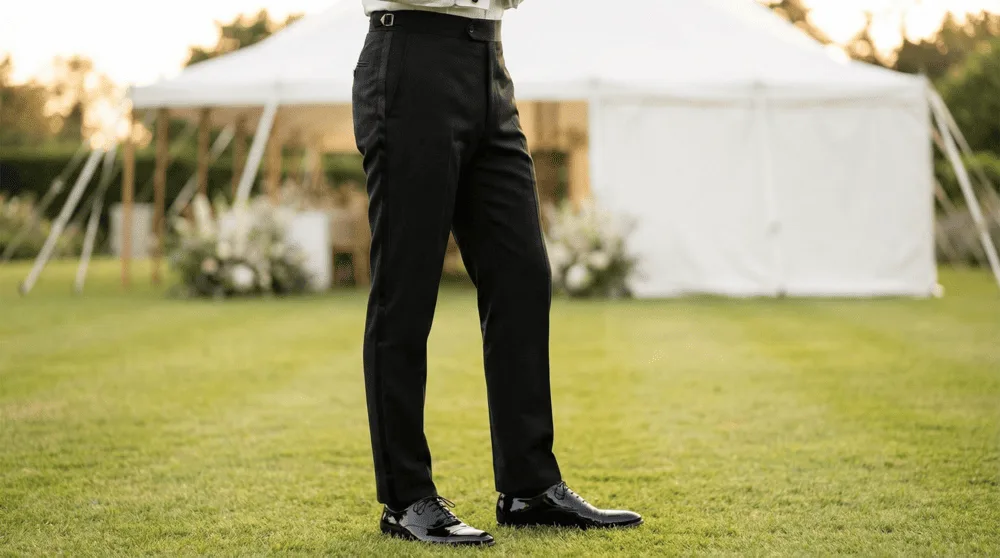
The importance of high-waist construction
High-waisted trousers serve both aesthetic and practical purposes. They create a seamless line from chest to shoe, visually elongating the legs and ensuring the shirt remains tucked and flat. When you sit, a high waist prevents the unsightly gap that occurs with lower-rise trousers.
Side adjusters or braces
Because black tie trousers should never be worn with a belt, they feature either:
- Side adjusters: Fabric tabs with buttons on each side of the waistband for minor adjustments
- Braces (suspenders): Fabric straps attached to buttons inside the waistband, worn under the waistcoat or cummerbund
Braces are the more traditional option and ensure the trousers remain at the proper height throughout the evening, even during dancing or extended seated periods.
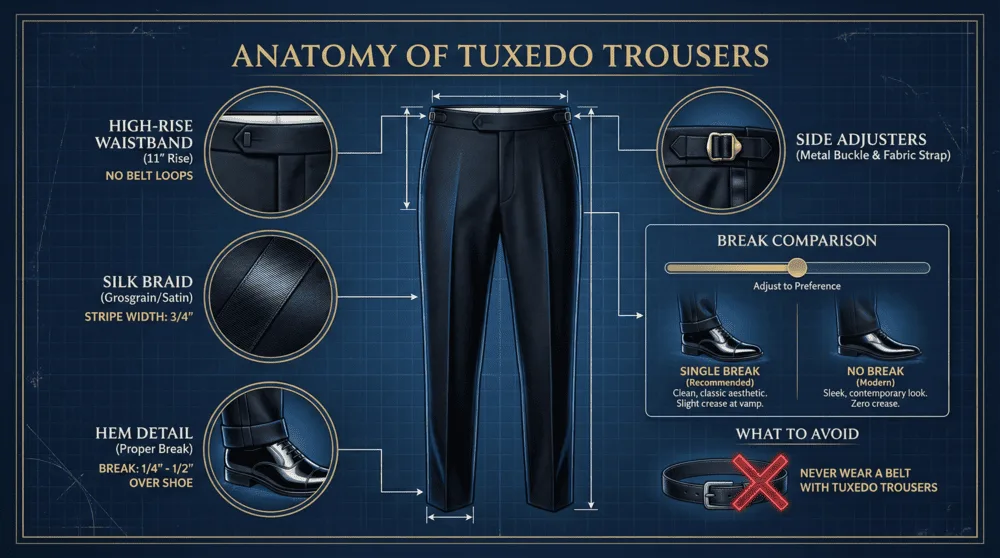
Proper trouser length and break
The break refers to the fold of fabric where the trouser hem meets the shoe. For black tie:
- A single break (slight fold) is traditional
- No break (hem just touching the shoe) is the modern preference
- A slight glimpse of sock when walking is acceptable with the no-break style
2.3. The formal shirt
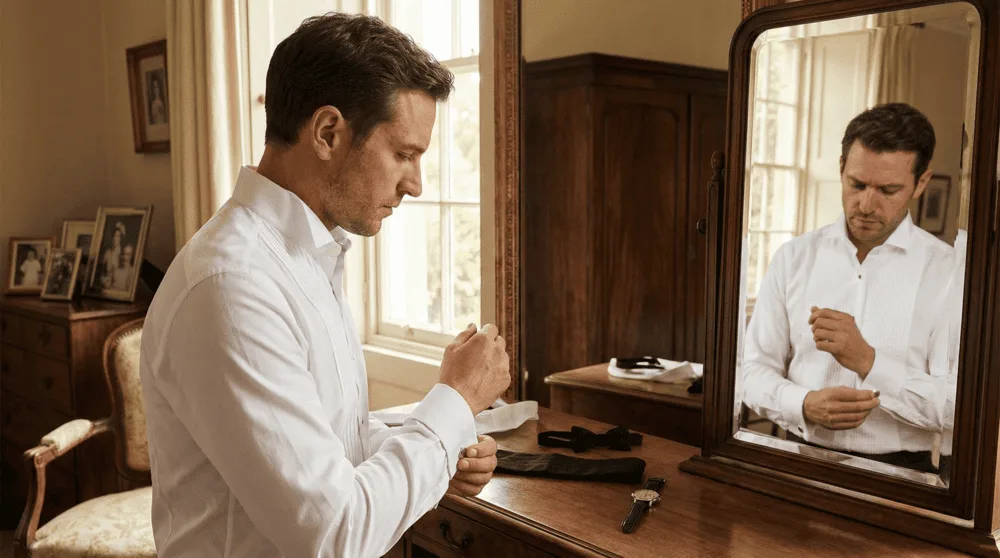
The black tie shirt is designed to present a crisp, structured appearance beneath the dinner jacket. It differs significantly from business shirts in both construction and detailing.
2.3.1. Shirt front styles
Pleated bib:
- Vertical pleats running down the front panel
- Creates texture and visual interest
- Pleats can be wide or narrow depending on preference
Marcella piqué (bib front):
- Stiff, textured cotton or linen panel
- Creates a firm, flat appearance across the chest
- The most formal traditional option
- Sometimes called a bosom or bib shirt
Plain front:
- Clean, unadorned front panel
- Modern minimalist aesthetic
- Acceptable for contemporary black tie
2.3.2. Collar styles
Wing collar:
- Stiff, upright collar with folded-down points
- Traditional formal option
- Points should sit behind the bow tie knot
- Best with self-tie bow ties that have more body
Turndown collar (spread or cutaway):
- Standard collar that folds down
- More comfortable and contemporary
- Increasingly preferred by modern style authorities
- Works well with both self-tie and pre-tied bow ties
French cuffs and studs
Black tie shirts require French cuffs, which fold back on themselves and are secured with cufflinks rather than buttons. This allows for elegant cufflinks that add personality to your ensemble.
The shirt front may feature a concealed button placket or stud holes. Studs are small decorative fasteners (often matching your cufflinks) that replace buttons on the shirt front. They add a touch of formality and are particularly appropriate with marcella piqué shirts.

2.4. The bow tie
The bow tie is the defining accessory of black tie attire. While the phrase black tie takes its name from this element, the execution matters as much as the presence.
2.4.1. Self-tie versus pre-tied
Self-tie bow ties:
- Are tied by the wearer each time
- Create a slightly asymmetrical knot that signals authenticity
- Are strongly preferred by style authorities
- Require practice but become second nature with experience
Pre-tied bow ties:
- Come already formed with an adjustable neck strap
- Produce a perfectly symmetrical, often too-perfect appearance
- Are generally discouraged for formal events
- May be acceptable for first-time black tie wearers as a temporary solution
We strongly recommend investing time in learning to tie a self-tie bow. The subtle imperfection of a hand-tied bow signals confidence and attention to craft.
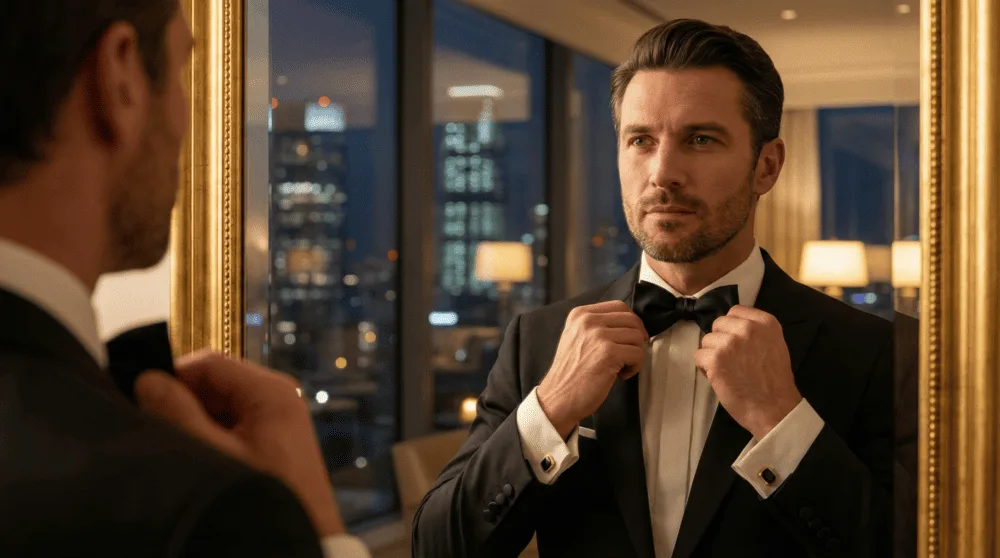
2.4.2. Colour and material
- Traditional: Black silk satin or grosgrain
- Alternative: Midnight blue to match a midnight blue dinner jacket
- Material match: The bow tie fabric should complement the lapel facing
The material of your bow tie should ideally match or complement your lapel facing. If your lapels feature satin, a satin bow tie creates visual harmony. Grosgrain lapels pair beautifully with a grosgrain or matte silk bow tie.

Quick reference: How to tie a bow tie
- Step one: Drape the tie around your neck with one end slightly longer than the other
- Step two: Cross the longer end over the shorter end and bring it up through the neck loop
- Step three: Fold the shorter end horizontally to form the front loop of the bow
- Step four: Drop the longer end down over the front of this horizontal fold
- Step five: Push the longer end through the loop behind the front bow
- Step six: Adjust both sides by pulling on the loops and straightening the knot
- Step seven: Fine-tune until the bow is balanced and sits centred
2.5. Footwear and finishing touches
The final elements of your black tie ensemble require the same attention to detail as the core garments.
2.5.1. Footwear requirements
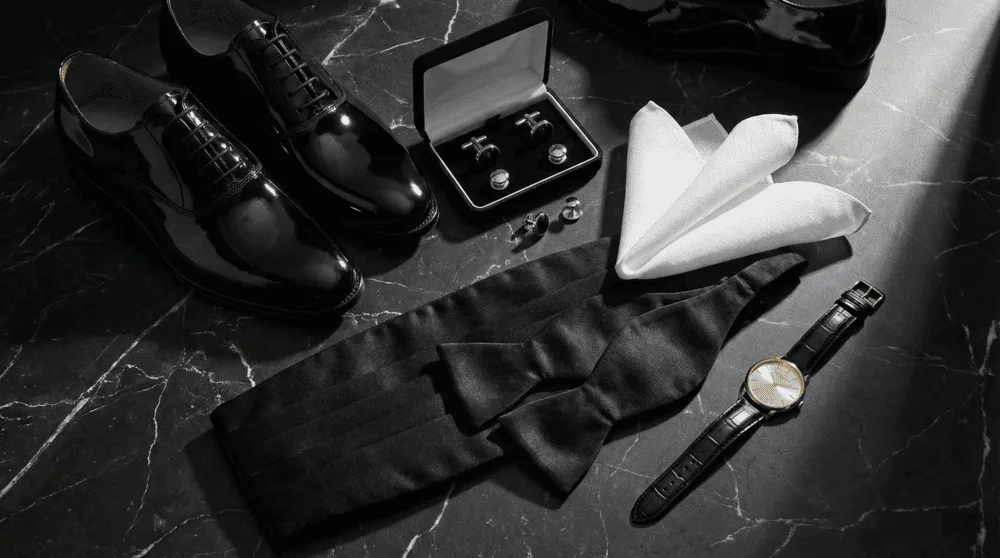
Your shoes must be:
- Black in colour
- Highly polished or patent leather
- Free of any brogueing (decorative perforations)
- Low-profile with a clean silhouette
2.5.2. Recommended styles:
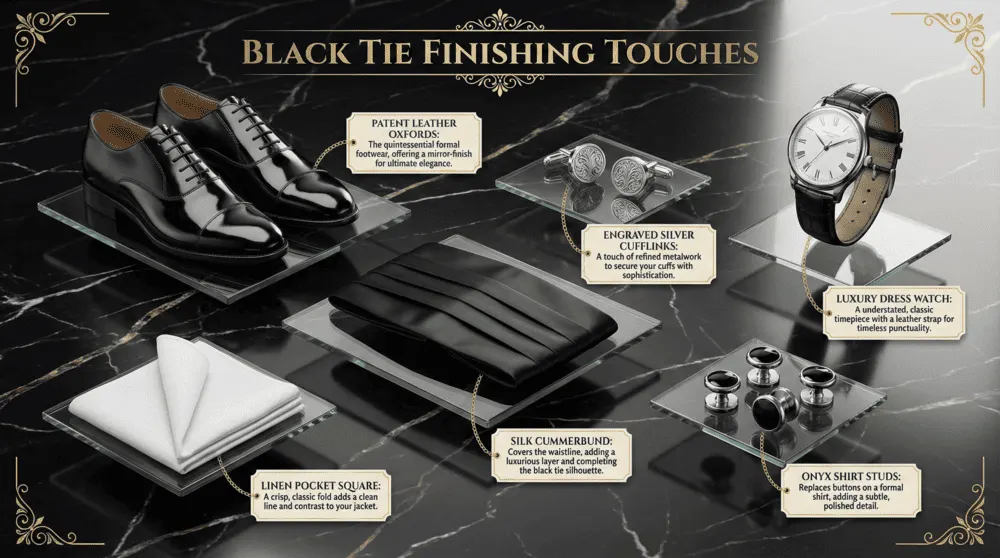
Patent leather Oxfords:
- The gold standard for black tie
- High-shine finish that complements silk accessories
- Closed lacing system for a sleek appearance
Whole-cut Oxfords:
- Made from a single piece of leather
- Exceptionally elegant and contemporary
- Available in patent or highly polished calf
Opera pumps:
- Traditional low-cut slip-on shoes
- Often feature a grosgrain bow
- Considered formal but somewhat anachronistic
- Best reserved for white tie in modern contexts
Velvet loafers:
- Acceptable for creative black tie or festive occasions
- Often feature embroidered crests or initials
- Should be reserved for less traditional events
2.5.3. Essential accessories
Cufflinks:
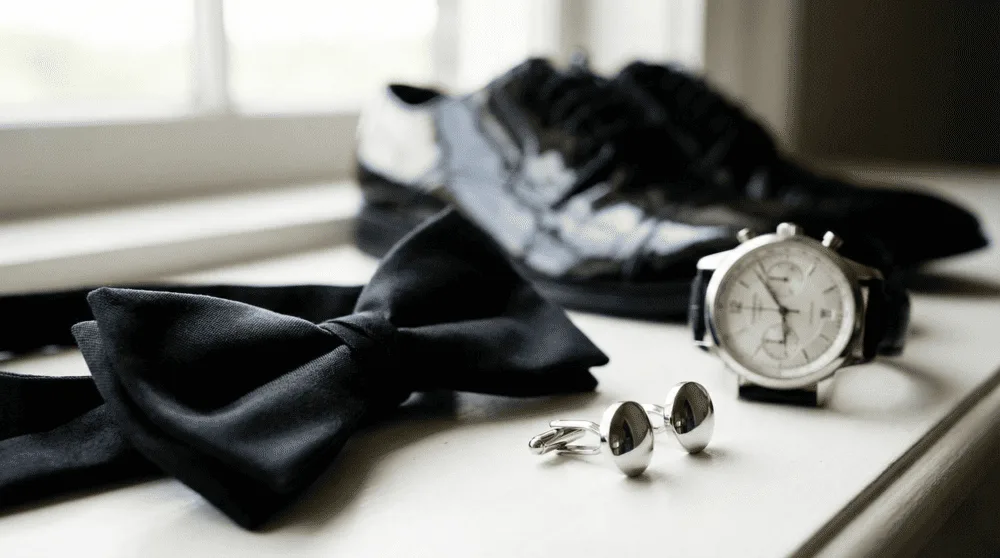
- Required with French cuff shirts
- Options range from simple silver or gold knots to gemstone settings
- Should complement but not overpower the ensemble
- Matching sets with shirt studs create a cohesive look
Pocket square:
- Optional but recommended
- White linen with a clean fold is the classic choice
- Should not match the bow tie exactly but should complement it
- Avoid loud patterns or colours for traditional black tie
Watch:
- A dress watch with a slim profile and leather or dark strap is appropriate
- Avoid large sport watches or smart watches
- Some purists suggest no watch at all, but a refined timepiece is acceptable
2.5.4. Waist covering:
Cummerbund:
- Pleated fabric band worn around the waist
- Pleats should face upward (historically used to hold theatre tickets)
- Typically black silk, though midnight blue or maroon is acceptable for creative events
- Creates a clean line covering the trouser waistband
Waistcoat (vest):
- Low-cut formal vest, typically in black or midnight blue
- Should not show below the dinner jacket button
- More coverage than a cummerbund
- Particularly effective in cooler weather
You should wear one or the other, not both. The only exception is double-breasted dinner jackets, which require neither since they remain buttoned at all times.
3. The art of perfect fit: black tie tailoring for every body type
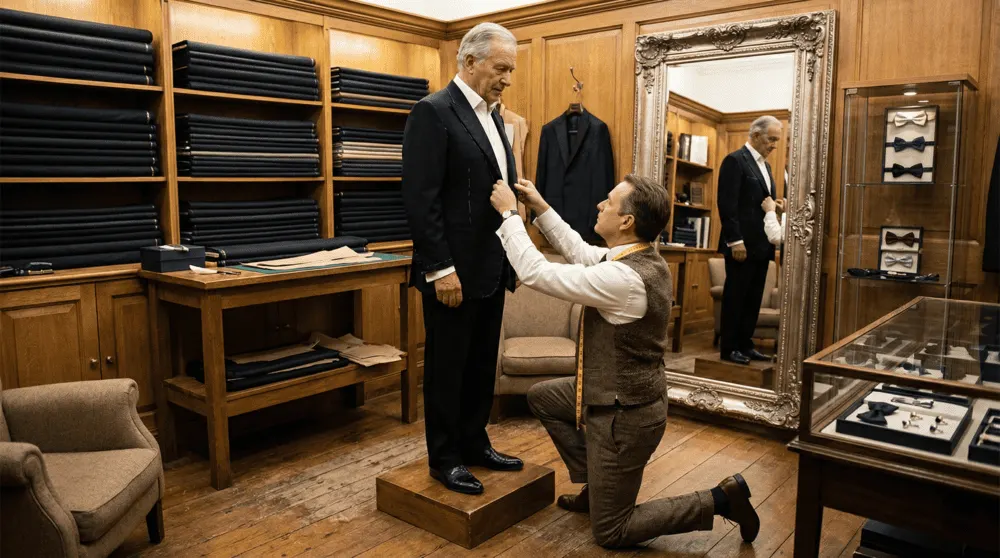
The secret that separates magnificent black tie from merely acceptable formal wear is fit. A perfectly fitted tuxedo from an affordable tier will always outperform an expensive garment that drapes incorrectly. At Dunnio Tailor, we believe every gentleman deserves formal attire that works with his unique physique.
This section provides tailoring guidance for different body types, ensuring you can work with your tailor to achieve the ideal silhouette.
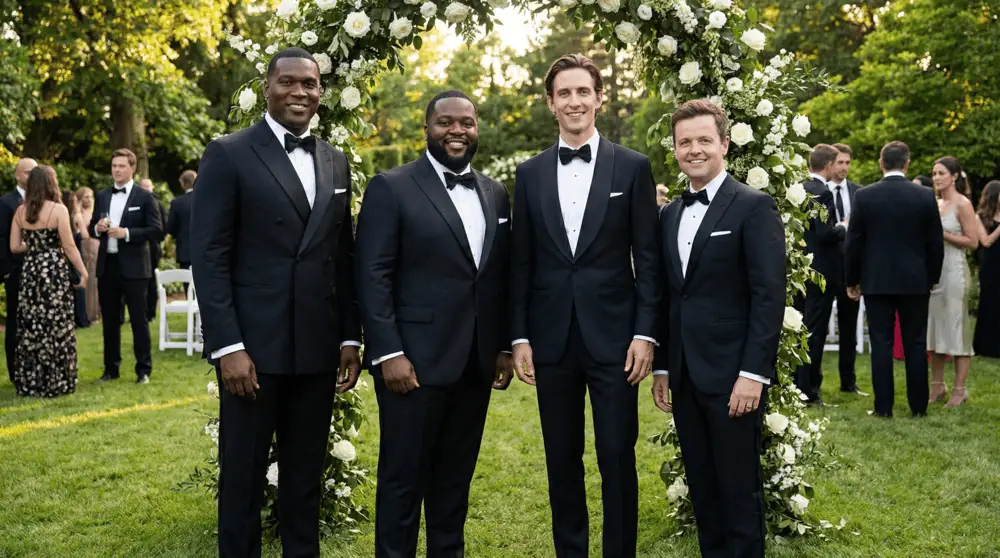
3.1. Athletic and inverted triangle builds
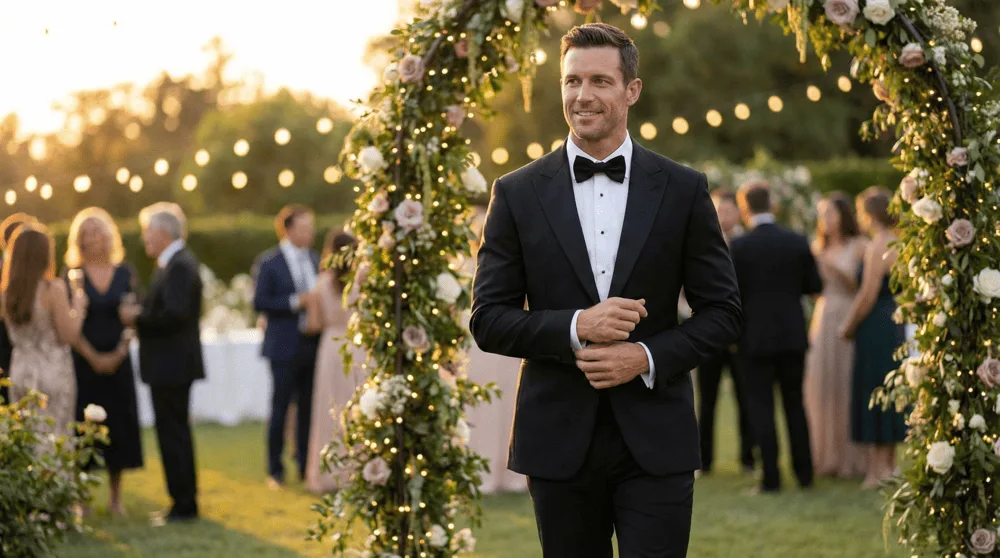
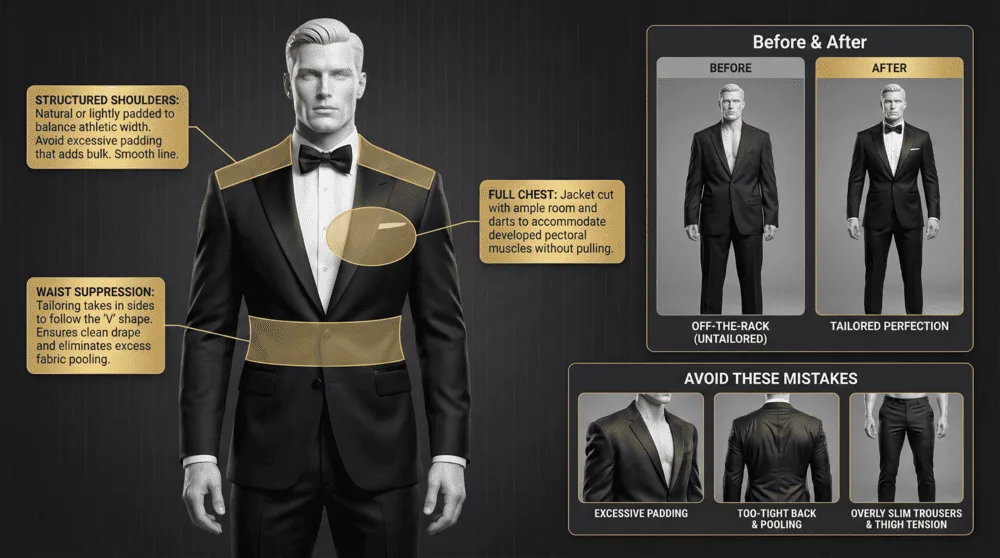
Gentlemen with broad shoulders and a narrower waist have what tailors call an inverted triangle physique. This athletic build presents an excellent foundation for black tie but requires specific adjustments to avoid appearing top-heavy.
3.1.1. Recommended styling:
Lapel choice:
- Peak lapels are ideal, as they complement and accentuate the existing V-shape
- Shawl lapels also work well for a softer aesthetic
Jacket construction:
- Moderate shoulder padding (athletic builds rarely need enhancement)
- Strong waist suppression to follow the natural taper
- Single-breasted with a low button stance to emphasise the chest
Trouser considerations:
- Ensure adequate room through the thigh and seat
- Tapered leg from knee to ankle prevents a boxy appearance
- Mid-rise or high-rise waistband works well with a defined waist
Common pitfalls to avoid:
- Jackets that are too tight through the back, causing horizontal creases
- Trousers that are too slim through the thigh, creating discomfort when seated
- Excessive shoulder padding that exaggerates proportions
3.2. Fuller figures and oval body types
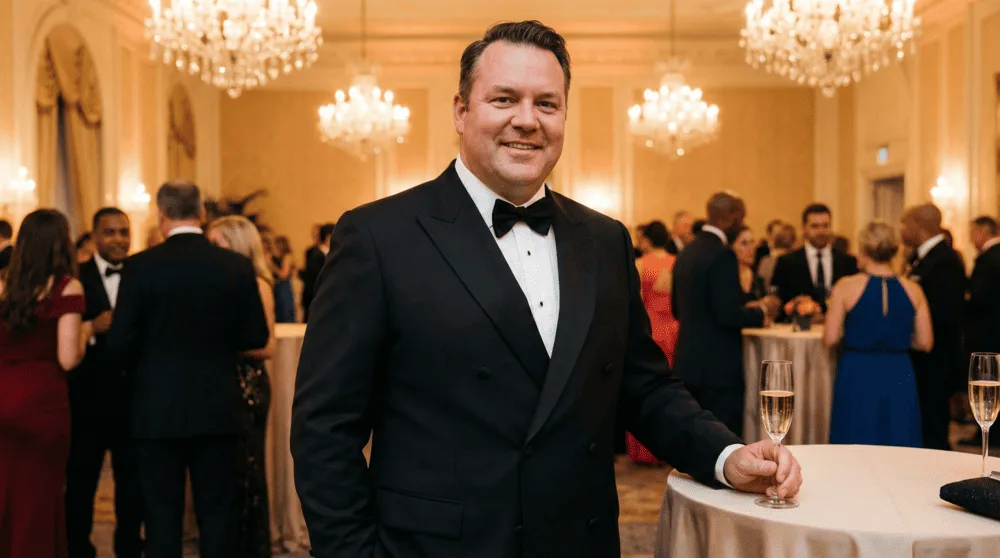
Gentlemen with a fuller midsection require thoughtful tailoring that creates elongation and draws attention to the whole silhouette rather than any single area.
Recommended styling:

Jacket construction:
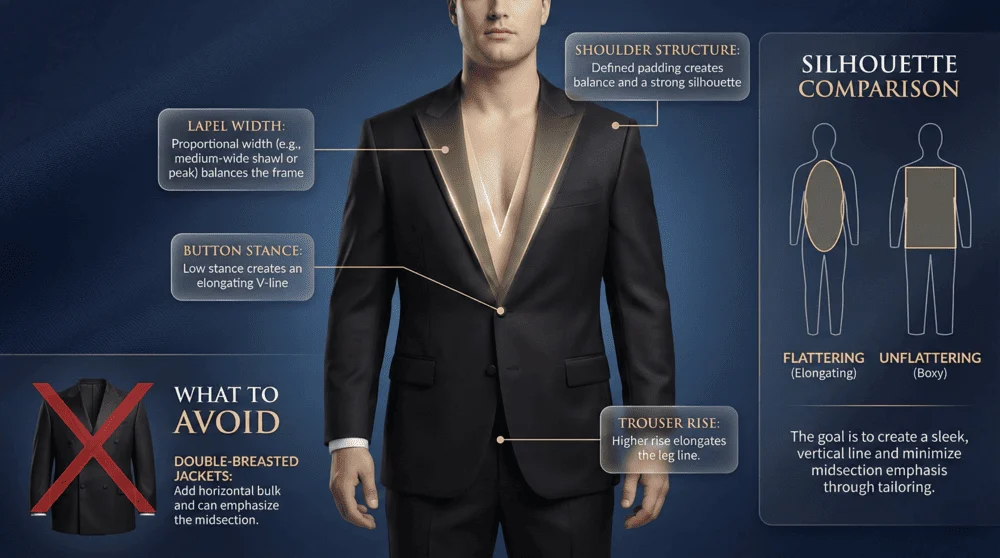
- Single-breasted with a low button stance creating a deep V-line
- This deep V elongates the torso and slims the overall appearance
- Avoid double-breasted styles, which add horizontal emphasis at the widest point
- Structured shoulders provide balance with the midsection
Lapel choice:
- Peak lapels draw the eye upward toward the face
- Moderate width rather than narrow, which can appear unbalanced
- Shawl collars can work but may soften the silhouette too much
Fabric considerations:
- Darker shades minimise visual weight
- Avoid heavy fabrics that add bulk
- Matte or low-sheen fabrics are more forgiving than high-shine options
Trouser adjustments:
- Higher rise provides comfort and a smooth line under the waistcoat
- Adequate room through the seat and thigh
- Slight taper from knee to ankle for a clean finish
- Flat front or single pleat depending on comfort preference
The importance of proper buttoning:
- A jacket that buttons without strain is essential
- There should be no X-shaped pull lines across the midsection
- When buttoned, a fist should still fit comfortably inside the jacket
Accessory strategy:
- A cummerbund provides a clean transition from jacket to trouser
- Vertical elements (the bow tie, the lapel line, the shirt placket) create lengthening
- Avoid wide, bulky watches or oversized cufflinks that add horizontal emphasis
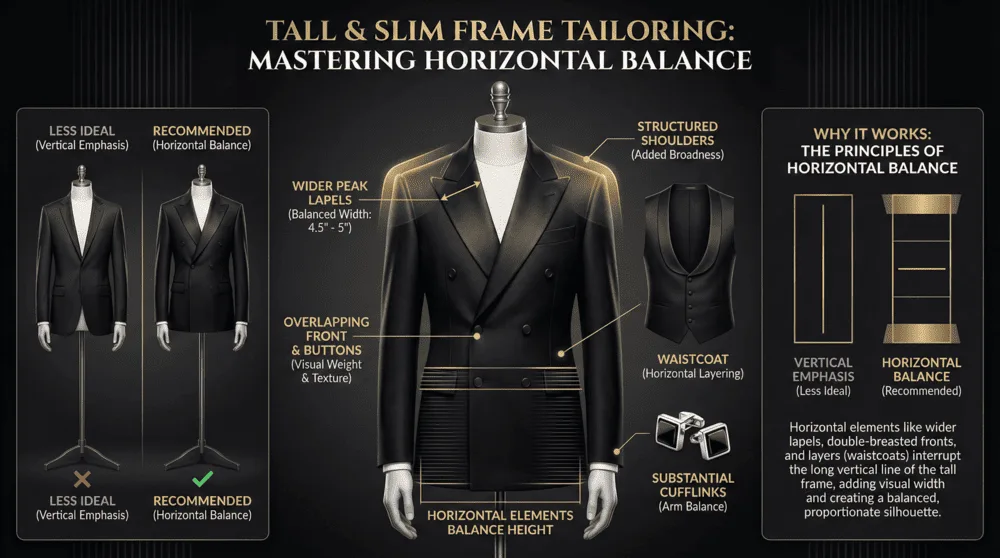
3.3. Tall and slim frames
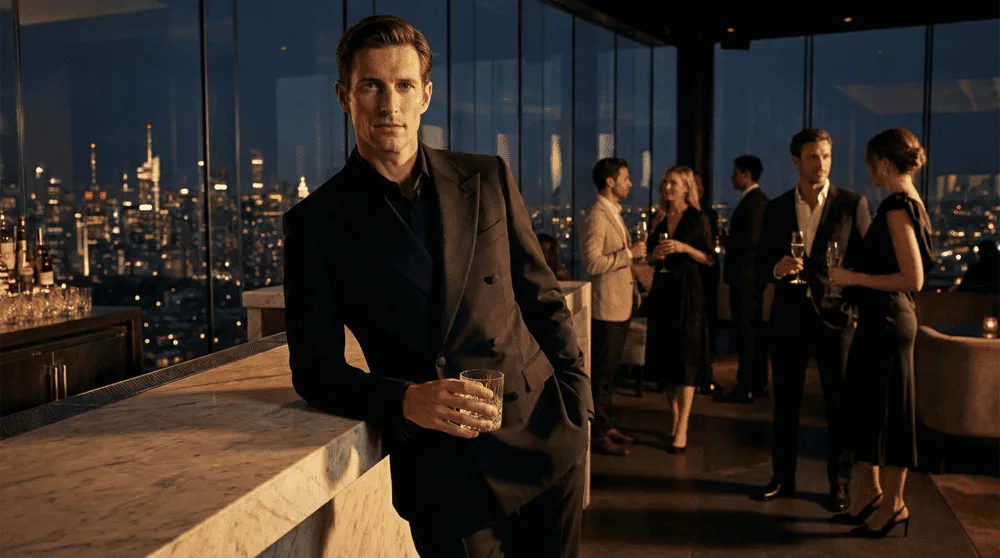
Tall, lean gentlemen have the advantage of a long vertical line but may find standard tailoring makes them appear too narrow or lanky. The goal is to add visual substance and balance.
Recommended styling:
Jacket construction:
- Double-breasted styles add horizontal dimension and create presence
- If choosing single-breasted, opt for slightly wider lapels
- Structured shoulders with moderate padding add breadth
- Slightly longer jacket length maintains proportion with height
Lapel considerations:
- Wider peak lapels add horizontal balance
- Shawl collars can also work, particularly in a wider profile
- Avoid narrow lapels which emphasise vertical length
Trouser strategy:
- Can carry either flat front or pleated styles well
- Ensure adequate length with a full break or single break
- Moderate width through the leg balances tall proportions
Fabric and colour:
- Can carry heavier fabrics that drape with substance
- Midnight blue or black equally effective
- Patterned dinner jackets (subtle jacquard or texture) add visual interest
Additional elements:
- A waistcoat adds another horizontal layer and visual weight
- Pocket squares with more volume add dimension
- Substantial cufflinks complement longer arms
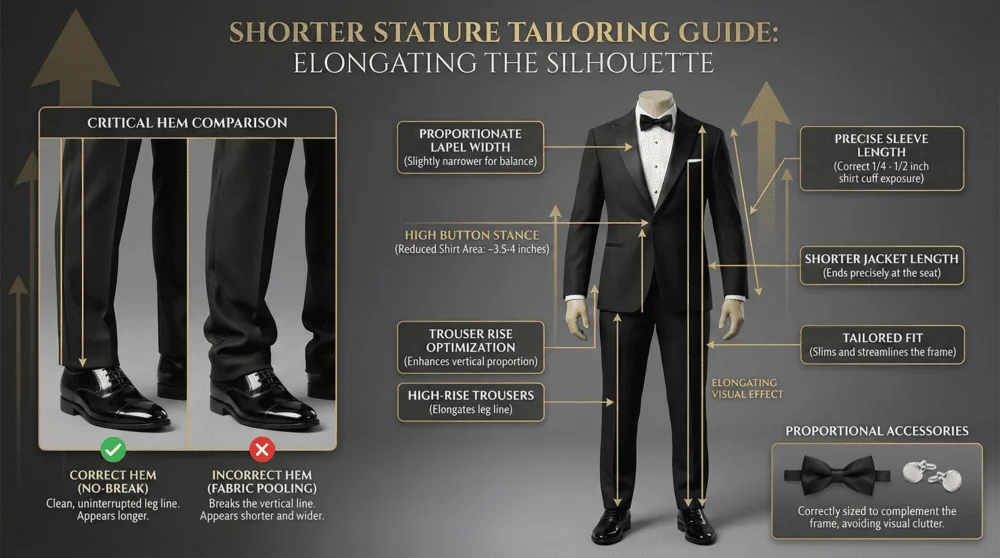
3.4. Shorter stature
Gentlemen of shorter stature benefit from tailoring that creates the illusion of height through careful proportioning and vertical emphasis.
Recommended styling:
Jacket construction:
- Single-breasted is almost always preferred
- High button stance shortens the visible shirt area and elongates the leg line
- Minimal shoulder extension to keep proportions natural
- Shorter jacket length (covering the seat but no further) extends the leg visually
Lapel choice:
- Moderate width peak lapels create upward motion
- Avoid very wide lapels which can overwhelm a smaller frame
- Shawl collars are acceptable but offer less vertical emphasis
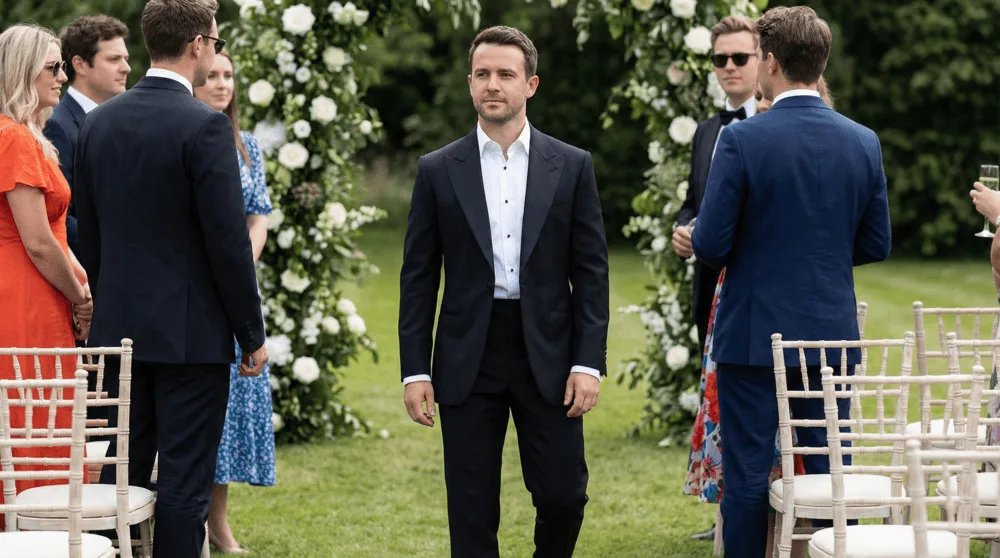
Trouser strategy:
- High-rise waistband is essential for elongating the legs
- Slim taper from thigh to ankle creates a continuous line
- No break or minimal break at the hem is crucial
- Any trouser pooling shortens the visual leg length
Proportional accessories:
- Proportionate bow tie (not oversized)
- Slim pocket square fold rather than puffed styles
- Refined cufflinks that do not overwhelm the cuff
Critical measurements:
- Sleeve length precisely calibrated to show the right amount of cuff
- Jacket length ending at the correct point on the hip
- Trouser rise and inseam carefully balanced
Body type tailoring summary
Body type: Athletic or inverted triangle
Jacket style: Single-breasted, peak lapel
Key focus: Waist suppression, thigh room
Goal: Complement natural V-shape
Body type: Fuller figure or oval
Jacket style: Single-breasted, low button, peak lapel
Key focus: Deep V-line, structured shoulders
Goal: Elongate and slim silhouette
Body type: Tall and slim
Jacket style: Double-breasted or wide lapel single-breasted
Key focus: Horizontal elements, structured shoulders
Goal: Add visual substance and breadth
Body type: Shorter stature
Jacket style: Single-breasted, high button stance
Key focus: High-rise trousers, minimal break
Goal: Create vertical elongation
4. Black tie events: when and where to wear it
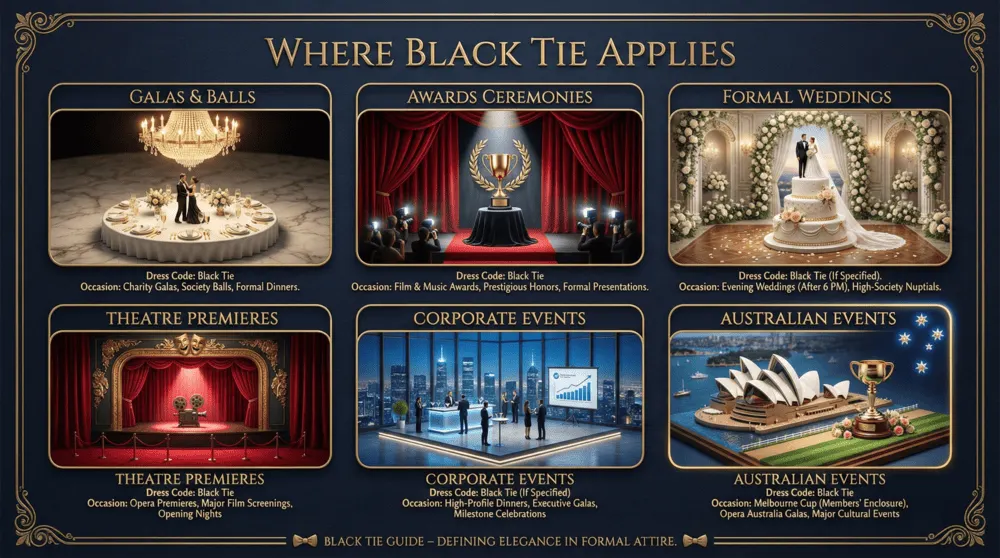
Understanding where black tie applies helps you prepare appropriately and ensures you never find yourself underdressed or uncertain.
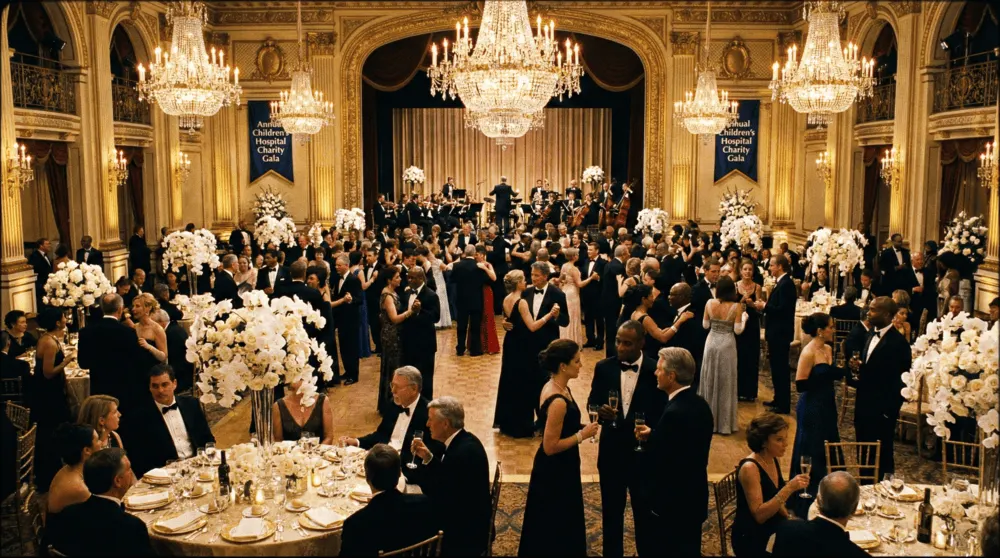
4.1. Traditional black tie occasions
Evening galas and charity balls:
- The most classic black tie setting
- Expect full traditional dress code adherence
- Often feature seated dinners and dancing
Awards ceremonies:
- Industry recognition events
- Corporate achievement celebrations
- Professional association galas
Formal weddings:
- Specifically when the invitation states black tie
- Usually for evening ceremonies and receptions
- Growing in popularity for milestone celebrations
New Year's Eve events:
- Formal parties and club celebrations
- Hotel ballroom gatherings
- Private celebrations with explicit dress codes
Theatre and opera premieres:
- Opening night performances
- Gala performances and benefits
- Historic venue celebrations
Prestigious corporate events:
- Annual company galas
- Client appreciation evenings
- Industry landmark celebrations
4.2. Australian-specific occasions
Melbourne Cup Carnival:
- Particularly the Cup Day itself
- Birdcage and Marquee events
- Some events specify morning suit, so check invitations carefully
Sydney harbour events:
- New Year's Eve galas with harbour views
- Corporate events at prestigious venues
- Charity functions at landmark locations
Perth and Brisbane corporate galas:
- Mining and resources industry celebrations
- Professional association dinners
- Philanthropic events
Wine region celebrations:
- Vintage launch dinners
- Winery gala evenings
- Harvest celebration events
4.3. The six o'clock rule
Traditionally, black tie is worn only after six in the evening or after sundown during winter months. This convention stems from the dress code's origins as evening wear. For afternoon events or daytime formal occasions, morning dress or a formal lounge suit may be more appropriate.
If you receive an invitation for a daytime event that specifies black tie, the host is setting a high formality standard. In such cases, follow the stated dress code rather than the traditional time rule.
5. Black tie weddings: a complete guide
Weddings represent the most common black tie occasion for many gentlemen. Whether you are the groom, a member of the wedding party, or a guest, understanding your role helps you dress appropriately.
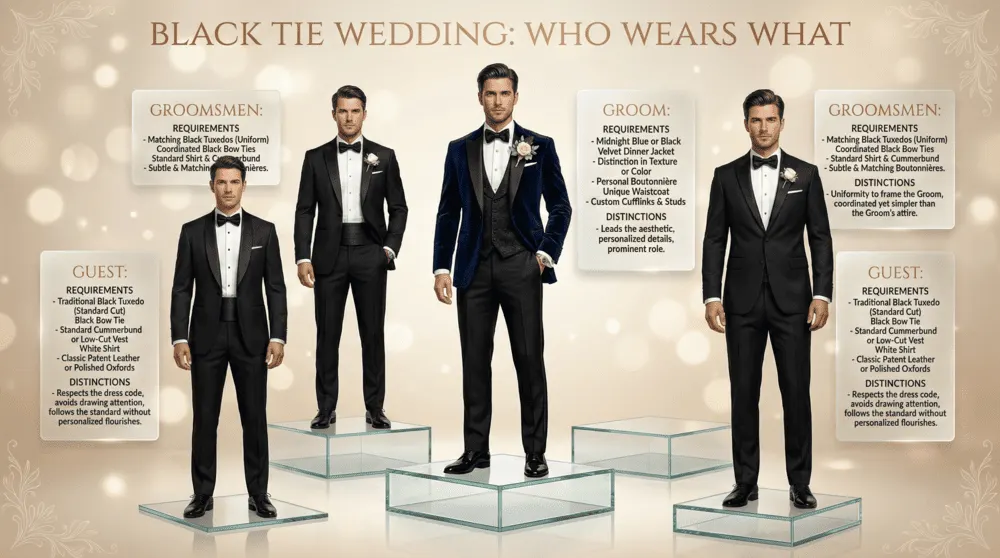
5.1. For the groom
As the groom, you set the standard for your wedding. Your attire should be the most refined in attendance, distinguished by subtle details that elevate you above your groomsmen and guests.
How to distinguish yourself:
Fabric choice:
- Consider a luxurious fabric such as silk-wool blend or fine merino
- Midnight blue offers a distinguished alternative to black
- Velvet dinner jackets create a memorable statement for winter weddings
Subtle distinctions:
- A different waistcoat colour or pattern from your groomsmen
- Unique cufflinks with personal significance
- A boutonnière that differs from the wedding party
- Bespoke tailoring that provides a superior fit
Coordination with your bride:
- Discuss colour palette and formality level
- Ensure your accessories complement her colour scheme
- Consider matching subtle details (pocket square colour, boutonnière style)
Investment in bespoke:
Your wedding photographs will be treasured for generations. A bespoke dinner suit, tailored precisely to your measurements and physique, represents an investment in both the day and your future formal wardrobe. Many Dunnio Tailor clients find their wedding tuxedo serves them for decades of formal occasions.
5.2. For groomsmen
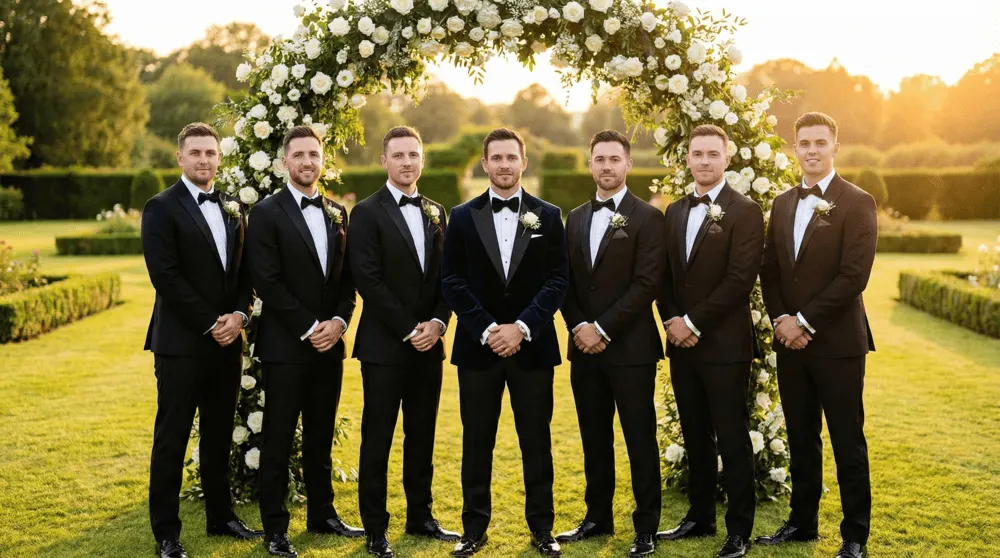
Groomsmen should complement the groom without competing for attention. Your role is to support the wedding party's overall aesthetic while maintaining your own refined appearance.
Coordination strategies:
Matching the groom:
- Wear the same style dinner jacket in the same colour
- Distinguish the groom through his accessories or waistcoat
Complementary approach:
- Slightly different jacket colour (such as navy when the groom wears midnight blue)
- Same style of shirt and bow tie
- Uniform accessories across the groomsmen
Rental versus ownership:
- For one-time participation, rental may be practical
- For gentlemen attending multiple weddings annually, ownership becomes cost-effective
- Ensure rental garments are properly fitted before the event
Key considerations:
- Confirm all details with the groom or wedding planner
- Arrange fitting appointments well in advance
- Ensure shoes are polished and shirt is freshly pressed
- Have accessories ready and practise bow tie technique
5.3. For wedding guests
As a guest at a black tie wedding, your role is to honour the dress code and celebrate the couple without drawing undue attention.
Guest dress code requirements:
When the invitation says black tie:
- A tuxedo or dinner suit is expected
- Dark colours only: black or midnight blue
- White shirt, black bow tie, polished black shoes
- Waistcoat or cummerbund required
When the invitation says black tie optional:
- Tuxedo is preferred but dark formal suit is acceptable
- If wearing a suit, choose navy, charcoal, or black
- Pair with a conservative tie and white or light blue shirt
- Ensure shoes are formal and polished
What to avoid:
- Wearing white or cream (reserved for the bride)
- Arriving underdressed out of convenience
- Wearing brown shoes, coloured shirts, or casual accessories
- Eccentric choices that draw attention from the couple
Practical considerations:
- Confirm the dress code if unclear
- Plan for weather and venue (outdoor ceremonies may require additional layers)
- Bring essentials for touch-ups (lint roller, shoe shine cloth)
6. Creative black tie and modern variations
While traditional black tie maintains strict standards, modern occasions sometimes call for creative interpretation. Understanding when and how to experiment helps you express personality while respecting formality.
6.1. When creative black tie is appropriate
Explicit invitation:
- When the host specifies creative black tie or black tie festive
- Fashion industry events
- Entertainment and arts celebrations
- Themed galas with specific aesthetic direction
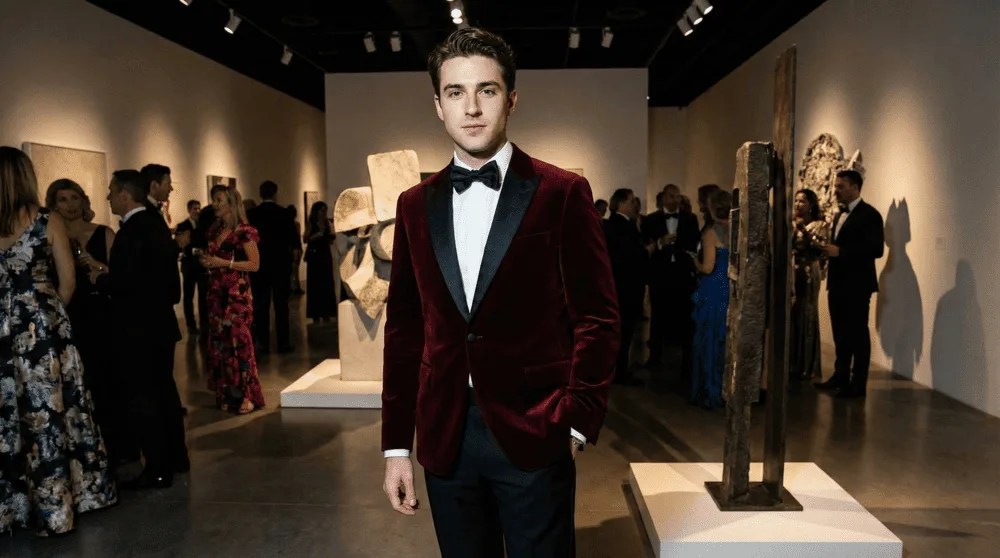
Acceptable creative elements
Velvet dinner jackets:
- Rich jewel tones: burgundy, emerald, navy, deep purple
- Maintain black trousers, white shirt, and black bow tie
- Particularly effective for winter events
- The fabric adds luxury while maintaining formality
Alternative neckwear:
- Midnight blue bow ties with midnight blue jackets
- Silk knit ties for more relaxed creative events (use sparingly)
- Black turtleneck replacing shirt and bow tie (for explicitly creative events only)
Patterned jackets:
- Subtle jacquard patterns in black or midnight tones
- Paisley or floral patterns for festive occasions
- Ensure the pattern is sophisticated, not costume-like
Coloured waist coverings:
- Burgundy, navy, or forest green cummerbunds
- Patterned waistcoats for visual interest
- Should complement, not clash with, other elements
6.2. What to avoid even at creative events
Even when creative expression is encouraged, certain elements cross the line from stylish to inappropriate:
- Novelty bow ties or cartoon patterns
- Bright or neon colours on primary garments
- Sneakers or casual footwear
- Tieless open-collar shirts without explicit approval
- Costume or themed elements (save these for fancy dress)

6.3. The creative black tie rule
When in doubt, add one creative element to traditional foundations. A velvet jacket with traditional trousers, shirt, and bow tie strikes the right balance. Multiple creative elements risk appearing costumey or disrespectful to the occasion.
7. Building your black tie wardrobe: investment guide
For gentlemen who attend formal events regularly, owning rather than renting makes practical and financial sense. This section guides you through building a black tie wardrobe that serves you for years.
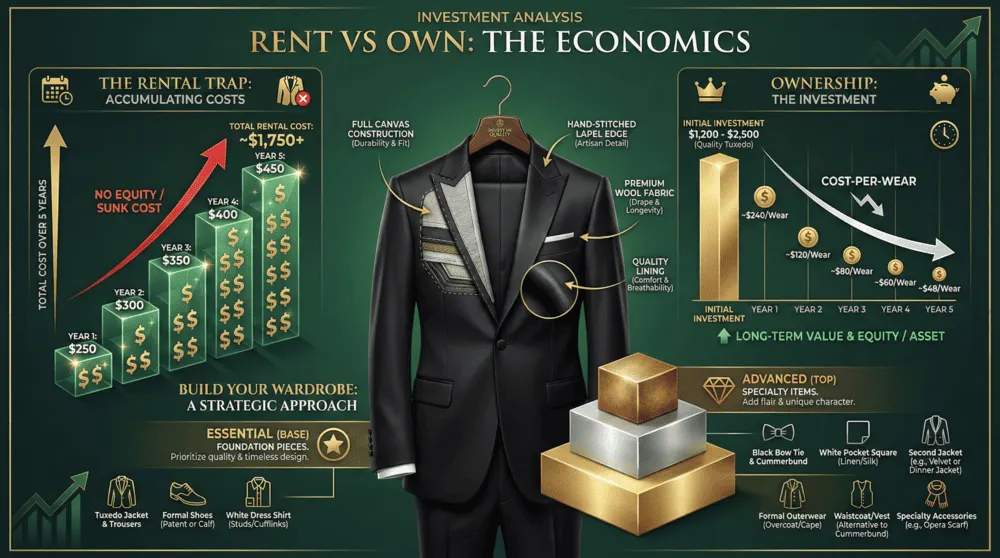
7.1. Rent versus own: the analysis
Reasons to rent:
- Attending only one formal event
- Body in transition (weight changes expected)
- Testing whether black tie events will become regular
- Limited storage space
Reasons to own:
- Attending two or more formal events annually
- Desire for perfect fit (rentals rarely fit precisely)
- Investment in quality that improves with age
- Ability to develop personal style within the dress code
The break-even point typically occurs after three to four rentals, at which point ownership becomes more economical. More importantly, a owned and tailored tuxedo fits vastly better than rental alternatives.
7.2. Building your wardrobe: priority order
Essential (first investment):
- One black or midnight blue dinner jacket and matched trousers
- Two white formal shirts (allows for alternating and emergencies)
- One black self-tie bow tie
- One pair of black patent or polished leather Oxfords
- One pair of black silk braces or trousers with side adjusters
- One black cummerbund or low-cut waistcoat
- Quality cufflinks (silver or gold)
Recommended additions (second phase):
- Midnight blue jacket if your first was black (or vice versa)
- Second bow tie in midnight blue
- Waistcoat if you started with cummerbund
- Silk pocket squares in white and cream
- Dress shirt studs to match cufflinks
- Refined dress watch
Advanced wardrobe (for enthusiasts):
- Velvet dinner jacket for winter and creative events
- White dinner jacket for summer
- Double-breasted jacket for variety
- Opera pumps or velvet loafers
- Vintage or heritage cufflinks
7.3. The Dunnio Tailor advantage
When you invest in bespoke black tie attire, you receive:
- Garments cut precisely to your measurements
- Adjustments for your specific posture and physique
- Fabric selected for your preferences and climate
- Construction that improves with age and wear
- A relationship with your tailor for future adjustments
A bespoke dinner suit becomes a lifetime investment, often serving for twenty years or more with minimal alterations. The cost per wear decreases with each event, while rental costs accumulate indefinitely.
8. Black tie etiquette and common mistakes
Dressing correctly is only part of the black tie equation. Understanding event etiquette and avoiding common mistakes ensures you navigate formal occasions with grace.
8.1. Essential etiquette guidelines
Punctuality:
- Arrive on time or slightly early
- Tardiness at formal events is particularly noticed
- Allow extra time for travel and parking at formal venues
Greeting and introductions:
- Greet hosts upon arrival and thank them before departure
- Introduce yourself to those at your table
- Make conversation inclusive and appropriate
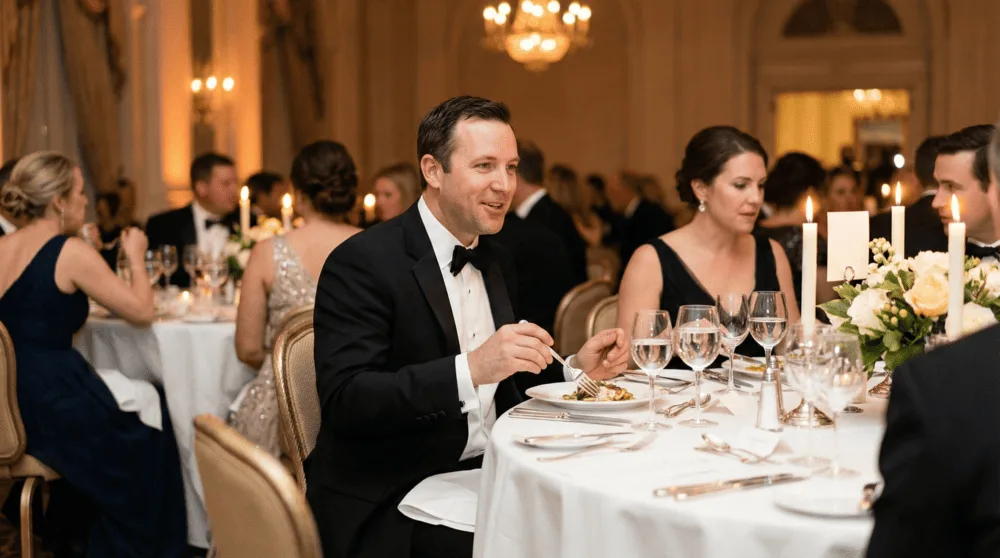
Dining etiquette:
- Follow the host's lead for seating
- Work from outside utensils inward
- Keep conversation pleasant and avoid controversial topics
- Limit alcohol consumption to maintain composure
Dance floor conduct:
- Accept invitations graciously
- Dance appropriately for the occasion
- Avoid monopolising any single partner
8.2. Common mistakes and solutions
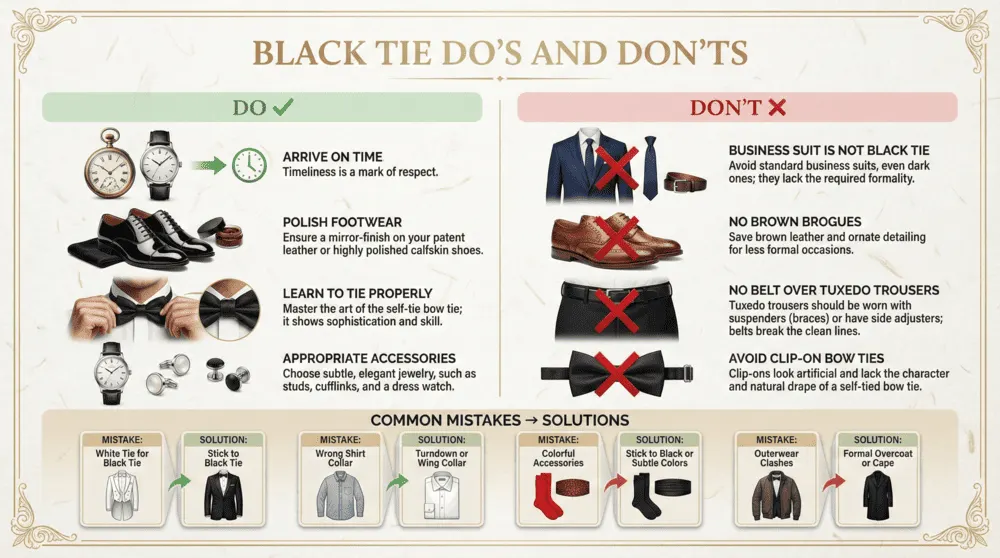
Mistake: Wearing a regular business suit
Solution: Always confirm dress code and rent or purchase appropriate attire
Mistake: Ill-fitting jacket (too tight or too loose)
Solution: Invest in tailoring before the event; a fist should fit inside the buttoned jacket
Mistake: Belt worn with tuxedo trousers
Solution: Use side adjusters or braces; black tie trousers should not have belt loops
Mistake: Clip-on or pre-tied bow tie
Solution: Learn to tie a self-tie bow; the asymmetry signals authenticity
Mistake: Brown or tan shoes
Solution: Black only; highly polished or patent leather
Mistake: Matching pocket square and bow tie exactly
Solution: Complement, do not match; a white linen square is always appropriate
Mistake: Visible undershirt beneath dress shirt
Solution: Wear a deep V-neck undershirt or none at all
Mistake: Wrong socks (white, athletic, or patterned)
Solution: Black silk or thin black dress socks only
8.3. Pre-event preparation checklist
One week before:
- Confirm fit of all garments (try everything on)
- Arrange any necessary alterations
- Select and clean accessories
- Practice bow tie technique
Day before:
- Press or steam shirt and trousers
- Polish shoes thoroughly
- Lay out complete ensemble
- Confirm event details and timing
Day of:
- Allow adequate time for dressing (thirty to forty-five minutes minimum)
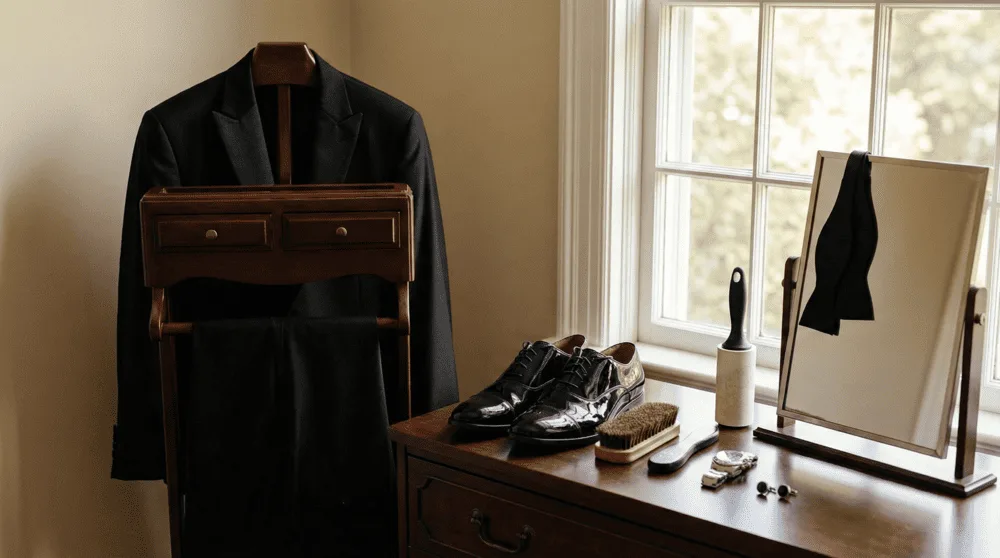
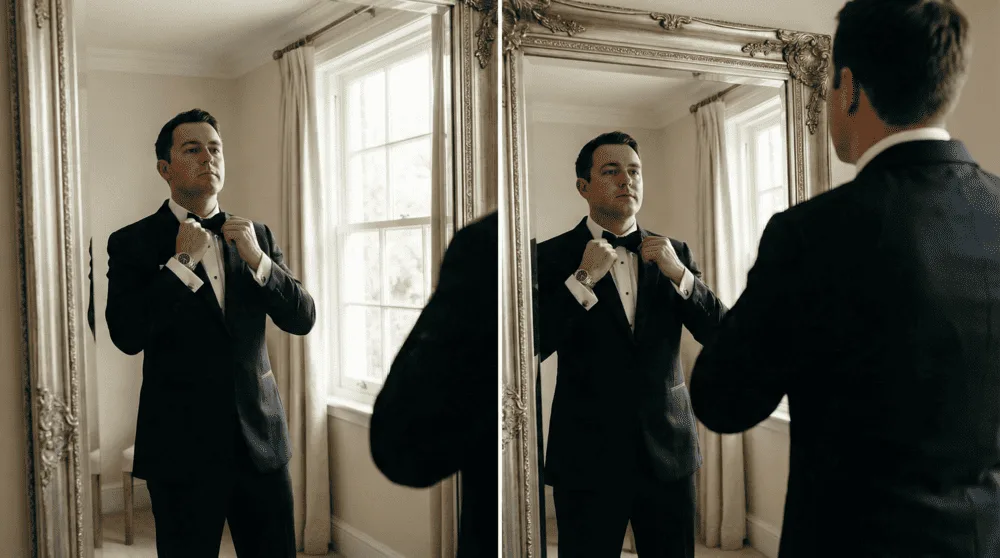
- Dress in stages: trousers, shirt, waist covering, shoes, jacket, bow tie
- Final check in full-length mirror
- Bring essential touch-up items (lint roller, comb)
9. Women's black tie attire
While this guide focuses on menswear, many gentlemen attend black tie events with partners. Understanding women's black tie expectations helps couples coordinate their formal appearances.
9.1. Women's dress code expectations
Traditional options:
- Floor-length evening gown
- Elegant formal cocktail dress (for black tie optional)
- Sleek separates with formal fabrication
Colour considerations:
- Avoid white or cream (reserved for brides at weddings)
- Rich jewel tones and classic black are always appropriate
- Metallics and sequins work well for evening events
Accessories for women:
- Elegant jewellery (understated or statement, depending on the gown)
- Formal heels or dressy flats
- Small clutch or evening bag
- Wrap or formal jacket for outdoor or cooler venues
9.2. Coordination with your partner
Complementing colours:
- Coordinate accent colours without matching exactly
- His pocket square might echo her dress colour subtly
- Avoid clashing patterns or competing statements
Formality alignment:
- Both partners should dress to the same level of formality
- If he wears a velvet jacket (creative), she can also embrace creative elements
- If he is traditional, she should match that restraint
Photograph considerations:
- Consider how colours photograph together
- Avoid busy patterns that compete in photos
- Coordinate with event photographer's lighting knowledge if possible
10. Frequently asked questions
Can I wear a regular suit to a black tie event?
No. A regular business suit, regardless of colour or quality, does not meet black tie requirements. The key distinctions are the silk-faced lapels, silk trouser stripe, and overall construction of black tie attire. If the invitation specifies black tie, a tuxedo or dinner suit is required.
What colours are appropriate for black tie?
For the dinner jacket and trousers: black or midnight blue only. The shirt should be white. The bow tie should be black (or midnight blue to match the jacket). Accessories like cufflinks and studs can be silver, gold, or gemstone, but the overall palette remains restrained.
Is a waistcoat necessary for black tie?
Either a waistcoat or a cummerbund is required to cover the trouser waistband, but you should wear one or the other, not both. The exception is double-breasted dinner jackets, which remain buttoned and require neither.
What is not appropriate for black tie?
Inappropriate elements include:
- Business suits, even expensive ones
- Brown, tan, or casual footwear
- Coloured shirts
- Long neckties (bow tie required)
- Novelty accessories or loud patterns
- Unbuttoned jackets (during formal moments)
- Belt worn over trousers
What is the difference between black tie and formal?
Black tie is a specific dress code requiring a tuxedo or dinner suit. Formal is a broader term that may mean black tie but could also indicate dark business suits, depending on context. When an invitation says formal, it is appropriate to clarify with the host. Black tie is unambiguous.
Can I wear a watch with black tie attire?
Yes, though purists sometimes suggest leaving the watch at home. If you wear a watch, choose a slim dress watch with a leather or dark metal strap. Avoid large sport watches, digital watches, or smart watches.
What shoes are best for black tie events?
Black patent leather Oxfords are the gold standard. Highly polished black calf leather Oxfords and whole-cut styles are also excellent choices. Velvet loafers may be acceptable for creative black tie. Avoid any shoes with brogueing, brown tones, or casual styling.
How should a tuxedo fit?
A properly fitted tuxedo should:
- Have shoulders that end precisely at your natural shoulder line
- Button without creating an X of tension across the chest
- Allow a fist inside the buttoned jacket for comfort
- Feature sleeves that end above the wrist bone, showing shirt cuff
- Include a collar that lies flat against the shirt collar without gapping
- Feature trousers that sit at the natural waist without requiring a belt
Your Dunnio Tailor consultation will address all these fit points to ensure your black tie attire presents perfectly.
Your black tie journey begins here
Mastering the black tie dress code is not about rigid conformity but about understanding the principles that make formal attire work. When you understand why each element matters, you can make confident choices that honour the occasion while expressing your personal refinement.
At Dunnio Tailor, we specialise in creating black tie attire that works for your unique physique and style preferences. Whether you are preparing for a wedding, a gala, or building a formal wardrobe for the years ahead, our expertise ensures you will step into any black tie event with complete confidence.
The tuxedo is more than a uniform. It is an investment in how you present yourself at life's most memorable occasions. Get it right, and you will never second-guess your appearance again.
Ready to create your perfect black tie ensemble? Visit Dunnio Tailor to begin your bespoke journey.